
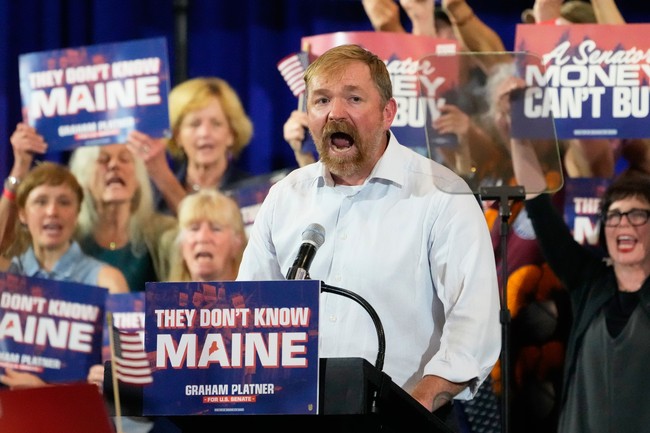
The scramble to replace Graham Platner as the Democratic nominee in Maine’s Senate race has turned chaotic, with two leading contenders exiting and the convention delegate math now pointing toward a far-left choice. This piece walks through the fallout from the replacement debate, the sudden withdrawals by Shenna Bellows and Nirav Shah, and why Troy Jackson looks poised to capture the nomination despite obvious weaknesses. The shift changes the battlefield for incumbent Susan Collins and gives Republicans a clearer path to frame the general election. The situation in Maine shows how party mechanics and delegate organizing can override public optics and candidate fitness.
The debate meant to find Platner’s successor exposed weaknesses in the replacement field and left Democrats scrambling. Eight candidates showed up, and the performance gap was glaring enough that even neutral observers struggled to find positives. That chaos reinforced why party leaders had clung to Platner for so long — the alternatives on stage did not inspire confidence. Voters and activists watching that performance realized the party had a real problem on its hands.
After the debate, two of the three top contenders abandoned their bids, shrinking the field and sharpening the internal fight. Shenna Bellows, the Maine Secretary of State, left the race after a poor showing that undercut her electability arguments. Her exit is a reminder that competency in public contests matters, and that simply holding statewide office doesn’t guarantee grassroots appeal or delegate support. The departure reshaped expectations fast, clearing space for better-organized factions.
Nirav Shah, another high-profile figure who had been seen as a potential compromise candidate, also stepped aside. Shah had positioned himself as someone who could rally Democrats against Susan Collins, even suggesting the urgency of uniting to beat her. His endorsement of former Maine Senate president Troy Jackson came as a surprise to some and signaled a concession that delegate dynamics were decisive. That move looked less like unity and more like surrender to the delegates’ current tilt.
https://x.com/shennabellows/status/2078857928497311926
The delegate math now tells the rest of the story: “While they are not legally bound to support him, nearly two-thirds of the 601 delegates have committed to voting for Jackson at that statewide convention. Jackson dominated the county-level meetings this weekend that selected those delegates, with two rivals falling far behind — and one of them, Maine Secretary of State Shenna Bellows, dropping out of the race partway through the process Sunday.” That paragraph, reporting on how delegates came together, underlines that internal organizing rather than broad voter enthusiasm is steering this outcome. Delegates picked at county meetings determine the next step, and those meetings were decisively stacked in Jackson’s favor.
Troy Jackson is the likely nominee now, despite glaring liabilities when it comes to general election appeal. He lacks charisma, has limited statewide name recognition beyond his left-leaning base, and his policy positions align with the far-left wing of the party. Yet he ticks the boxes party activists favor and has secured key endorsements that helped capture delegate commitments. From a Republican viewpoint, that makes him an easy foil to portray as out of step with Maine’s broader electorate.
For Republicans and for Susan Collins, this development is strategically useful. A nominee like Jackson lets opponents frame the contest in clear terms: it becomes a battle between Maine’s moderate tradition and an increasingly radical Democratic alternative. Campaign messaging can be tight and targeted. Rather than contending with a centrist Democrat who could peel off swing voters, Republicans can highlight stark policy contrasts and show how the Democratic selection process put factional preference ahead of electability.
The episode also exposes broader Democratic vulnerabilities heading into the midterms: messy internal processes, questionable vetting, and a reliance on delegate mechanics that may not reflect statewide sentiment. When a party’s convention structure rewards intense factional organizing, the resulting nominee can be strong at conventions but weak in general elections. Maine is now a case study in how selection systems produce candidates that energize the base while alienating independents and moderates.
Looking ahead, expect intense local and national attention on Maine as both parties recalibrate. Democrats will try to unify behind Jackson and sell his candidacy despite reservations about appeal; Republicans will sharpen attacks on his record and paint him as far-left and unrepresentative of Maine’s mainstream. Either way, the path to November just got clearer: this will no longer be about Platner’s scandals so much as about whether the Democrats can rally behind a nominee who can actually win statewide.



Add comment