
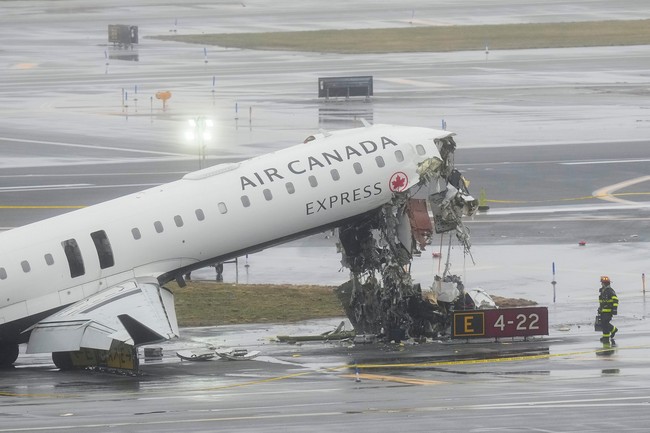
The LaGuardia runway collision on Sunday night involved an Air Canada jet and a Port Authority fire truck, resulting in the deaths of the two pilots and dozens of injuries; the airport was closed while investigators and federal officials responded, witnesses described a chaotic evacuation, and leaders prepared briefings as emergency crews continued their work. This article lays out the sequence of events, the human toll, eyewitness accounts, official movements, and the broader disruption to travel without adding external links or extra commentary. It preserves firsthand quotes from officials and witnesses and keeps the embedded visual and audio markers in their original places for follow-up. The focus remains on facts, direct reports, and the immediate aftermath for passengers and responders.
The collision occurred as an Air Canada plane was landing at LaGuardia and hit a Port Authority fire truck that had been responding to a separate incident on the runway. Emergency personnel moved quickly to evacuate the aircraft and treat the injured, and initial reports indicate a high-speed impact that left debris across the runway. Local hospitals received dozens of people, and the Port Authority reported many were released after treatment while others remained hospitalized. The situation unfolded late Sunday and continued into Monday as officials sorted the response and the investigation began.
A runway collision at New York’s LaGuardia Airport late Sunday killed two people, injured dozens more and shut down one of the busiest domestic airports in the region.
The crash occurred when an Air Canada jet landing on Sunday collided with a Port Authority fire truck that had been responding to a separate incident. Investigators were working on Monday morning to determine the cause of the accident, which killed the plane’s pilots. It appeared to be the first fatal accident at LaGuardia since 1992.
Authorities provided early figures that framed the scale of the crash: dozens were injured, with 41 passengers and crew reportedly taken to hospitals and 32 released after treatment in initial updates. Preliminary analysis suggested the impact occurred at high speed, which helps explain the extensive damage and multiple injuries reported at the scene. The airport announced closures that immediately rippled through regional travel plans, and officials warned delays and cancellations would continue as operations were halted. That disruption compounded pressure on travelers and authorities who were already managing a busy travel period.
The images and accounts coming from the scene were stark and unsettling, showing wreckage and responders working under difficult conditions. Passengers described a rapid, frightening evacuation while smoke and debris made moving through the cabin chaotic and urgent. At airports, those moments can determine who gets out safely, and survivors’ accounts make clear how tense and fast-moving this incident was. Visual documentation and eyewitness audio helped paint the human side of the emergency as crews worked to secure the area.
The photos are disturbing:
Witness statements captured the immediate panic and confusion inside the aircraft as people tried to get out. One witness detailed debris flying and people screaming during the evacuation, and others described the shock of seeing responders on the runway amid damaged equipment. Those firsthand recollections provided raw insight into what passengers experienced in the seconds after impact. Officials collected those statements while continuing to treat the injured and clear the scene for investigators.
He described seeing debris flying, smoke, people screaming during evacuation. Heartbreaking to hear a survivor lay it out like that.
Listening to him talk gives you chills
Local leaders and federal officials moved to the airport to get briefed and coordinate the next steps in the response. New York City leadership planned an on-site visit to review the situation with emergency managers, and federal transportation and aviation authorities also dispatched senior staff to assist. Their presence signaled the seriousness with which the crash was being treated and the desire to centralize information and resources for the families and survivors. Officials vowed to pursue a thorough investigation to determine how a fire truck ended up on an active runway during a landing roll.
Investigators will study the chain of events, communications, and timing that led to the response vehicle being on the runway when the jet was landing. That probe will look into dispatch protocols, runway incursion procedures, and what warnings or coordination existed between control tower personnel and responders. The technical review will be detailed and could take time, but answers are essential for preventing a repeat of this kind of tragedy. Meanwhile, families and rescue teams remained the immediate focus for support and recovery.
Please keep the victims, families and response teams in your prayers.
For anyone watching from home, the images and reports are a sobering reminder of how quickly routine travel can turn dangerous and how decisive emergency actions become. Survivors, medical staff, and emergency responders are continuing to deal with the aftermath while investigators collect evidence and officials manage airport operations. As the community processes the event, questions about procedures and accountability will have to be answered. The priority now is care for the injured and clarity on what happened so lessons can be learned and applied.



Add comment