
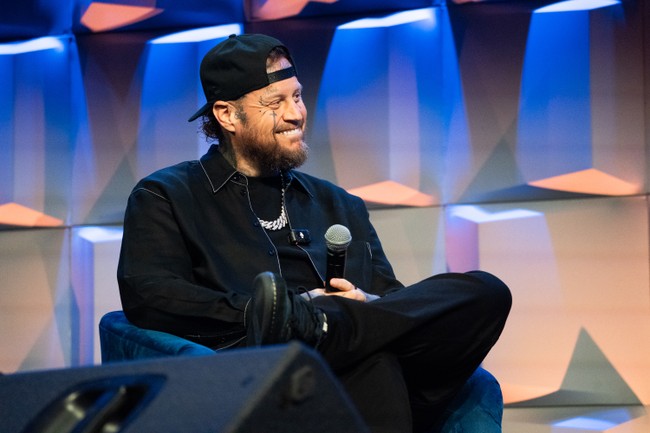
Jelly Roll’s late-night monologue on “Jimmy Kimmel Live” crossed a line for many country fans by targeting President Donald Trump, and that choice exposes the tension between an artist’s stage persona and the political leanings of a core audience. The moment raises questions about where country performers belong when they step into partisan late-night comedy, and whether commercial fallout is likely when fans feel mocked. This article examines the risks, the historical precedent, and why venue and tone still matter for career longevity.
Country music built its power on authenticity, blue-collar storytelling, and a bond with fans that often sits outside coastal cultural scenes. When a performer known for redemption and grit takes the microphone on a partisan late-night show and joins in anti-conservative humor, many long-time supporters hear that as a breach of trust. Jelly Roll’s decision to deliver barbs at President Trump on a Kimmel stage was not a neutral choice; it was an allegiance to a specific late-night comedy culture that frequently targets conservative figures.
On the show, Jelly Roll used personal humor about his own weight loss to land a punchline about the president. He said he had “shed the equivalent of an ‘entire Donald Trump,'” and turned a reported 14-pound weight gain into a broader ridicule of fitness and approval. Those lines played to a coastal late-night sensibility and landed poorly for listeners who expected the singer to remain above partisan sniping. In country music, tone and venue can transform a joke into a cultural provocation.
The reaction among fans was immediate and mixed, with confusion from many who assumed Jelly Roll leaned conservative after earlier public moments. Country audiences pay attention to cues; they read stages, platforms, and alliances as indicators of an artist’s loyalty. When a performer embraces the style of a late-night host known for skewering conservatives, it sends a message that can alienate a base that fills arenas and buys radio plays.
History offers a stark example. In 2003, the Dixie Chicks criticized President George W. Bush from a London stage and faced boycotts, radio bans, and a sharp commercial backlash. That episode taught artists that political remarks delivered on certain stages can trigger heavy consequences in this genre. The modern landscape hasn’t changed that basic dynamic: where you say something matters as much as what you say.
https://x.com/theMRC/status/2092266156602089564
Country careers survive reinvention, but they also depend on a reliable audience. The music business rewards artists who can evolve creatively, yet it ultimately expects loyalty to the people who pack the venues. A high-profile late-night turn for a performer who built his reputation by connecting with conservative or working-class fans forces a choice about whom to keep happy over the long haul.
Late-night television under Jimmy Kimmel is not a nonpartisan platform; it is part of an entertainment ecosystem with a clear comedic approach and repeated targets. Choosing to guest-host and use that style of humor signals alignment with that environment, and that alignment carries immediate commercial risk in the country world. Fans who feel mocked are not shy about withdrawing their support when they see artists embracing a coastal cultural machine.
The monologue also leaned on conventional late-night tropes about health and decline, treating a small weight fluctuation as if it proved serious physical deterioration. Official White House medical records, cited in public reporting, state the president remains in “excellent health,” with robust cardiac, pulmonary, and neurological function and a recorded weight of 238 pounds. Translating a modest gain into a narrative of collapse follows a familiar late-night pattern rather than a sober appraisal.
Critics in Hollywood are attempting to shift conversations about cognitive or physical decline from one political figure to another, expecting voters to overlook documented concerns about President Biden. That strategy is standard in partisan entertainment circles: swap targets, recycle jokes, and hope the audience doesn’t notice the inconsistency. For country artists, aligning with that playbook is a risky move because their fans prize sincerity and straightforward values.
Jelly Roll can claim free expression and the right to land monologue punches, and performers have long used late-night stages to shape public image. But country radio and ticket buyers have proven repeatedly that they respond to perceived moralizing or ridicule by turning away. A single late-night appearance doesn’t end a career, but it forces a clear choice about which audience an artist plans to prioritize, and that choice now sits squarely on Jelly Roll’s record.
Industry insiders say the music business will tolerate controversy if the numbers hold, yet commercial metrics often follow cultural signaling. If an artist’s actions make their core audience uncomfortable, radio programmers, promoters, and fans will reflect that discomfort in playlists and ticket sales. The practical reality is that careers require both reinvention and a careful reading of where loyalty points are earned and spent.
Artists who want to bridge cultural divides must do so deliberately and with respect for their listeners, not by stepping into a partisan late-night routine that punches a clear ideological direction. For many country fans, the stage where those punches land matters more than the joke itself. Jelly Roll’s choice to host Kimmel and adopt that tone will now be weighed against the loyalty he’s already built.

Add comment