
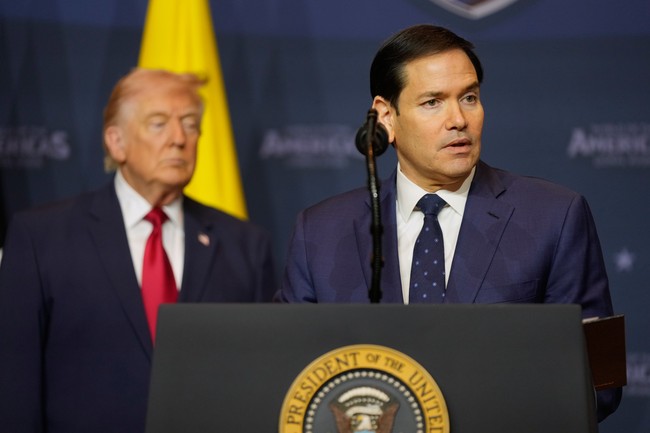
The Trump administration has paused all immigrant visa processing worldwide while consular officers undergo comprehensive retraining, a move framed as administrative oversight amid legal fights over prior country-specific restrictions and public-charge scrutiny. This pause affects interviews already scheduled, raises questions about mass visa revocations for asylum-related entries, and signals a broader shift toward tighter visa vetting and social-media checks. The policy change arrives after courts struck down an earlier attempt to suspend visas for nationals of 75 countries, and it comes as the administration coordinates with other agencies on enforcement measures that could impact hundreds of thousands of visa holders.
The State Department says the suspension is temporary and aims to give consular officers new guidance and training so they can “evaluate every visa applicant comprehensively and consistently.” Consular appointments that were on the books were reportedly canceled and applicants told they will be notified of new dates. The move is being presented as an administrative pause so the system can operate under updated standards rather than through abrupt policy rollouts.
All US immigrant visa applications have been paused by the Trump administration as the state department moves to tighten restrictions and limit access to applicants who they deem could end up relying on US assistance, a state department official confirmed Tuesday.
The agency launched the initiative at all embassies and consulates in early August, according to the official and visa appointments had to be adjusted to accommodate “in-depth training”, according to the official. The state department has been working on updated guidance and training since early this year, “to ensure all consular officers are fully equipped to evaluate every visa applicant comprehensively and consistently”, they added.
The Financial Times reports that applicants with interviews already scheduled were sent emails that their appointments had been canceled and that they would be informed of a new date and time.
The initiative began at U.S. embassies and consulates earlier this month, according to a State Department official. Applicants who already had interviews scheduled have reportedly received emails telling them their appointments were canceled and that they’ll have to wait for a new date.
Courts recently intervened when the administration tried to suspend visas from 75 countries based on public-charge metrics, with a federal judge ruling that the Secretary of State exceeded statutory authority. That legal defeat didn’t end the effort to tighten immigration; instead, the administration shifted tactics to system-wide retraining and process pauses. This administrative route avoids immediately reinstating a country list and instead focuses on ensuring consistent decision-making across posts.
A Biden-appointed federal judge has struck down the Trump administration’s suspension of immigrant visas for foreign nationals of 75 countries, handing immigration activists another victory against President Trump’s effort to slam the brakes on mass immigration.
And once again, a law passed more than 60 years ago — the Immigration and Nationality Act of 1965, better known as the Hart-Celler Act — is a specter still haunting America’s broken immigration system.
At the heart of the case is the Catholic Legal Immigration Network, Inc. (CLINIC), a “religious” organization that has gotten into the legalized human trafficking racket.
U.S. District Judge Jeannette Vargas of the Southern District of New York ruled that Secretary of State Marco Rubio exceeded his statutory authority when the State Department ordered consular officers to stop issuing immigrant visas to nationals of 75 countries while the administration reviewed public-charge risks.
Beyond the pause, the administration is preparing other enforcement actions, including a plan to revoke visas for asylum seekers who entered on tourist or business visas. Officials estimate that up to 200,000 people could be affected if revocations proceed at scale, making it one of the largest coordinated visa revocation efforts in U.S. history. That action would be coordinated between the State Department and the Department of Homeland Security to identify and remove visas tied to misuse of nonimmigrant travel categories.
Visa applicants now face greater scrutiny than before, with social media checks and higher processing costs being reported as part of the tightened vetting. Those additional layers are intended to reduce fraud and misuse of the immigration system by catching red flags earlier in the process. From the administration’s perspective, these steps are about enforcing the law and protecting taxpayers from an influx of individuals likely to rely on public assistance.
For many Americans who voted to end mass, unchecked migration, the steady stream of arrivals has been a source of frustration and a test of trust in elected leaders. The prior administration’s practices and a sprawling legal and bureaucratic framework kept flows moving even when border enforcement tightened. The current strategy of stopping processing to retool the system is a blunt administrative tool, but it reflects the political imperative to show immediate action while legal fights play out.
That bluntness is intentional: officials want the visa apparatus operating under stricter, more uniform standards before it resumes normal cadences. Retraining consular officers and updating guidance offers a way to centralize consistency without waiting on protracted litigation to resolve policy disputes. Whoever is affected by the pause will be waiting to see how long the retraining takes and whether the changes stick when processing resumes.
Editor’s Note: Republicans are fighting for election integrity by requiring proper identification to vote. It’s common sense, yet Democrats are spreading lies about the impact of such a measure.
Finally
This is what the American people voted for keep all illegals out of our country period. They must be vetted and on probation for a decade.
Damn Straight it’s about time and get her done pronto!!! I just stated elsewhere on this site the following comments about this out of control invasion that’s still just simmering and reached its boiling point during the totally out of control Biden/Harris Fraud administration that was Insane!
SECURE??? In a PIGS EYE as they say!!! Oh RIGHT Knee-Pads Kamala is quite qualified as a PIG; so that’s why the Border was A’OK according to that administration from Hell!!! Kamala had it covered!!! Just like Auto-pen Biden knew what day it was or where the exit was when walking off a stage or Air Force One!
Biden as president was only an Auto-pen puppet for the evil Demoncrap party and they all robbed America and its True Citizens Blind “6 ways to Sunday!” Biden was also demonically infected or influenced which should make it obvious that he and that most horrid administration were serving only enemies of America and Satan himself!
About that slime bucket of shit murderer and I quote: “the suspect was an immigrant in the country illegally who had been admitted under the Biden administration.”
“DHS fired back with a statement blaming former President Joe Biden and former DHS Secretary Alejandro Mayorkas for the suspect’s presence in the country. The department said the administration “recklessly unleashed millions of unvetted illegal aliens into American communities!” Think about it, MILLIONS of useless criminal scums they allowed to overrun our Nation just to help the Globalist New World Order propagators and keep getting more votes for the Demoncrap party to stay in power!!!
The victim as stated respectfully here absolutely was a decent woman that was rubbed out by a scum that should be prosecuted at GITMO and executed immediately! I quote from this article, “Puch was not just another name in a crime blotter. Friends and acquaintances described her as soft-spoken and hardworking, someone focused on supporting her child.”
This Nation of ours better hold all those Demoncrap bitches and bastards like Biden, Mayorkas responsible for all of this evil in our country and start flushing ALL of these Illegal Alien Invaders OUT of here NOW!!!