
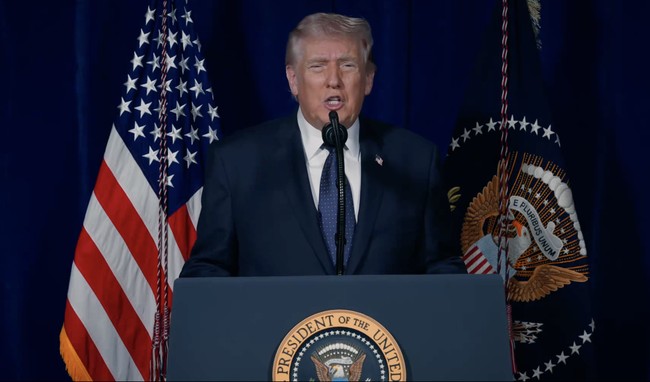
President Trump announced Monday he is pausing planned strikes on Iranian power plants for five days, saying his pressure has pushed Tehran to pursue a resolution, and that high-level conversations are continuing this week.
The President had warned Iran with an ultimatum to open the Strait of Hormuz or face strikes on their energy infrastructure within 48 hours, a message meant to stop the chaos disrupting global energy markets and hurting American consumers. Facing the looming deadline, he opted for a short, strategic pause while diplomats and back-channel contacts engage with the Iranian side.
“I am pleased to report that the United States of America, and the country of Iran, have had, over the last two days, very good and productive conversations regarding a complete and total resolution of our hostilities in the Middle East,” he wrote in an all-caps post. That blunt, public framing makes clear this administration prefers strength first, then talks if the adversary shows willingness to act reasonably.
“Based on the tenor and tone of these in-depth, detailed, and constructive conversations, which will continue throughout the week, I have instructed the Department of War to postpone any and all military strikes against Iranian power plants and energy infrastructure for a five-day period, subject to the success of the ongoing meetings and discussions,” Trump added. The wording signals a conditional, short-term truce rather than a retreat from pressure.
Markets reacted almost immediately, with oil prices moving down after the announcement, reflecting traders’ view that the risk of a major disruption had eased slightly. Lower energy costs at the pump are politically important at home, and this administration clearly understands the need to combine military readiness with economic calm when possible.
Iran’s Ministry of Foreign Affairs publicly denied any direct negotiations were taking place, calling the American statements an attempt to lower energy prices and buy time for military options. “There are no direct talks between Tehran and Washington,” they said, and added that U.S. statements are part of efforts to reduce energy prices and buy time to implement military plans.
Given Tehran’s long record of deception and state propaganda, the Iranian denials deserve heavy skepticism; quiet, unofficial channels often operate precisely because public acknowledgment would be politically costly for the Iranian regime. It is reasonable to expect Tehran to publicly deny discussions even while options are quietly explored to avoid internal backlash.
Trump told CNBC’s Joe Kernen he had “very intense discussions” with the Iranians, a phrase that underlines the high stakes and sustained pressure behind the scenes. He suggested the talks are with a new kind of Iranian interlocutor and hinted at a leadership dynamic he frames as “regime change” in the sense of shifting pressure onto hardline actors inside Tehran.
Across the capital and among allied capitals, officials are watching closely to see whether Tehran will take meaningful steps to de-escalate, including reopening the Strait of Hormuz to commercial traffic. If Tehran refuses, the five-day window could simply be a tactical pause before orders resume, so the administration keeps leverage while testing Iran’s intentions.
The upside of this approach, from a conservative perspective, is that it combines credibility of force with a willingness to convert pressure into peaceful outcomes when the adversary signals seriousness. The President’s public posture reinforces deterrence while giving diplomats room to extract concessions that protect American interests without immediate kinetic action.
Critics will argue the pause looks like weakness; supporters argue it’s shrewd and disciplined: apply decisive threat, watch for behavioral change, and act if promises are hollow. This administration is betting that a compact, conditional freeze tied to ongoing talks will yield concrete results that benefit U.S. security and global energy stability.
The situation remains fluid, and the next few days will be decisive. If Iran demonstrates constructive steps, the pause could lead to a de-escalation that stabilizes oil markets and reduces the immediate chance of military confrontation; if not, the pause will have simply been another test of Iran’s willingness to cooperate under pressure.
Either way, the message from the White House is clear: strength first, diplomacy second, and no guarantees beyond short, conditional windows tied to measurable progress. That posture aims to keep options open and to protect American interests while avoiding unnecessary escalation that could draw the country into a prolonged conflict.


Add comment