
RFK Jr. Forces a Long-Overdue COVID Reckoning on Dana Bash and CNN
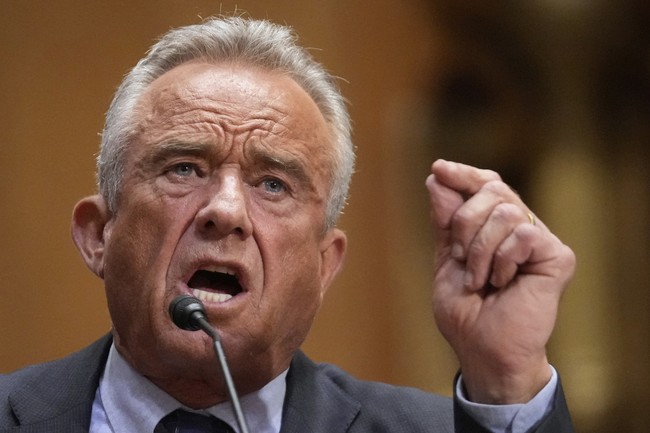
Robert F. Kennedy Jr. confronted CNN on live television, calling out the network’s role in fear-driven pandemic messaging and challenging anchors who leaned on “trust the experts” as a conversation-ender. His appearance reopened public questions about how journalists and officials handled COVID policy, and why many Americans now demand accountability. The exchange with Dana Bash crystallized a larger debate about media responsibility, expert authority, and the consequences of suppressing dissent during a national crisis.
Robert F. Kennedy Jr. walked into a high-profile Sunday interview and made it clear he was not there for small talk. He pushed back hard against the narrative that mainstream outlets used fear to steer public behavior, and he made an aggressive case that CNN played a central role in manufacturing consent for sweeping policies. From a Republican perspective, his critique lands on the core principles of limited government and individual liberty: citizens deserve facts, not panic, when policies that restrict freedoms are on the table.
The focal point of the back-and-forth was anchor Dana Bash, who leaned on routine appeals to expertise as a rhetorical shield. Kennedy accused her of repeating second-hand claims and of using “trust the experts” to shut down debate, a tactic he said helped justify extreme measures without proper scrutiny. That criticism echoes a wider frustration: when institutions demand deference instead of debate, public trust erodes and policy mistakes become harder to correct.
Kennedy didn’t just criticize tones and soundbites; he pointed directly at the outcomes. He argued that CNN’s constant presentation of death counts and dire chyrons functioned as a form of behavioral engineering, meant to prod citizens toward compliance with lockdowns, mandates, and other interventions. Those tactics, he said, were justified at the time as necessary to “save one life,” but they also came with severe social and economic costs that never received equivalent attention.
“All you know how to do is repeat things people told you and say, ‘Trust the experts.’ That’s what you did during the COVID. Now, we know that Dr. Fauci, the expert, was lying about everything… And now you’re rolling out the experts again for something you have no personal knowledge of.”
https://x.com/greg_price11/status/2083910454938661359
That exact quote landed because it ties the media’s behavior to specific institutional failures. From a conservative lens, the problem is not expertise itself but the lack of accountability when experts are wrong and the media fails to critique them. Republicans have long emphasized checks on centralized power; when pandemic policy silenced dissent and centralized decision-making, many citizens felt their constitutional protections and personal judgment were sidelined.
The broader fallout has been a loss of credibility for both medical and media institutions in many communities. People who wanted open scientific discussion and transparent data felt pushed to the margins, and that alienation has fueled skepticism that will not evaporate with a single high-profile interview. Making matters worse, political actors tied to pandemic policy have been slow to accept responsibility, deepening partisan divides about what actually happened and why.
Examples from inside the response now feed the narrative that the early messaging was shaped by political as much as scientific calculation. Public figures and advisers have since admitted that early timelines and thresholds were tentative, and some measures lacked a firm scientific basis when widely promoted. When those admissions come out months or years later, they reinforce the argument that the public was misled or manipulated.
CNN’s style of perpetual alert on-screen contributed to a national atmosphere of anxiety, according to critics who now see those tactics as part of a broader pattern. The constant stream of alarming visuals and emphatic framing reduced complex policy trade-offs to binary moral imperatives, crowding out nuance and alternative viewpoints. For Republicans concerned with civil liberties and limited government, that dynamic is particularly dangerous because it enables emergency powers and extended restrictions without proportional oversight.
The discovery and release of internal documents and public testimony, including congressional hearings, have given critics new ammunition. High-profile exchanges in Congress and media coverage of internal records have encouraged Americans to reassess how decisions were made and who benefited from certainty when the evidence was unsettled. Those revelations push the country to ask hard questions about transparency, professional credibility, and the limits of deference to authority.
The debate is far from academic: it shapes how future crises will be managed. If media outlets and policymakers escape meaningful scrutiny for missteps, the same mistakes can repeat. From a Republican viewpoint, the corrective is straightforward: restore robust public debate, insist on accountability for both experts and media institutions, and protect individual rights against the impulse for one-size-fits-all mandates.
Americans deserve a media environment that reports uncomfortable facts and allows for open scientific disagreement without labeling dissent as dangerous. That expectation is not a rejection of expertise but a demand for humility, transparency, and constitutional guardrails when public policy intrudes on basic freedoms. The RFK Jr. and Dana Bash exchange may be uncomfortable for some, but it underscores a necessary national conversation about how we balance expert advice with democratic oversight.

Add comment