
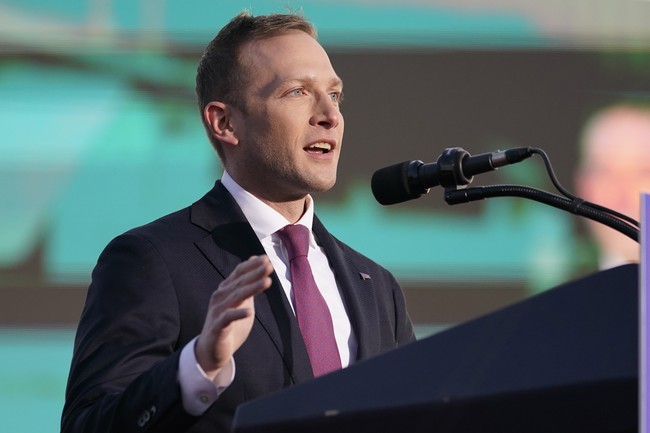
I’ll walk through Rep. Max Miller’s public response, the documents he released, the nature of the evidence he cited, where the recordings came from, and the political context surrounding his reelection campaign.
Ohio Rep. Max Miller Defends Reputation Amid Abuse Accusations
Ohio Representative Max Miller has publicly answered recent allegations from his ex-wife with a direct statement and a large batch of supporting material. He followed his video message with a release of documents, recordings, and other records that he says back up every factual claim he made. The release was distributed on his official social account and aims to put the primary record in front of the public and press.
The video statement appears. Following that, another embed is left in place for the related media. Miller says the materials were compiled to allow reporters and the public to check the reporting against original sources. He emphasizes that the packet includes items filed in court, timestamps from a court-sanctioned co-parenting platform, and continuous audio excerpts taken from original recordings.
https://x.com/MaxMillerOH/status/2083923492676706663
In his release, Miller highlights that the packet includes an organized summary and an index to make navigation easier for anyone looking through the files. He also notes that his legal team prepared the documents and that he personally paid for the compilation and release. That matters politically because it shows he wanted to establish a clear, traceable record without involving outside groups.
This packet contains the underlying documents, recordings, and records relating to allegations that have been publicly reported about Congressman Max Miller. It is provided so that reporting on these allegations can be checked against the primary record. Every factual claim made in the Congressman’s public statement is supported by an exhibit in this packet, and the packet includes additional material not previously made public.
The packet is said to include police records, court filings from Cuyahoga County, sworn discovery responses and deposition testimony, and the parties’ co-parenting communications. Miller’s team points to OurFamilyWizard messages that are timestamped, Ring doorbell video, and audio recordings captured legally under Ohio law. The goal is to show contemporaneous evidence rather than relying solely on memory or summary accounts.
Village Police Department records; orders and filings of the Cuyahoga County Court of Common Pleas (General and Domestic Relations Divisions); sworn discovery responses and deposition testimony; the parties’ court- sanctioned co-parenting platform (OurFamilyWizard), which timestamps every message; Ring doorbell video; and audio recordings. All recordings were lawfully made under Ohio law (R.C. 2933.52, one-party consent). Where a recording has been filed with the Court, the filing notice is included in Section 04. Audio excerpts are continuous, unedited cuts from the original recordings; nothing has been spliced. In excerpts where the parties’ minor child is named aloud, the name is masked with a brief tone; no other alteration of any kind has been made.
Miller frames this as a defense of his reputation and a pushback against what he describes as public allegations lacking full context. From a campaign perspective, he and his supporters argue that transparency is the correct move when accusations surface against an incumbent. Releasing raw material is meant to let independent observers draw their own conclusions from original records.
Politically, the timing matters as Miller is running for reelection and has notable endorsements that factor into how the controversy is received. His supporters point to those endorsements as evidence that national figures remain confident in his candidacy. Opponents will continue to press for scrutiny, but Miller is betting that comprehensive documentation will blunt the momentum of the accusations.
This approach will likely force media outlets and opponents to grapple with primary documents rather than rely on shorthand summaries. When records include police and court filings, timestamps, and unedited audio, it raises the bar for anyone making claims that contradict those materials. That reality reshapes the conversation from mere allegations to a test of how the facts align with public statements.
Observers should expect both legal and political follow-up. Legal teams will parse filings and audio for admissibility and relevance, while campaign teams will use the packet to shape messaging. For voters, the release provides a trove of material to review, and for journalists the packet offers a trail to verify specific claims against documented exhibits.
Whether the materials settle the matter in public opinion remains to be seen, but Miller’s strategy is clear: respond fast, supply the primary record, and force scrutiny toward original evidence. That tactic fits a conservative playbook of confronting allegations head-on with documentation and insisting on accountability from both the accuser and the press.



Add comment