
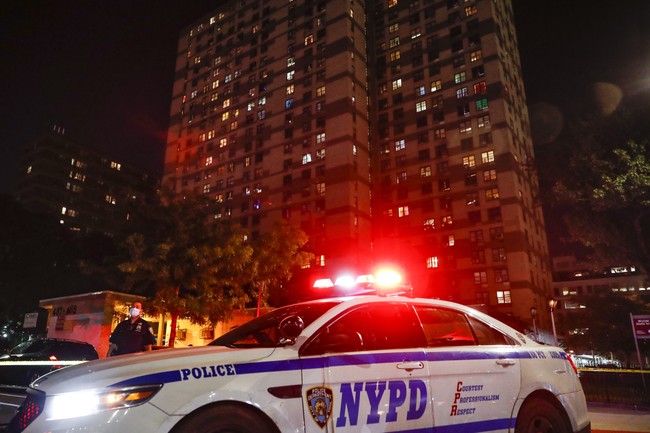
Zohran Mamdani has named a longtime adviser who pushed replacing police responses to some nonviolent 911 calls with social workers to a top aide position, and critics warn the move risks public safety, officer departures, and a costly new department; the hire revives debate over his Department of Community Safety proposal and its potential effects on New York policing and crime trends.
The mayor-elect’s appointment renews concerns about a plan that would shift many non-life-threatening responses away from the NYPD and toward mental health professionals. Opponents argue the idea prioritizes ideology over practical street-level experience and could leave first responders and residents vulnerable.
Zohran Mamdani’s latest hire to his incoming staff includes the mayor-elect’s long-time chief advisor, who has been dubbed the “chief architect” of Mamdani’s campaign proposal to have social workers respond to certain non-violent 911 calls in New York City.
The heavily criticized proposal was drummed up by the Ivy League-educated, California-native Elle Bisgaard-Church, a relative political newcomer affiliated with the Democratic Socialists of America (DSA). Bisgaard-Church was tapped by Mamdani Monday to once again be his chief adviser while running the helm at New York City’s City Hall after serving in the same post during his campaign and during his state assembly days.
Critics note the proposal’s origins in academic and activist circles and question whether those backgrounds translate to managing volatile, real-world emergencies. The concern is simple: training and policy are not the same as on-the-ground experience, and mistakes can have severe consequences.
Bisgaard-Church has been credited with being pivotal to getting Mamdani’s message to voters and campaign staff dub her the “chief architect” behind Mamdani’s Department of Community Safety proposal, according to CBS News.
When developing the Department of Community Safety proposal, which aims to replace police officers with mental health professionals to deal with non-life-threatening emergencies with a focus on subway stations, Bisgaard-Church reportedly spoke to mental health experts, public safety officials from other cities and former New York City Police Department (NYPD) Chief of Department Rodney Harrison. The new department will cost approximately $1.1 billion, according to a campaign proposal on Mamadani’s website.
That $1.1 billion price tag is no small sum and invites scrutiny on priorities and outcomes. Opponents argue taxpayers deserve clear evidence this model will reduce harm and not simply shift risks or costs elsewhere in the system.
There are practical worries about retention and morale in the NYPD if the city pursues wide-scale reassignments of responsibilities. Officers may feel undermined or constrained by policy changes that remove them from routine but sometimes dangerous calls, prompting some to look for work elsewhere.
Loss of experienced officers would likely affect response quality in serious incidents, critics say, and a thinner, less-experienced force could embolden criminals. History and common sense suggest that when visible, effective policing is reduced, bad actors test boundaries until consequences are restored.
Another urgent concern is the safety of social workers and mental health staff sent into unpredictable situations without the protection and backup that police can provide. Responding to domestic disputes, subway altercations, or scenes with volatile individuals can quickly become life-threatening, and the wrong mix of skills and equipment can be deadly.
Supporters of the plan promote the idea that many calls are better handled by clinicians and caseworkers, and that specialized responses can de-escalate crises more effectively than uniformed officers. That argument carries weight in select, controlled scenarios, but critics say the devil is in the rollout details and incident triage decisions.
Proper triage requires experienced dispatch, robust training, and fail-safe transfers to armed responders when a scene turns dangerous. Without rigorous, well-tested protocols and a phased implementation that protects both responders and the public, experiments at scale are risky.
Political framing has fueled this debate, with partisans on both sides invoking ideology and fear. From a Republican-leaning perspective, public safety must come first, and reforms should be evidence-based, incremental, and reversible if outcomes worsen.
New York voters who prize law and order will be watching staffing patterns, crime statistics, and spending closely as the administration rolls out any changes. If officers depart and crime rises, the political and human costs will be immediate and hard to reverse.
At the same time, the presence of mental health professionals in crisis response can be an improvement when narrowly applied and integrated with policing. The key difference is approach: skeptics demand pilots, transparent metrics, and accountability before upending a cornerstone of urban safety.
Declaring a wholesale replacement of police roles without airtight evidence sets up a high-stakes gamble with lives, budgets, and city stability. Whatever the intent, policymakers must align incentives, clarify thresholds for police involvement, and ensure every responder has the tools to stay safe and effective.


Add comment