
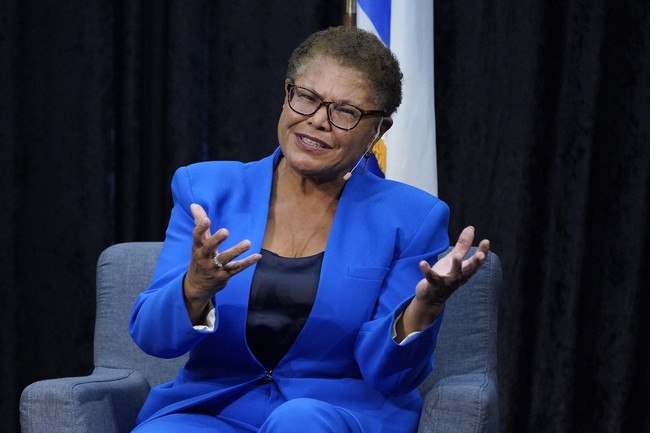
I recap how Los Angeles Mayor Karen Bass stumbled over a promise to end street homelessness by 2026, how a CNN interview highlighted the gap between pledge and reality, and why conservatives see this as a pattern of failed Democratic leadership in a city drowning in problems it helped create.
The campaign trail has exposed cracks in Mayor Karen Bass’s record, and a recent CNN interview made those cracks headline material. She once promised to “end street homelessness in L.A. by 2026,” a bold pledge that now looks more like wishful thinking than policy. Voters are watching to see whether words match results.
That social media post from Bass acknowledging a rally also included a quiet admission that her administration has fallen short on homelessness. The concession was small, but for many Angelenos it’s proof that lofty goals met reality and lost. Conservatives argue this is exactly the sort of overpromising voters should expect from entrenched Democratic leaders.
During the CNN sit-down, host Elex Michaelson pointedly asked why Bass’s 2023 timeline missed the mark, and the exchange grew uncomfortable fast. She had made the same commitment in an earlier CNN interview with Jake Tapper in 2023, and that promise is now a measuring stick. The contrast between promise and outcome matters to people tired of empty assurances.
The interview transcript paints the moment plainly: “When you talked to Jake Tapper in 2023, you said that your goal was to end street homelessness in L.A. by 2026. It’s now 2026,” said Elex Michaelson. “And we haven’t ended it,” Bass said. “We have not ended it, and we’re not close to ending it,” Michaelson said. “How were you so off?” “Well, basically, when I said that it was at the beginning of my term,” Bass replied. “I am very committed to achieving that goal. I didn’t anticipate some of the bureaucratic barriers I would experience but I am prepared to take those on now.”
Bass’s response leaned heavily on bureaucracy and unforeseen obstacles, and critics say that’s a standard dodge when results don’t meet rhetoric. She also shifted blame toward other city and county officials, suggesting they prioritized affordable housing over preventing street homelessness. That explanation rings hollow to many who watch tents multiply on sidewalks while millions in taxpayer dollars flow into programs that underdeliver.
The host pressed further, noting homelessness had only fallen about 17.6 percent in nearly four years, and asked why voters should trust a renewed promise. Bass replied with the same reassuring tone she uses in public appearances, urging patience and continued faith in her leadership. Conservatives call that tone-deaf, insisting voters deserve accountability, not gentle promises repeated like a classroom lesson.
Republican mayoral candidate Spencer Pratt has seized on Bass’s missteps, hammering her record in debates and accusing her of failing to protect neighborhoods. Pratt’s critiques focus on accountability and results rather than platitudes, arguing the city needs leaders who stop blaming systems and start fixing problems. His approach resonates with voters frustrated by crime, public safety issues, and visible homelessness.
Examples of earlier misjudgments fuel the skepticism. In 2022, Bass reportedly claimed 95 percent of people living on the streets would accept housing, a figure that critics say proved wildly optimistic. Over the following years, critics say the actual acceptances were a fraction of that number, exposing a gulf between hopeful projections and real-world outcomes.
Another exchange shows how political sparring has moved from policy to personal blame, illustrating how high emotions run on this issue. Bass was asked about remarks from Pratt in which he blamed the current leadership for his family’s losses during unrest, and the rhetoric got heated. The debate around responsibility is as much about narrative as it is about numbers on a spreadsheet.
Conservative observers view Bass’s stumble as part of a broader Democratic pattern: promising sweeping fixes for complex problems and then failing to follow through. That pattern, they argue, erodes trust and leaves cities worse off because voters keep recycling leaders who talk big but fall short. In LA, the stakes are tangible: neighborhoods struggling with public safety, businesses choosing to leave, and residents navigating a landscape full of tents and uncertainty.
This election cycle isn’t just about personalities; it’s about whether voters prefer the same approaches that produced these outcomes or whether they want leaders who prioritize clear results and accountability. The pressure on Bass is real, and for conservatives the interview with CNN only confirmed what many already believed: words without measurable progress are not leadership. The city’s future will hinge on whether voters accept more of the same or demand a different recipe for change.

Add comment