
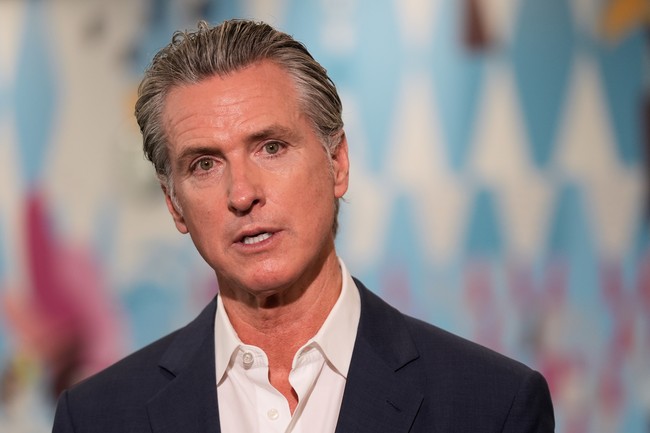
California Governor Gavin Newsom declared a fiscal victory, but state budget analysts disagree, saying the so-called balanced budget depends on drawing down reserves and one-time revenue gains instead of fixing structural overspending. This piece breaks down the claims, the analysts’ rebuttal, the size of the remaining shortfall, and where taxpayer dollars are still being directed despite the fiscal squeeze.
Gavin Newsom stood before cameras and announced triumph: “$0 structural deficit through July 2028.” He framed this as proof that “fiscal discipline and progressive values go hand in hand,” delivering the line with the certainty of someone used to friendly coverage. The problem is that the political theater does not change the math sitting on Sacramento’s desks.
Five days after Newsom’s declaration, the Legislative Analyst’s Office gave lawmakers a far bleaker briefing. Rachel Ehlers told the legislature plainly that California’s fiscal condition is not sound, even amid unusually strong revenues. Her assessment contradicts the governor’s public message and forces attention back to the structural gap lawmakers still face.
“Despite these booming revenues, the state’s underlying fiscal condition, in our assessment, is not sound. We continue to have a structural deficit, both for the coming budget year, ’26-27, as well as forecast for ’27-28, even under the governor’s proposals,” Ehlers said.
The LAO’s numbers are uncomfortable: the office estimates a remaining hole of $16.9 billion after the May Revision. That figure matters because it shows that even after revenues surged—California saw revenues come in $30 billion higher than the LAO predicted the previous June—the state still lacks a durable plan to match ongoing spending with sustainable revenue. Hitting a one-year jackpot from the market does not erase a recurring mismatch between commitments and receipts.
Ehlers also made plain how the budget is being balanced on paper. The governor’s proposal relies on withdrawals and suspended deposit requirements that together total $20 billion. As she put it, “Really, the only way the budget proposal before you is balanced is by relying on reserves.” That is not fiscal discipline; it is using one-time cushions to paper over recurring obligations.
Newsom’s Department of Finance quietly acknowledged a more modest claim at the same hearing, saying the May Revision “cuts the structural deficit by more than half.” Cutting by more than half is not the same as elimination, yet the message from the campaign trail was absolute. The difference between a boast and a confession matters when voters are weighing whether a governor can manage the nation’s largest state without recurring crises.
Reserves that appear robust on press releases only exist because rules that would refill those funds have been suspended. The rainy day fund sits at $4.5 billion this year and falls to $2.1 billion by 2027-28 if current plans hold. Suspending replenishment rules and pulling from emergency stockpiles to paper over recurring deficits is a risky pattern that leaves taxpayers exposed to the next downturn.
Meanwhile, the budget still finds room for priorities that reflect the governor’s agenda. The spending plan includes $2.1 billion in climate bond funds for 2026-27 and a proposal to buy 161 acres of a shuttered racetrack for a recreational hub on the Bay. At the same time, the state continues to expand Medi-Cal coverage in ways critics say lack sustainable funding streams. Those choices reveal priorities: programs get funded while structural balance gets deferred.
“The May Revision relies on a mix of revenue, spending, and reserve solutions to balance the next two budgets, while both the administration and LAO project structural deficits in future years without additional action.”
That line from a Sacramento policy group that usually favors higher spending is telling: even supporters worry the underlying math doesn’t add up. When allies say the approach depends on temporary fixes, what remains is a question of whether Sacramento will ever embrace real spending restraint or simply keep shifting costs forward. Voters deserve a clear answer, not press conferences that substitute headlines for a credible long-term plan.
If Newsom runs for higher office, his record will be scrutinized as more than rhetoric on fiscal competence. Right now the books show a $16.9 billion gap papered over by a $20 billion reserve drawdown and temporary revenue gains, presented to the public as a balanced budget. That political packaging might play well in a friendly media cycle, but it does not resolve the structural decisions that will determine California’s fiscal future.

Newsom really thinks he could be a presidential candidate he destroyed his own state bankrupt California has the most homeless population in America has spent billions on a invisible train to no where and has raised taxes the highest in America and never takes responsibility for any of it. Businesses are leaving or closing their businesses down because of his incompetence and he thinks people are going to elect another asshole to destroy this country. He probably will be in federal prison long before he even gets to campaign. What you do to friends wives is going to happen to you Bubba and Tyrone will be waiting for you. You will have a life time of hair jel