
The Iran conflict has pushed U.S. pump prices back over $4 a gallon, but Americans are still better off than many global consumers. This piece looks at what’s driving the rise, where prices sit compared with other countries, and why, despite pain at the pump, the United States faces a price shock rather than a supply shock. I argue from a conservative viewpoint that energy security and policy matter, and that domestic production keeps us insulated from the worst outcomes.
Global disruptions around the Strait of Hormuz have translated into higher prices for gasoline, diesel, and heating oil even though U.S. physical supplies have not been cut off. Oil markets are global, and any real or threatened closure of key tanker routes sends ripples through futures markets and retail pumps. That means American motorists feel the consequences of distant conflicts even when our refineries and pipelines remain intact.
American prices for transportation fuels gasoline and diesel remained at four-year highs on Tuesday as the war with Iran moved into the 53rd day and the Strait of Hormuz remained mostly closed to vessel traffic.
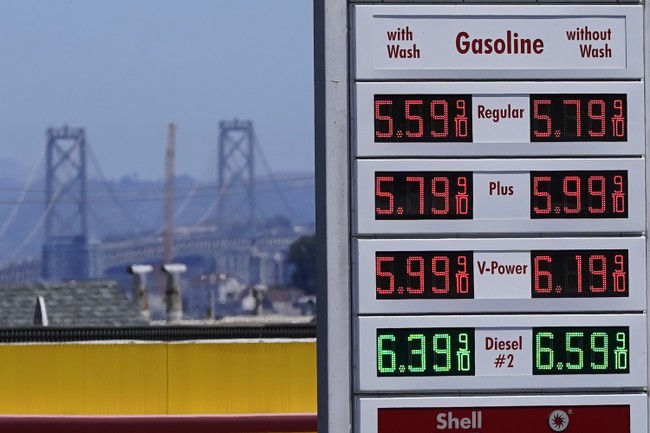
The national average price of a gallon of unleaded regular gasoline stood at $4.02, a 28.1% increase from $3.14 a gallon average at this time last year. National gasoline prices have averaged more than $4 per gallon for 22 consecutive days.
The national average price of diesel fuel, used extensively to power industry, trucking, and railroads, has risen about 52% from the year prior to more than $5.51 a gallon on Tuesday. In Texas, Florida and Arizona, diesel costs have jumped by more than 60% year-over-year.
Across America the pain varies. In Alaska, for example, diesel can fetch near $6 a gallon and heating oil fills sometimes exceeded $6 a gallon, even though the state sits atop vast reserves. That mismatch comes from logistics and a lack of local refining capacity, where crude often heads south and refined products come back up. Local market quirks can make any national average a rough guide rather than a complete picture.
At the same time, a useful point of comparison shows Americans are not paying the highest rates on the planet. Tax-heavy metro areas in Europe routinely see pump prices around double what U.S. drivers pay. Other wealthy cities in Asia and Europe face substantially higher retail prices because of steep fuel taxes and different subsidy structures.
While American drivers are feeling the pinch, costs remain significantly lower than in other global hubs like Paris and London, where high taxes push prices to approximately $8.20 and $7.50 per gallon, respectively. In Asian markets, consumers in Seoul paid $5.23 per gallon earlier this week, while the price in Tokyo sat at $4.75.
In India, the government has shielded consumers by pressuring state-run refiners to freeze prices at approximately $3.86 per gallon in New Delhi, even as those companies reportedly lose nearly $200 million a day. This artificial stability stands in contrast to the U.S. market, where prices remain tethered to global volatility despite high domestic output.
Consumption patterns adjust quickly when prices spike, and recent data showed card spending at gas stations surged while other discretionary categories softened. Americans shifted spending toward essentials, with increases at fuel pumps accounting for a big share of month-to-month growth. That behavior underlines how energy prices bite into leisure budgets and less essential spending.
The war’s impact on the consumer is uneven to be sure. Debit and credit card spending was up in March, the most in more than three years, according to Bank of America, with a 16.5% jump in spending at gas stations the biggest factor, but there also was growth of 3.6% excluding gas. Changes in tax law have pushed up the average IRS refund this year by over 11%, which is also a help.
But overall, Americans are having less “fun” as high gas prices and uncertainty shadow their discretionary spending. The impacts are being felt in the dollars spent on escape rooms, bowling alleys, and arcades.
One key distinction matters for policy: we are seeing a price shock, not a supply shock. The United States is now a net exporter of oil and natural gas, which means market access and domestic production cushion the economy from catastrophic shortages. That reality is a strategic advantage and should shape conservative energy policy, emphasizing continued production, streamlined permitting, and resilient infrastructure.
History offers perspective: unlike the 1970s oil crisis, we do not face gas lines or rationing, and consumer panic has not become systemic. Still, the episode is a reminder that geopolitics affects costs at home and that energy policy is national security policy. Conservative principles of energy independence and strong deterrence help keep both prices and risks lower over time.
Editor’s Note: For decades, former presidents have been all talk and no action. Now, Donald Trump is eliminating the threat from Iran once and for all.



Add comment