
I’ll explain Representative Chip Roy’s MAMDANI Act, why it’s aimed at Marxists and radical Islamists, what the bill would change in immigration law, the political obstacles it faces, and why conservatives see it as a necessary defense of American institutions.
The MAMDANI Act is a straightforward proposal to stop people who openly oppose America from gaining or keeping citizenship and residency. Representative Chip Roy frames it as a tool to remove members or advocates of socialist, communist, Chinese Communist Party, or Islamic fundamentalist movements from our society. For many conservatives, the idea is common sense: if someone actively seeks to subvert the nation, they should not be welcomed in or protected by our immigration system. The bill reads like a defensive move to prevent hostile ideologies from taking root in our institutions.
The core of the bill would amend immigration law to allow denaturalization, deportation, or denial of entry for those who are members of, or who advocate for, those listed ideologies. Supporters argue advocacy is often the pathway to action, and that speech or publications promoting extremist doctrines should be treated as red flags. Detractors counter that the language could be overly broad, sweeping in protected expression and risking abuse by future administrations. Those arguments matter, but so does the basic premise: a nation should not be required to admit or retain people who are committed to tearing it down.
Critics paint this as an assault on free expression and due process, and they raise valid questions about definitions. What counts as advocacy? Does sharing an article or participating in a political meeting qualify? The bill’s language attempts to define advocacy to include written, electronic, or printed materials, which makes the scope wide. Conservatives who back the measure insist the focus is on explicit efforts to advance hostile political movements, not on casual or academic discourse.
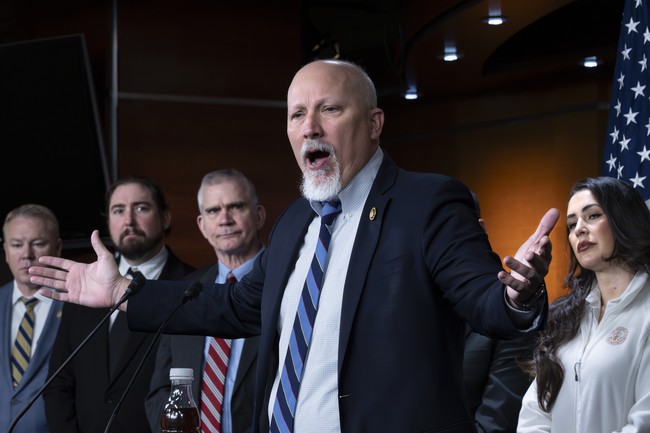
Representative Roy offered a blunt explanation for why he put the bill forward: “Why do we continue to import people who hate us? Not just for the last six years, but for the last 60 years, our immigration system has been cynically used to disadvantage American workers’ competitiveness in favor of mass-importing the third world. This has not just led to higher crime and lower wages, but also the promulgation of hostile ideologies fundamentally opposed to American values.
By targeting the Red-Green Alliance, this legislation deploys new tools to fight back against the Marxist and Islamist advance that has devastated Europe and has now arrived on our doorstep, especially in my home state of Texas,” said Congressman Roy.
Those remarks capture the Republican view that immigration policy is not merely about numbers and paperwork; it is about the character of the nation. If open borders or lax screening allow organized efforts to implant deadly ideologies, conservatives argue it invites long-term decline. The bill is pitched as preventative medicine: better to stop infiltration early than to try to reverse cultural and institutional decay later.
Politically, the road for the MAMDANI Act is steep. Even with a GOP House majority, narrow margins make passage uncertain. The Senate remains a higher hurdle, where the filibuster means controversial measures need broad bipartisan support to succeed. That political reality is why many proposed reforms stall before they can be debated in earnest, no matter how appealing they are to the party base.
Beyond votes, implementation would be messy and litigious. Courts would likely see immediate challenges over definitions, evidence standards, and constitutional protections. Conservatives anticipate these fights and believe robust legal defenses are worth mounting to preserve national security and the cultural fabric. Opponents warn of selective enforcement and chilling effects on speech, and those are risks that any version of the bill would need to confront head-on.
There is also a practical enforcement question: identifying and proving membership or advocacy in secretive movements requires intelligence, investigation, and cooperation across agencies. Border and immigration officials would need clearer authority and tools to act without trampling civil liberties. Republicans pushing the idea say rebuilding those capabilities is part of restoring effective sovereignty, especially in border states that feel the impact firsthand.
Even if the MAMDANI Act does not become law, its introduction forces a national conversation many conservatives think has been overdue. It shifts the debate from abstract immigration numbers to the ideological character of incoming populations and the long-term consequences for American institutions. That debate will shape future policy choices, and for Republicans committed to defending national identity and safety, it is a fight they plan to keep waging.



Add comment