
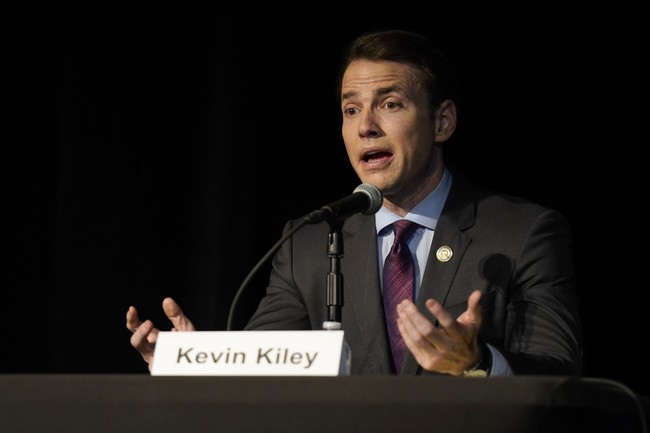
Checklist: assess Kevin Kiley’s position in California’s reshaped districts; explain how Prop. 50 and Newsom’s map could backfire; describe the current vote situation and jungle primary dynamics; note ballot-counting delays and their potential impact; highlight Kiley’s history as a conservative challenger.
California’s latest redistricting, pushed hard by Governor Gavin Newsom and backed by Prop. 50, was meant to blunt Republican gains by redrawing competitive seats. The plan targeted several GOP lawmakers, including Representative Kevin Kiley, who has long been a thorn in the governor’s side. Instead of bowing out, Kiley ran as an independent in the newly drawn District 6 and suddenly looks like a real threat to Newsom’s scheme. That alone tells you this gamble might not pay off the way the powers-that-be intended.
Under the state’s jungle primary system, the top two vote-getters, regardless of party, advance to the general election. Right now, Kiley is leading the count in District 6, which includes much of Sacramento, and the second-place candidate is also a Republican, Michael Stansfield. If those standings hold, Democrats could be shut out of the November runoff entirely, turning Newsom’s gerrymander into an own goal. That outcome would be a striking rebuke to the idea that heavy-handed mapmaking can reliably protect a single party’s interests.
Winning in the jungle primary isn’t guaranteed yet, because California’s ballot-counting process is glacial and prone to late swings. Many ballots remain uncounted and the state’s system often produces shifts in the weeks after election day, sometimes dramatically so. Those late tallies have a history of moving results in favor of Democrats, which is why conservatives remain cautious even when early numbers look favorable. Still, the early picture is encouraging for those who want competitive races and accountable representation.
Kevin Kiley’s political résumé helps explain why he’s resonating with voters who want someone who fights back. He served in the state Assembly from 2016 to 2022 and later won a seat in the U.S. House, building a reputation for suing over overreaching lockdown policies and pushing back on progressive excesses. That track record made him a target when the mapmakers reconfigured his old district, but it also made him a recognizable, combative candidate who appeals to conservatives and independents. Running as an independent gives him room to attract disaffected voters while still keeping conservative principles front and center.
There’s strategic value in a Republican and an independent advancing to November in a seat that was supposed to be engineered for Democrats. If two center-right candidates reach the runoff, Democrats would have no route to victory in that district. Even if only one conservative-style candidate advances, the general election becomes a high-stakes fight where national and state Democrats will pour resources into opposing him. That would force their hand and expose how much of their ground game depends on favorable maps and late-count dynamics.
https://x.com/RedWavePress/status/2062299420381573136
Newsom and his allies banked on Prop. 50 and aggressive redistricting to cement Democratic control and erase several GOP seats. But political engineering is never perfect, and voters don’t always behave like mapmakers expect. When incumbents adapt—by changing how they run or even running as independents—plans can unravel. The possibility of a November contest between two non-Democrats is a real-world reminder that political manipulation can rebound unpredictably.
Ballot-counting complications remain the wild card in this story, though, and any premature celebration would be foolish. California’s process means weeks of uncertainty, and late returns could narrow or reverse current leads. Conservatives and independents who want Kiley to stay competitive have reasons to be optimistic but must also accept a tense wait before knowing whether this early promise becomes a November reality. The map’s architects may still get the last laugh if late counts tilt the balance back toward Democrats.
One thing is clear: Kiley has repeatedly forced high-profile fights with the state’s leadership and has proven willing to take unconventional routes to stay in the game. Whether he ends up in a November runoff alongside another Republican or survives as the sole conservative survivor into the general, his campaign is disrupting the narrative that the new maps automatically lock in Democratic dominance. For Republicans and independents watching California, that disruption is worth tracking closely.
WOW: A newly redrawn congressional map pushed by California Gov. Gavin Newsom is dangerously close to EXPLODING in Democrats’ faces in CD-6 — as Independent Kevin Kiley and Republican Michael Stansfield are leading the June 2 primary and headed toward a November runoff, potentially shutting Democrats out entirely.
Amazing…!
Kiley has been a thorn in Newsom’s side since 2020, when Kiley was an Assemblyman and sued Newsom for his COVID lockdown policies (and won). Kiley then ran for governor in the 2021 recall election. As petty as he is unctuous, Newsom hatcheted up Kiley’s District 3 and moved the components into two districts: 5 and 6. Kiley chose to run in District 6, which encompasses heavily Democrat voting blocs within Sacramento.

“Newsom Redistricting Collapses”
Newson needs to collapse with it!