
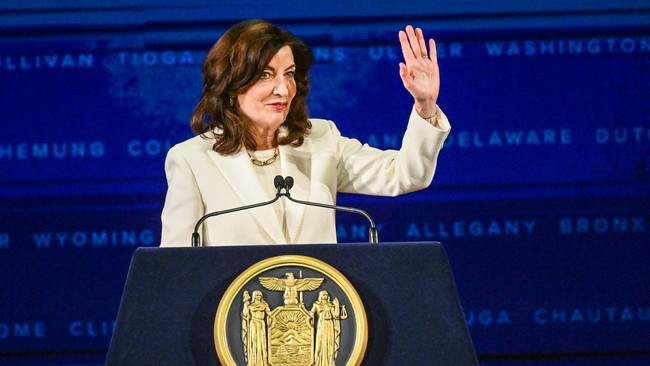
New York’s assisted‑suicide law has pushed Catholic healthcare providers and multiple congregations of nuns into federal court, arguing the statute forces them to choose between violating deeply held religious beliefs or abandoning decades of care for the sick and dying.
See You in Court: Catholic Nuns Fight Back Against Hochul’s ‘Culture of Death’ Law
The political left keeps lecturing us about freedom while passing laws that shove their worldview into every corner of life. Now a group of roughly 13 plaintiffs, including Catholic healthcare providers and several orders of nuns, say Gov. Kathy Hochul’s assisted‑suicide law compels them to counsel and even refer patients for lethal options. They claim the statute makes them participate in practices that contradict the very foundations of their faith and mission of care.
These sisters haven’t been remote observers; many have spent decades tending the elderly, the poor, and the terminally ill, often at no charge. The new law, the plaintiffs argue, would make those caregivers either abandon their beliefs, stop providing care, or risk fines and license revocation. That’s a Hobson’s choice disguised as patient empowerment.
At stake is more than conscience protection. The lawsuit says the statute actively forces medical staff to discuss assisted dying under an expanded duty tied to an existing Palliative Care Information Act. According to the complaint, practitioners must proactively raise assisted dying with terminally ill patients, whether the patient asks or not. That mandatory counseling, the plaintiffs argue, turns pastoral care into a recruitment effort for suicide.
Mother Marie Edward’s words capture the moral objection: “Everyone is made in the image and likeness of God, and there is a dignity about the human person,” she told the outlet. “We are only the guardians of this body. We do not take the charge of whether or not we live or we die. That’s up to God.” Those are not legal abstractions — they are the bedrock convictions that guide how these communities serve the vulnerable.
https://x.com/TheFP/status/2079264039994089689
Mark Rienzi of Becket, who represents several sisterhoods and religious institutions in the case, put the concern bluntly: “New York is forcing sick and dying people to consider suicide at their lowest moment, regardless of whether they ask for it or not.” He added, “Worse, it’s conscripting the nuns who care for them into its suicide cult on pain of crushing fines and professional ruin.” That language is forceful because the plaintiffs view the law as coercive and inimical to both faith and medical conscience.
This is a Republican‑framed critique of big government overreach: when the state insists that private caregivers adopt a public policy that contradicts their convictions, it bulldozes pluralism. Religious institutions provide unique forms of care precisely because they operate under different moral frameworks — frameworks that many patients seek out. Forcing conformity by statute undermines choice rather than expands it.
Practical problems multiply beyond conscience claims. If Catholic homes decline to participate in mandated counseling or referrals, they might lose licenses, funding, or be subjected to penalties. If they comply, they betray the trust of communities who turn to them for compassionate, noncoercive support. The law thus creates incentives that could hollow out faith-based caregiving at the exact moment society needs diverse providers the most.
Courts now face a clear constitutional question: can the state compel religious caregivers to promote an option that violates their doctrines and professional ethics? The plaintiffs want federal relief to block enforcement where it would force speech and referrals that conflict with conscience. If the judiciary protects those freedoms, it will reinforce the idea that liberty includes the right not to be conscripted into someone else’s moral program.
Beyond the courtroom, the debate is cultural. Advocates of the law argue it helps patients know all end‑of‑life choices, but opponents see it as normalizing suicide and marginalizing caregivers who refuse to participate. The conflict exposes a basic tension in modern policymaking: is pluralism worth protecting when popular majorities push a single moral solution into law?
The law works in tandem with an existing New York statute, the Palliative Care Information Act, which requires doctors and nurse practitioners to inform terminally ill patients of all their end-of-life options. Now that assisted dying is one of them, medical professionals must proactively raise it with patients—whether or not the patient asks.
Whether you agree or not, the nuns’ lawsuit forces a democratic question about coercion, conscience, and the limits of governmental power. Laws that demand speech and referrals from the faithful move beyond regulation into cultural enforcement, and that is precisely why this case matters to anyone who cares about religious liberty and institutional integrity.
Mark Rienzi, president of Becket, who is representing the Carmelite Sisters, the Dominican Sisters, the Benedictine Sisters, and the Little Sisters of the Poor, as well as Bishop John O. Barres and the Diocese of Rockville Centre, said in a statement that, “New York is forcing sick and dying people to consider suicide at their lowest moment, regardless of whether they ask for it or not.”
“Worse, it’s conscripting the nuns who care for them into its suicide cult on pain of crushing fines and professional ruin,” Rienzi added. “That is both unconscionable and unconstitutional. We’re confident the federal courts will put a stop to it.”



Add comment