
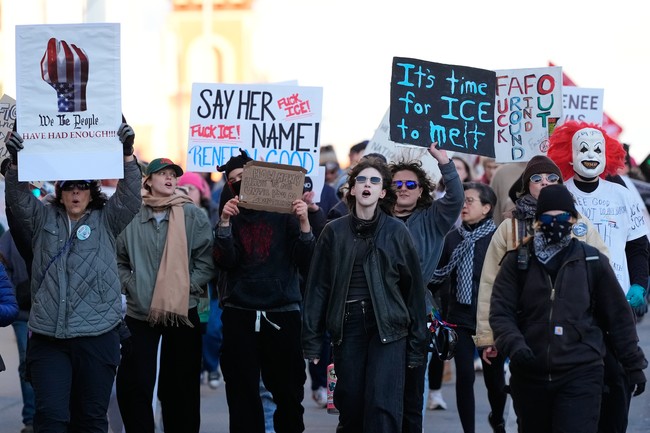
The Minneapolis shootings and the GOP response have reopened old debates about enforcement, local resistance, and immigration policy; this piece argues that federal authority must be asserted, critiques proposals for negotiated compromises and local collaboration, and calls for a hard line against sanctuary jurisdiction obstruction while preserving original quoted passages and embed tokens.
When federal agents try to enforce immigration law and encounter organized, hostile resistance in cities like Minneapolis, the country faces a clash between rule of law and performative protest. Some Republican officials, however, seem eager to retreat into negotiations and compromise that echo earlier failed strategies. That retreat risks rewarding lawbreaking and abandoning the agents who are carrying out federal directives.
Kristi Noem and the administration have pursued aggressive operations to remove illegal migrants from sanctuary jurisdictions, and critics complain about the ugliness of the results. The ugliness is not accidental disorder; it is the predictable consequence of a deliberate effort by activists and local officials to obstruct enforcement. Those jurisdictions have cultivated an environment where direct action against federal officers is both encouraged and celebrated.
Representative Mike Lawler recently urged a different tack, suggesting collaboration and warmed-over ideas from the George W. Bush era as a solution to the violence in Minneapolis. He wrote that “The deaths of Renee Good and Alex Pretti in Minneapolis this month were tragic and preventable. No matter where you stand on immigration enforcement, the shootings show that what the country has been doing is not working.” That argument treats the problems as if decades of permissive policy and political obstruction had not occurred.
The deaths of Renee Good and Alex Pretti in Minneapolis this month were tragic and preventable. No matter where you stand on immigration enforcement, the shootings show that what the country has been doing is not working.
The shootings were indeed tragic, but they followed conscious choices to confront federal agents. Video and reporting show that Ms. Good refused to comply and that Alex Pretti brought a firearm to a planned effort to free a detained activist. Those are not accidents; they are tactical decisions made in the belief that street theater and provocation would prevail over law enforcement.
Lawler suggests collaboration among federal, state and local police and even proposes joint investigations into the deaths, arguing that such cooperation would build public confidence. He writes, “Collaboration should start now. The F.B.I. and state and local departments should together investigate the deaths of Renee Good and Alex Pretti. A transparent and accountable process that protects the rights of everyone involved, including the deceased and their families, would ensure all relevant evidence is collected and bolster the public’s confidence in immigration enforcement and our justice system.” That sounds reasonable on its face, but it ignores the incentives and pressures that made Minneapolis a hostile environment to begin with.
Experience in Minneapolis and in other episodes of politically charged investigations shows how local sympathy for protesters can skew outcomes. The George Floyd investigation is a stark example of process shaped by community pressure and results-driven narratives. In that climate, asking Minneapolis authorities to participate in a probe of federal agents invites bias and could undermine a fair, evidence-based conclusion.
Some still invoke the idea of a path to legal status rather than deportation, recycling elements of past comprehensive reform proposals. Those ideas typically include penalties, work requirements, and refusal of public benefits, but they also carry a magnet effect that draws more migrants if enforcement slackens. The political reality is that soft approaches translate over time into expanded immigrant voting blocs and long-term shifts in public resource burdens.
- No Amnesty. Workers who have entered the country illegally and workers who have overstayed their visas must pay a substantial penalty for their illegal conduct.
- In Addition To Paying A Meaningful Penalty, Undocumented Workers Must Learn English, Pay Their Taxes, Pass A Background Check, And Hold A Job For A Number Of Years Before They Will Be Eligible To Be Considered For Legalized Status.
The practical problems of implementing any broad legalization are acute: identity theft, falsified documents, and deeply embedded networks that enable illicit hiring all complicate the notion of a fair, workable path. Past operations have exposed extensive misuse of Americans’ identities and the limits of workplace verification systems. Rewarding that status creates perverse incentives and invites further waves of irregular migration.
The better course, from a conservative enforcement perspective, is to restore the supremacy of federal law and protect the officers carrying it out. That means vigorous deportations for those here illegally, denaturalization where fraud is evident, and accountability for local officials who obstruct enforcement. If the federal government yields ground to local sanctuaries or accepts half-measures that allow insurgent networks to keep operating, the unrest and violence will persist.
Political survival concerns should not determine whether the administration enforces the law. Stonewall Jackson famously warned, “Never take counsel of your fears.” The country needs a policy that prioritizes sovereign control of borders and the rule of law over convenient political compromises that have failed before. If Washington hangs tough, the disruption of enforcement will be temporary; if it blinks and negotiates from weakness, voters will remember the failure.



Add comment