
Checklist: summarize a tense meeting between Minnesota Governor Tim Walz and Border Czar Tom Homan; report each side’s public statements and quotes; explain likely objectives and disagreements; note President Trump’s comments and related quotes; preserve original embedded media tokens.
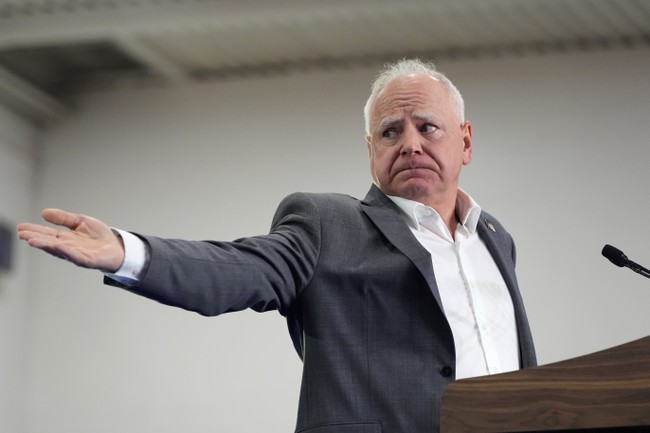
The tone of a recent meeting in Minnesota was cautious and, at times, combative as Governor Tim Walz met with federal immigration enforcer Tom Homan. Walz framed the discussion around reducing federal pressure in Minnesota and ending what his office called a “campaign of retribution,” while Homan is widely understood to be focused on locating and removing illegal aliens. Both sides spun the outcome to their advantage, leaving residents and observers to wonder how cooperation will actually play out on the streets of Minneapolis. The public statements and subsequent reactions suggest this will be a long, public tussle rather than a quick resolution.
Walz’s office released a short summary that emphasized a desire for fewer federal forces and an ongoing dialogue with federal officials. That language indicates the governor is pushing for a diminished federal footprint and more control for state agencies in managing enforcement activities. To supporters, this reads as a protection of local authority; to federal agents and enforcement advocates, it can sound like resistance to an operation meant to restore order. The competing priorities are clear: Walz wants safeguards and limits, Homan’s task is enforcement.
Public reaction was immediate and sharp from commentators who see the Biden-era handling of immigration as weak and the Trump administration’s approach as deliberately tough. Critics of the governor argue that asking for fewer federal agents while crime spikes or enforcement ramps up is tone-deaf. Supporters of Walz counter that federal interventions risk overreach and political fallout. The exchange highlights a deeper political split over who should control enforcement on local streets.
Shortly after the meeting, the governor’s office released his take on how the meeting went, and the tone was, if not ebullient, then at .
The post continues:
…a swift, significant reduction in the number of federal forces in Minnesota, and an end to the campaign of retribution against Minnesota.
The Governor and Homan agreed on the need for an ongoing dialogue and will continue working toward those goals, which the President also agreed to yesterday. The Governor tasked the Minnesota Department of Public Safety as the primary liaison to Homan to ensure these goals are met.
From the enforcement side, the mission is simple: locate and remove individuals in the country illegally, with or without local cooperation. Tom Homan has a reputation for getting results and rarely bending policy to local political calculations. Observers familiar with federal enforcement note that federal priorities often override local preferences when officials believe national security or immigration laws are at stake. That dynamic sets the stage for ongoing friction between Minneapolis city leadership, the state, and the federal team on the ground.
Some of the rhetoric surrounding this meeting has been heated, with one commentator dismissing the governor’s comments as “laughable horse squeeze.” That dismissive tone captures how polarized the narrative has become: one side frames federal action as necessary law enforcement, the other frames it as punitive intervention. These competing narratives matter because they shape public perception, influence local cooperation, and determine whether police and community leaders will work with or push back against federal teams. The next moves will be strategic and public-facing.
President Trump weighed in during a visit to Iowa, where he said the governor and the mayor reached out to him for help. The exchange quoted below captures part of that interaction and shows how national figures are using the situation to score political points. Trump presented the calls for assistance as evidence that his approach to border and domestic security is effective and popular among some state leaders.
Here’s how that exchange went:
Will Cain: He has posted that you have retreated in Minnesota, Governor Gavin Newsom, and is encouraging people to keep the pressure up.
President Trump: See I haven’t heard that at all. Because it’s just the opposite. I was called by the governor (Walz) yesterday. I was called by the mayor (Minneapolis’ Jacob Frey) yesterday, how do we do something, please, how do we do something? I think its bad for them, I don’t think its bad for us. I think it’s bad for them.
WC: You’ll have to see what Governor Newsom…
DT: It’s not a question of retreat. We want safe cities. Whether its that we… you know, we took a lot of the bad, the crime out of there. We want safe cities and states. We want a safe country. And again, we just got a report, done by Democrats, that the country is the safest ever recorded. Right now.
Media spin from both sides is predictable: local officials emphasize limits and oversight while federal advocates stress results and law enforcement imperatives. Practical cooperation will hinge on day-to-day interactions between Minnesota Department of Public Safety personnel and the federal teams Homan deploys. If liaisons can find pragmatic, narrow areas to collaborate on, enforcement might proceed with fewer political fireworks; if not, each public statement will ratchet tensions higher and make operational success harder to achieve.
At the time of this report, there was no public statement from Tom Homan summarizing the meeting or pledging operational changes. The lack of an immediate federal response leaves room for speculation about next steps and for both political and operational maneuvering. Local communities will be watching closely to see whether federal operations proceed as planned or whether state pressure results in adjustments to scope, cadence, or presence.


Add comment