
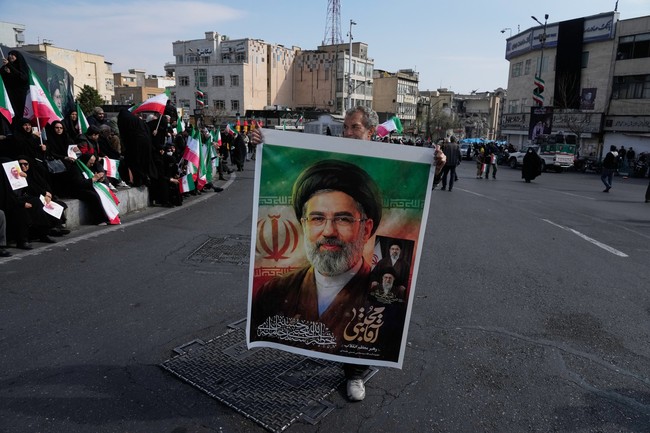
I’ll walk you through a quick, clear take on Iran’s new “Supreme Leader,” the strange public optics around his debut, the cardboard cutout moment that lit up the internet, the flood of memes that followed, and what it all suggests about Iran’s leadership and vulnerability.
There’s no denying the optics are bad for Tehran. Mojtaba Khamenei has been introduced as the new “Supreme Leader,” yet reports and footage suggest he is not being presented in normal, confident leader fashion. When a state occasion substitutes a photo or a cutout for a live presence, it sends a message of weakness or extreme caution to both domestic audiences and foreign adversaries. That kind of uncertainty is dangerous in a regime already under military and diplomatic pressure.
U.S. and Israeli officials have made it clear that top Iranian figures are potential targets given past escalations and strikes. American and Israeli operations over recent years have seriously degraded aspects of Iran’s military and leadership networks. In that context, keeping a leader offstage can be read as an attempt to limit exposure to strikes, but it also looks like an admission that the regime cannot safely show its leadership to the public.
There are even unverified reports suggesting the new leader may be in poor condition from a prior attack, though such claims are difficult to confirm without independent access. Iran controls the narrative tightly and habitually withholds or alters information about its inner circle. Still, absence breeds speculation, and speculation drives the memes that often reflect popular sentiment more honestly than official statements do.
At a rally where officials wanted to show public support, they displayed a picture rather than their leader in person, and that image felt, at best, like damage control. The visual was awkward enough to make people wonder whether Tehran could credibly project authority during heightened tensions. In a country where the regime trades heavily on displays of unity and strength, such misfires are telling. They undermine the very theater of power the leadership depends on.
Then came a clip from another ceremony that allegedly showed a cardboard cutout of the new leader being paraded. I cannot verify the clip’s authenticity, but the scene exploded online. That single frame—paper in place of a person—became a lightning rod, because it captured in one goofy moment what many already suspected: a leader more concept than commanding presence.
People online went to work immediately, and the result was a deluge of memes that mixed humor with political bite. Satire and memes are an old, blunt instrument for testing how resilient a regime’s public image really is. The cardboard trope made it easy to lampoon Iran’s new arrangement and point out the awkwardness without needing a detailed brief on geopolitics.
Some of those reactions were sharp, some vulgar, and some outright savage in tone. Humor often turns dark quickly when a population sees a potential power vacuum next door. A couple of particularly graphic memes circulated widely, drawing both laughter and grim approval from those who think Tehran has painted itself into a corner. Several posts warned that mocking a fragile opponent is only sensible when your side can back up the jokes with credible deterrence.
Of course, there’s a strategic angle here. If the leadership is effectively hiding its figurehead to avoid targeted strikes, that acknowledges a vulnerability. It also signals to rivals that the regime fears exposure. Public appearances serve as both morale boosts and an assertion of survivability; removing them concedes both. For policymakers and analysts, those concessions become data points in assessing Tehran’s posture and options.
Memes do more than entertain; they shape perceptions. In authoritarian or tightly controlled societies, images that undermine the official narrative can erode legitimacy faster than any op-ed. Social media reactions—especially when amplified by foreign comment—can influence how insiders calculate risk and loyalty. That may matter more than we think in a state where appearance and ritual are central to staying in power.
People are watching to see whether Mojtaba Khamenei will actually step into the visible role he’s been handed. If he never does, the cardboard moment will be remembered as a symbol of a regime too brittle to perform its own rituals. If he appears and proves resilient, the memes will fade, but for now the internet’s response says a lot about how fragile the new arrangement looks to both critics and casual observers.
Editor’s Note: For decades, former presidents have been all talk and no action. Now, Donald Trump is eliminating the threat from Iran once and for all.
Add comment