
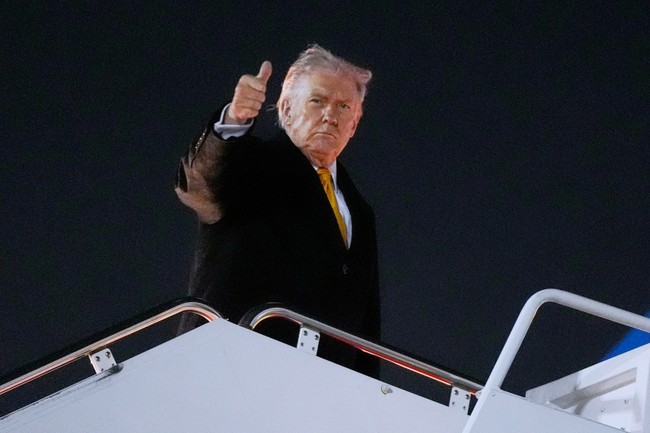
This article summarizes President Trump’s forceful response to a recent attack on National Guard members, his announced immigration pause for “all Third World Countries,” and the political fallout including reactions from lawmakers and the implications for federal benefits and migration policy.
President Trump used a late-night message to confront immigration failures he says have endangered Americans, tying his reaction to the ambush of two National Guard members in Washington, D.C. He pointed to the death of 20-year-old Sarah Beckstrom as proof that current policies have dangerous real-world consequences. The attacker was identified as 29-year-old Afghan national Rahmanullah Lakanwal, who entered the U.S. in 2021 under Operation Allies Welcome. This framing sets the tone for the administration’s proposed hard-line approach to migration and benefits for noncitizens.
Trump chose blunt, unfiltered language that plays to voters who have long felt ignored on border and resettlement issues. He framed the immigration system as overwhelmed and broken, placing blame squarely on the prior administration’s handling of evacuations and resettlement programs. The message mixes anger, sarcasm, and policy promises intended to reassure Americans that decisive action is coming. For his supporters, this is a direct answer to the sense that elites have prioritized newcomers over citizens.
He did not spare colorful insults aimed at political opponents, but beneath that rhetoric is a clear set of concrete proposals meant to change the rules on benefits, admissions, and citizenship. Trump stated: “A very Happy Thanksgiving salutation to all of our Great American Citizens and Patriots who have been so nice in allowing our country to be divided, disrupted, carved up, murdered, beaten, mugged, and laughed at, along with certain other foolish countries throughout the World, for being ‘Politically Correct,’ and just plain STUPID, when it comes to Immigration.” That line captures both the tone and the policy intent—pause and reassess who is admitted and who receives federal support.
The president moved from rhetoric to a set of declarations about what he would do next, promising a sweeping “permanent pause” on migration from entire regions. He wrote that he would “permanently pause migration from all Third World Countries to allow the U.S. system to fully recover, terminate all of the millions of Biden illegal admissions … and remove anyone who is not a net asset to the United States, or is incapable of loving our Country.” Those words aim to stop the flow of arrivals while the system is retooled to favor national security and assimilation.
Trump also pledged to end federal benefits for noncitizens and to pursue denaturalization in specific cases, saying he would “denaturalize migrants who undermine domestic tranquility and deport any Foreign National who is a public charge, security risk, or non-compatible with Western Civilization.” That language signals an aggressive legal and administrative push to tie immigration status to behavior and perceived societal fit. Supporters see this as reclaiming control; opponents warn of legal battles and humanitarian impacts.
He assembled a list of grievances he believes prove the system is broken, naming economic and cultural impacts tied to large-scale resettlement and migration. Among the lines presented as evidence are the following quoted points:
- “A migrant earning $30,000 with a green card will get roughly $50,000 in yearly benefits for their family.”
- “The real migrant population is much higher.”
- “This refugee burden is the leading cause of social dysfunction in America …”
- “… hundreds of thousands of refugees from Somalia are completely taking over the once great State of Minnesota.”
- That Omar is one of the biggest critics of the American experience despite the fact that “her place of origin is a decadent, backward, and crime-ridden nation.”
- “Even as we have progressed technologically, Immigration Policy has eroded those gains and living conditions for many.”
The reaction from the Republican side includes immediate legislative alignment with the president’s calls for a freeze while Congress works on a longer-term solution. Rep. Chip Roy has promoted his “PAUSE Act,” framing the issue as both illegal and legal immigration overwhelming systems and communities. He argued that convoluted legal channels have amounted to a mass admission program that strains schools, hospitals, and local services. That line of defense frames the pause as a necessary reset rather than a political stunt.
Critics will litigate the legal reach of measures like denaturalization and benefits termination, and Democratic lawmakers will resist vigorously, promising court fights and public campaigns. The president acknowledged that implementation details will be disputed but insisted action is required to prevent further erosion of safety and social stability. He invoked “reverse migration” as a core remedy, stating, “Only REVERSE MIGRATION can fully cure this situation,” and closing with, “Other than that, HAPPY THANKSGIVING TO ALL, except those that hate, steal, murder, and destroy everything that America stands for.”
The president’s final, stark line in the post was: “You won’t be here for long!” That blunt promise captures the take-no-prisoners posture he and his allies are adopting. Whether courts, Congress, or public opinion ultimately shape the policy, the administration has set a governing tone that prioritizes national security, strict benefit eligibility, and a permanent pause on migration from the nations it labels third-world countries.


Add comment