
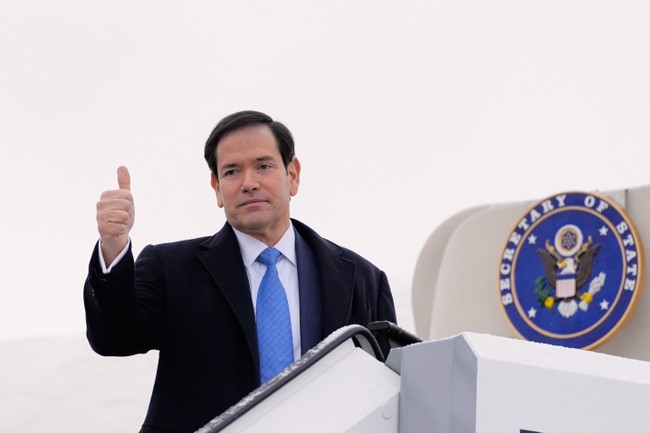
This piece explains why Secretary of State Marco Rubio says the Trump administration’s visa and immigration changes are driven by an America first approach rather than any intent to single out India, recounts his remarks in New Delhi, and reflects on how corporate hiring practices, national interests, and recent migration pressures shape the push for reform.
Secretary Rubio used his time in New Delhi to confront a pointed question about new U.S. immigration measures, and he answered directly. He insisted the changes are not targeted at India even though they may disproportionately affect Indian workers who currently fill many high-skilled roles in the United States. His point was simple: reform is being applied globally and designed to serve American national interest first.
Secretary of State Marco Rubio pushed back against criticism of President Donald Trump’s immigration reform as Indian officials and media raised concerns that U.S. visa and immigration reforms may curb migration from India.
“What I want to leave clear is that the changes, while they may be having a disproportionate impact on a place like India that provides so many high-skilled workers to the U.S. economy, it is not a system that is targeted at India,” Rubio said during a Sunday news conference in New Delhi, India. “It is one that’s being applied globally.”
From a Republican perspective, this is the clearest expression yet of what America first means in immigration policy. Our borders and visa rules must reflect our national needs, not the convenience of foreign labor markets or the staffing preferences of big tech. That stance has drawn international attention, but it also answers voters who demanded a government that puts American workers and employers first.
“Everything that you do as a country needs to be in your national interest, and that includes your immigration policy,” Rubio continued. “The United States, I believe, is the most welcoming country in the world on immigration.”
“Every single year, a million people, roughly, become permanent residents of the United States and contribute greatly,” he said.
Those numbers matter. Even while welcoming legal immigration, the administration argues it must manage inflows so they benefit American families and employers fairly. The existing system allowed distortions where companies relied heavily on foreign visa holders instead of training or hiring domestically. Fixing that imbalance is a policy choice that favors American opportunity without closing the door to lawful immigration.
I spent years consulting in industries that relied heavily on H-1B and other temporary visa holders, and I saw firsthand how the system worked in practice. Many visa holders were talented and hardworking, but I also saw companies use the program to depress wages or outsource recruiting rather than invest in American talent. Those business incentives pushed the visa system beyond its original purpose, and reformers are calling that out.
Reform is overdue, and the political mood has shifted. Conservatives want clear rules that protect national security, uphold fairness for American workers, and preserve lawful immigration as a pathway to citizenship. That pragmatic approach is what Marco Rubio signaled in New Delhi: changes will be broad and applied globally, not a diplomatic slight aimed at any single partner nation.
“The changes that are happening now or the modernization of our migration system into the United States is not focused – it’s not India-specific; it is global,” Rubio stressed. “It’s being applied across the world.”
“We are in a period of modernization, and I’ll be frank and honest with you, because it’s important to talk about this: We’ve had a migratory crisis in the United States,” he said. “This is not because of India, but broadly, we had over 20 million people illegally enter the United States over the last few years, and we’ve had to address that challenge.”
That last point is why the debate isn’t merely about visas for skilled workers. It ties into broader enforcement problems and the surge of illegal entries that strained public services and disrupted labor markets. Policy reforms, therefore, aim to balance legal migration, strengthen borders, and ensure employers do not game the system at the expense of American workers.
Diplomacy with India continues and appears largely unaffected by these policy shifts, which is important given the strategic partnership between the two democracies. Leaders can disagree about administrative changes while still cooperating on defense, trade, and regional security. The U.S. can both manage migration responsibly and maintain an essential alliance.
From a conservative vantage point, saying what you mean and putting Americans first in policy is not rude, it is responsible. Rubio’s message in New Delhi is consistent with a broader commitment to sovereign control over immigration policy, and it signals to voters that the administration intends to follow through on those priorities.

Add comment