
I’ll explain the key moves: Trump’s demand on Iran’s enriched uranium, why a third country transfer was unacceptable, the recent U.S. strikes labeled self-defense, CENTCOM’s explanation of targets, and how this all signals a tougher, clearer U.S. posture moving forward.
President Donald Trump pushed a firm condition about Iran’s highly enriched uranium late Monday, insisting the material be surrendered to the United States or destroyed under strict supervision. That stance narrows the options and removes the murky middle ground of handing the material off to a third party. From a national security angle, there is nothing casual about controlling weapons-grade material, and Trump made that reality plain.
“The Enriched Uranium (Nuclear Dust!) will either be immediately turned over to the United States to be brought home and destroyed or, preferably, in conjunction and coordination with the Islamic Republic of Iran, destroyed in place or, at another acceptable location, with the Atomic Energy Commission, or its equivalent, being witness to this process and event,” the president said in a post on Truth Social.
That quote cuts through a lot of diplomatic hedging and shows a demand for verifiable, observable action. The insistence on the Atomic Energy Commission or an equivalent being witness is about making sure the process is transparent and irreversible. Trust but verify is one thing; this is trust minimized and verification maximized, which is what a strong administration should demand.
Talk of shipping uranium to a third country had floated around, but that idea carries obvious risks. A middleman state could mishandle, withhold, or even secretly return material to Iran, and that would defeat the whole point of disarmament. The U.S. position rejects half-measures and ambiguous outcomes that leave Americans vulnerable.
Meanwhile, events at sea and along Iran’s coast raised the stakes. Explosions were reported in Bandar Abbas, Sirik, and Jask, spots we’ve seen before when tensions escalate around U.S. vessels. Those incidents prompted immediate U.S. military responses, not as escalation theater but as protective measures for our forces and freedom of navigation.
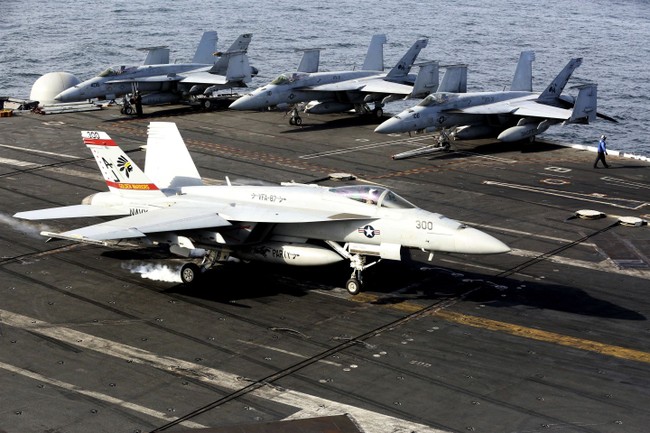
CENTCOM confirmed the U.S. struck in self-defense, targeting missile launch sites and boats that were attempting to lay mines. The strikes reportedly disabled IRGC boats and hit a surface-to-air missile site in Bandar Abbas. Officials stressed that the action was measured and aimed at neutralizing imminent threats rather than provoking wider conflict.
“U.S. forces conducted self-defense strikes in southern Iran today to protect our troops from threats posed by Iranian forces,” Capt. Tim Hawkins, a CENTCOM spokesperson, said.
Capt. Hawkins also explained the tactical side: the targets included missile launch sites and boats attempting to emplace mines, and CENTCOM emphasized restraint while defending forces. According to senior officials, Iranian boats were observed placing mines in the Strait of Hormuz and a missile site had targeted U.S. warplanes. Those are concrete threats that demand a solid, swift response.
From a Republican perspective, this sequence is about doing what previous administrations often failed to do: act decisively to eliminate threats and insist on real solutions. Policy isn’t just high-minded talk; it’s the point where words meet action. Requiring the transfer or destruction of enriched uranium and following up with defensive strikes when needed reflects a coherent strategy to protect American lives and interests.
Iran’s attempts to reframe demands or use softer legal language do not change the underlying threat. Iranian officials have been trying to repackage aggressive posture with different vocabulary, but the practical effects remain the same. Words won’t deter weapons or mines; removing or neutralizing those capabilities will.
There are real, narrow risks in any kinetic action, and military leaders say these strikes were limited to specific threats. CENTCOM’s framing as self-defense matters legally and politically, and it keeps the focus on protecting personnel and assets. That restraint is deliberate, but it does not mean passivity.
What matters going forward is enforcement and verification. If an agreement commits Iran to turn over or destroy enriched uranium, there must be inspectors, witnesses, and certainty the job is done. Leaving open paths for deception or recirculation of nuclear material would be a catastrophic mistake, and the current U.S. posture rejects that route.
This approach combines diplomacy with credible force: demand a tangible outcome on nuclear material while showing the will to defend U.S. forces and freedom of the seas. The goal is clear and unambiguous: eliminate the immediate threat, secure the materials, and prevent future risks through verifiable actions.



Add comment