
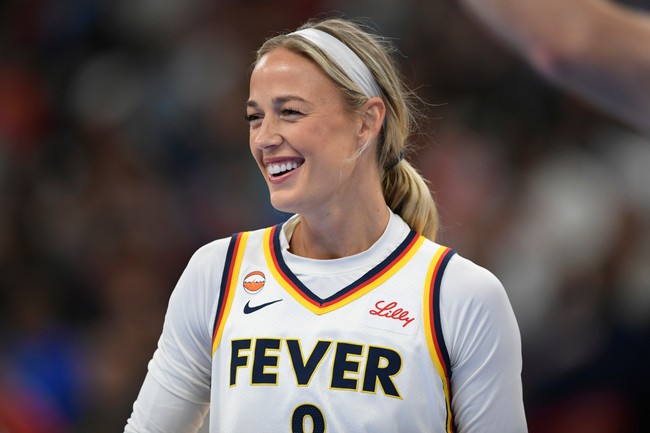
Sophie Cunningham turned a postgame night out into a viral, unapologetically patriotic moment that drove her critics crazy and delighted her supporters, highlighting how a pro-American stance and insistence on fair play for female athletes keeps her unapologetic and in the spotlight. The Indiana Fever guard celebrated a hot streak with teammates, joined fans at a local honky-tonk, and belted out “Courtesy of the Red, White & Blue” while embracing the crowd, even as she continues to take heat for defending girls’ sports. The scene underscores both the cultural clash around sports and identity and Sophie’s refusal to be silenced by loud opponents and cancel-culture pressure. This piece follows that viral night, the backlash Sophie has faced, and the way she keeps playing and living on her own terms.
Sophie Cunningham has become more than a WNBA player for a chunk of the country; she’s a symbol of standing up for fair competition and traditional values in sport. After the Fever beat the Dallas Wings 98–87, she celebrated with teammates and then headed to a local bar where the mood was relaxed, folksy, and patriotic. That setting was perfect for a player who has been outspoken about protecting girls’ sports and who simply wants to live and enjoy herself without being politicized at every turn. The crowd’s reaction showed most patrons were there to have fun, not to stage a culture war.
At the bar, someone with a microphone announced, “Ladies and gentleman, my friend, America’s sweetheart – Sophie Cunningham!” and the room erupted. The opening chords of Toby Keith’s “Courtesy of the Red, White & Blue” started up and Sophie joined in, singing openly and proudly as people cheered. It was the kind of small-town, Americana moment that national media love to either mock or weaponize, depending on which side of the culture war they’re on. For many, it was refreshingly normal to see a pro athlete unafraid to show pride in her country.
There’s a larger story attached to that night out: Sophie has been targeted since she spoke plain truths about girls’ sports and who should compete in them. “I think we need to protect young girls,” she told ESPN, and followed up plainly: “They shouldn’t have to go against biological men.” Those lines aren’t complicated, and they resonate with lots of parents who simply want fair play in school and community athletics. Instead of engaging on the issue, too many critics choose theatrics and insults at games.
Because Sophie spoke up, she’s been met with rude signs and vocal heckling at arenas, and some on and off the court treatments have gone beyond polite disagreement. On the floor, tensions have flared: an opposing player was assessed a Flagrant 2 and ejected after a hit that left Sophie vulnerable during a layup. Off the floor, athletes who push back against her views sometimes try to frame her stance as hateful rather than a call for fairness. That tendency to conflate policy positions with personal malice is part of the toxic environment Sophie refuses to buy into.
Sophie has answered this pressure the way a lot of conservatives would applaud: by living her life and sticking to her principles. She says she’s never once said that she hates transgender people, and she’s made clear that her aim is to protect opportunities for girls. Critics who want to reduce the debate to personal attacks miss the point: this is about organized sports, safety, and equitable competition for young women. Her willingness to say it out loud is why she’s become a focal point for both admiration and scorn.
The viral singalong night was an emphatic reminder that political heat won’t erase someone’s personality or patriotism. Sophie looked at ease on a bar stool, smiling and singing along with fans who wanted to celebrate a winning streak and a hometown moment. Watching her enjoy a simple slice of life drove some opponents into fits of outrage, as if the ability to enjoy the country while holding conservative views is a provocation. For many viewers, that reaction says more about the critics than it does about her.
Backlash on social media and at games is noisy, but it’s not stopping her from playing her game and living publicly. She’s continued to help the Fever win, and those wins have been accompanied by growing crowds and attention from people who appreciate her candor. The theatrical protests and angry signage make headlines, but they don’t change the fact that parents and fans are listening to reasonable arguments about fairness in girls’ sports. Sophie’s staying power comes from a mix of talent, plain speaking, and a refusal to be shamed into silence.
https://x.com/DailyCaller/status/2088771865288249506
Sophie Cunningham’s barroom moment is more than a viral video; it’s a snapshot of a cultural divide where patriotism, sports, and free speech collide. She’s choosing to be visible, to speak her mind, and to accept the consequences, good or bad, that come with that choice. Whatever one thinks of the debate, it’s clear Sophie isn’t going to play a quiet role while others try to define her for her. She’ll keep scoring on the court and singing off it, unapologetically and loudly.

Add comment