
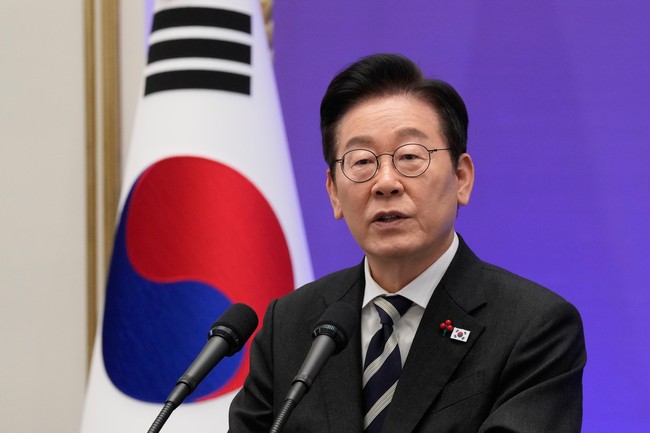
South Korea’s president has proposed formal talks to end the Korean War while massive anti-communism rallies filled the streets, spotlighting a generational clash over security, alliances, and how to handle North Korea’s nuclear threat.
Young conservatives in South Korea poured into the streets on Liberation Day to denounce communist influence and to show strong support for the U.S. alliance. The crowd waved South Korean and American flags and made clear they worry any naive peace deal could cost them their security. Their turnout reflects a generation shaped by the threat from the North and skeptical of progressive approaches that might weaken deterrence.
On the other side, President Lee Jae Myung urged talks to formally end the 1950-53 Korean War and proposed mechanisms to manage tensions with Pyongyang. He framed the push as pragmatic, arguing that formal dialogue could include measures to curb the North’s nuclear capabilities and reduce the risk of sudden escalation. Conservatives fear that a premature peace arrangement could pave the way for U.S. troop reductions and leave South Korea more exposed to coercion or outright aggression.
Lee delivered his call during Liberation Day remarks, advocating coexistence and a diplomatic pathway to a formal end to hostilities. He also emphasized layered safeguards and preemptive steps to ease tensions while seeking to address North Korea’s nuclear program. For many on the right, however, talk of coexistence without ironclad guarantees and continued American presence sounds dangerously optimistic.
In a speech marking the anniversary of Korea’s liberation from Japanese colonial rule, Lee said the two Koreas should hold a sit-down for coexistence.
https://x.com/KoreansWithIL/status/2088693592844120470
He urged dialogue between North Korea and concerned parties to end the 1950-53 Korean War, which was stopped by a ceasefire, not a peace treaty, and said discussions could also explore effective measures to curb Pyongyang’s nuclear capabilities.Lee said Seoul would take preemptive and sustained steps to ease tensions and build layered safeguards to contain escalation.
North Korea has not accepted Lee’s invitation, and it still officially regards the South as an enemy state, which makes any near-term breakthrough unlikely. Past efforts at dialogue have repeatedly failed to produce lasting constraints on Pyongyang’s weapons programs or stable security arrangements. That history feeds the right’s skepticism and keeps a hawkish view politically potent in Seoul.
Polling shows a majority of young men leaned conservative in the last presidential vote, reflecting anxiety about security and distrust of progressive overtures toward the North. That demographic shift has real political punch and has driven street-level mobilization against anything perceived as soft on communism. The demonstrations were part patriotic, part strategic pushback: a warning that South Koreans who remember or study the North’s brutality will not risk their hard-earned freedoms for an uncertain deal.
Conservatives argue a peace treaty without concrete, verifiable steps on denuclearization and a continued U.S. deterrent presence could be a trap. They point out that the Korean War ended in a ceasefire, not a treaty, precisely because the balance of power and commitments from allies mattered. Removing those anchors could invite coercion or worse, so many insist any diplomacy must be hard-headed and staged, not sentimental.
Meanwhile, Left-leaning leaders claim engagement and formal talks are the only way to manage escalation and reduce the risk of miscalculation that could spiral into conflict. That sounds reasonable in theory, but history shows Pyongyang has used negotiations to buy time and exploit divisions among rivals. Real security gains demand more than speeches; they require enforceable verification and sustained allied cooperation.
The American alliance remains central to South Korea’s security calculus and to the concerns voiced by those protesting on the streets. For Republicans who favor “peace through strength,” the lesson is straightforward: diplomacy must be backed by credible military posture and clear red lines. Compromise is possible, but only when it protects citizens and preserves deterrence against a nuclear-armed regime.
Public demonstrations and political divisions in Seoul make clear that any move toward a formal peace will be met with intense scrutiny and resistance unless it convincingly improves security. South Korea’s domestic politics now play into strategic calculations across the region, and Washington should pay attention to the popular mood. In short, proposals to end the war deserve careful study, but not at the expense of deterrence or the safety of allies.
Editor’s Note: Thanks to President Trump and his administration’s bold leadership, we are respected on the world stage, and our enemies are being put on notice.
Help us continue to report on the administration’s peace through strength foreign policy and its successes. Join RedState VIP and use promo code FIGHT to receive 60% off your membership.

Home-based job that pays more than 12,000 Dollar per month by doing simple tasks on a laptop or mobile device part-time. Last month, I earned 24,863 Dollar from this job by working 4 hours per day online. Very simple jobs to do, and the earnings are insane. Everyone can now make more money online by joining the website listed below…..
𝒋𝒖𝒔𝒕 𝒖𝒔𝒊𝒏𝒈 𝒕𝒉𝒊𝒔 𝒔𝒊𝒕𝒆.. Www.PayAtHome1.Com
Antichrist Atheist Communists serve Satan, and it is ridiculous for anyone to even think peace between the North and South is imaginable let alone within the realm of reality!