
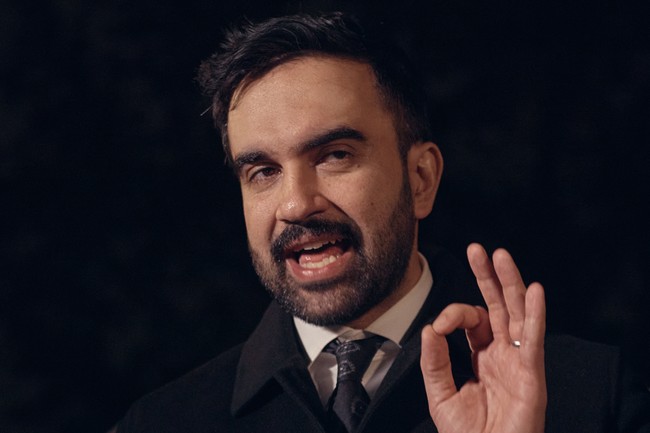
The attack on National Guard personnel in Washington left a soldier dead and another fighting for life, and the mayor-elect Zohran Mamdani’s brief X post about the fallen Guard member drew sharp criticism for what it omitted; this article recounts the events, the responses, and why many felt his message missed essential details.
Mamdani’s Spin on Guard Shooting Skips Big Facts, Gets Blasted
The news that Specialist Sarah Beckstrom was mortally wounded and later died on Thanksgiving hit hard across the country. She was just 20 years old and had volunteered to work the day before Thanksgiving so fellow Guardsmen could be home with family. The other Guard member, Staff Sgt. Andrew Wolfe, remained in critical condition and fighting to survive after the same attack.
President Donald Trump publicly condemned the assault and announced Beckstrom’s death, calling her “outstanding in every way,” and he spoke with her devastated family. Law enforcement described the incident as an ambush, said an Afghan national allegedly shouted “Allahu Akbar” during the attack, and are investigating it as a possible act of terrorism. Those details were widely reported and formed the backdrop to the immediate national reaction.
Many people noticed that Zohran Mamdani, the mayor-elect of New York City, posted an X comment that avoided those specifics. His post read: “I’m devastated to learn of the passing of Specialist Sarah Beckstrom, a member of the West Virginia National Guard. She was only twenty years old. As families across the nation come together today to celebrate Thanksgiving, let us take a moment to think of those in West Virginia who have been plunged into unimaginable grief.”
The blockquote above is verbatim from his X post, and critics pointed out what it did not say. It did not mention that Beckstrom was allegedly killed or murdered, it did not reference the claim that an Afghan national shouted “Allahu Akbar,” it did not note that police were treating the incident as an ambush or possible terrorism, and it did not acknowledge Staff Sgt. Andrew Wolfe. Those omissions struck many as a significant failure to acknowledge the nature and context of the attack.
Observers asked why a public figure, especially one stepping into the highest office of New York City, would issue a condolence that left out what many saw as central facts. Some suggested the omission looked like a conscious effort to avoid naming a possible motive or suspect identity. Others said it read like a sanitized, politically careful statement that downplayed the violent and possibly terror-related nature of the incident.
I could not find other X comments from Mamdani addressing the attack directly, so his short post appeared to be the main public response from him at the time. The timing drew attention: a transition team tweet surfaced the day before Thanksgiving and then his brief condolence on the day of the tragedy, which many people then compared and criticized. That transition tweet also went viral and invited additional scrutiny of his public messaging.
Social media lit up with critique, and one viral reply highlighted a previous controversial remark linked to Mamdani about his “aunt” and post-9/11 experiences. Critics connected the dots, suggesting a pattern where Mamdani had missed or downplayed broader public concerns in prior comments and now again seemed to miss the full picture. The viral replies and threads amplified outrage and intensified calls for clearer, more direct statements from him.
Other posts and embeds further stoked the conversation, as commentators noted how a public official’s choice of words matters when a service member is killed and another remains gravely wounded. For many, leadership demands naming uncomfortable truths, not softening them. The absence of explicit terms like “killed” or “terrorism” in that short message made the response look incomplete at best and evasive at worst.
The reaction underlines a wider media and public expectation: when an attack seems politically charged or possibly terror-related, officials are expected to acknowledge the facts being investigated and to offer a full-eyed condemnation. Failing to mention the alleged attacker, the reported words shouted during the assault, or the ongoing investigation left a vacuum that others quickly filled with criticism and speculation. That fallout now follows Mamdani as he prepares to assume the mayoralty in a city still processing the violence and its implications.
For those following the story, the tragedy of a young life lost and a comrade fighting for survival remains the central fact, and the debate over public statements is a separate but closely related issue. How officials address such incidents tells the public what they prioritize and how they will lead in moments of crisis. In this case, many argued, the omission spoke louder than the words offered.

Add comment