
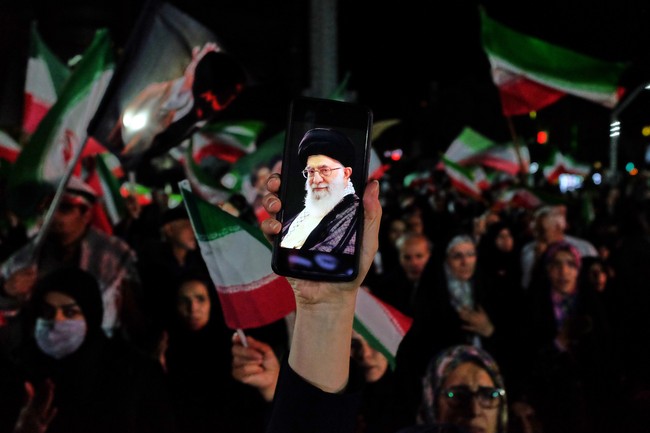
The Trump administration says a deal with Iran is “largely negotiated,” but recent rhetoric from Tehran — invoking wartime sacrifice and resistance — has raised doubts and hardened instincts in Washington. This article examines Iran’s symbolic rhetoric, the stakes President Trump has set, how references to Khorramshahr matter politically, and what a Republican perspective expects from a final agreement.
I start by laying out why symbolism matters in Tehran’s messaging and how that affects negotiations. Next, I look at President Trump’s clear red line on Iran’s nuclear capability and why that shapes bargaining power. Then I compare historical references Tehran uses to the present military and diplomatic context. Finally, I explain why a firm stance and insistence on verifiable terms best protects American interests.
Tehran’s leadership has invoked the liberation of Khorramshahr, a potent national memory from the Iran-Iraq War, to frame current talks as a test of resistance. That reference is heavy with meaning inside Iran: it celebrates civilian sacrifice and national defiance. From a Republican view, rhetorical toughness is expected from an adversary, but it should not derail firm requirements in any deal.
President Trump has said a deal is “largely negotiated” but warned the United States will sign “a great and meaningful” agreement or walk away entirely. The core American demand remains clear: no nuclear capability for Iran. Republicans insist that any agreement must eliminate pathways to nuclear weapons, not merely delay them, and must include robust verification and enforcement mechanisms.
President Masoud Pezeshkian invoked one of Iran’s strongest wartime symbols on May 24, signaling Tehran’s resolve to hold its ground against the U.S. and Israel across the region, a counterterrorism expert said.
The Iranian leader’s remarks came at a key moment in diplomacy, as President Donald Trump said a deal with Tehran to end the war is “largely negotiated” and warned the U.S. would either sign “a great and meaningful” agreement or walk away entirely.
While Iran signaled broad agreement with Washington on some points, it said a final deal is not imminent and that negotiations over the remaining details are still underway.
That kind of saber-rattling fits a pattern: Tehran uses wartime imagery to strengthen domestic resolve and to extract concessions abroad. In negotiations, symbolism can be leverage, but it cannot replace concrete concessions. Republicans pushing for a strong, verifiable outcome will view such language as bargaining positioning, not final terms.
In an marking the anniversary of the 1982 recapture of Khorramshahr from Iraqi forces during the Iran-Iraq War, Pezeshkian said, “Khorramshahr today is Iran, the Persian Gulf, and the Strait of Hormuz,” adding that “resistance, self-sacrifice, and repelling aggression are rooted in the culture of this land.”
Analysts claimed Pezeshkian was deliberately invoking one of the deepest ideological touchstones of the Islamic Republic — the battle that came to symbolize national resistance, civilian sacrifice and defiance against invasion.
“This is the Iran-Iraq War reference, and the timing is the point,” said Dr. Omar Mohammed, director of the Antisemitism Research Initiative Program on Extremism at George Washington University.
May 24 marks the anniversary of the 1982 liberation of Khorramshahr, the southwestern city Saddam Hussein captured early in the war and Iranian forces retook after months of brutal urban combat.
Invoking Khorramshahr is a deliberate choice by Tehran to remind its population of unity and resistance. For U.S. negotiators, that means they should expect hardline signals while talks continue. It also means Republicans will demand that words are not mistaken for concessions; instead, enforceable, verifiable commitments must be central to any final document.
American political instincts favor clear outcomes: stop the nuclear threat, sanction violent proxies, and secure freedom of navigation in the Persian Gulf. President Trump’s core stance — no nuclear capability — aligns with this instinct. Republicans are wary of deals that only buy time or leave inspectors with limited access.
History shows that ambiguous terms or weak verification allow adversaries to create bad options later. The Iran-Iraq War memory Tehran evokes is about endurance and rebuilding, not about surrendering military or strategic objectives. That is why Republican negotiators emphasize snapback sanctions, intrusive inspections, and irreversible steps away from enrichment pathways.
Tehran’s rhetoric also plays to regional audiences, signaling support for allied militias and posturing against Israel. For Republicans, protecting allies and maintaining deterrence are non-negotiable. Any agreement must therefore address regional aggression, not only nuclear restrictions, so that a pause in one threat does not enable another.
Diplomacy can work when backed by credible force and unwavering verification. The American public deserves an agreement that ends the nuclear threat and prevents Iran from returning to breakout capability. From a Republican perspective, that means walk-away leverage must be credible and used if Iran’s concessions are cosmetic.
Iran talking tough is nothing new, but rhetoric should not blind negotiators to reality: only verifiable, enforceable, and irreversible limitations on nuclear capability will protect American security. Time will tell whether this “largely negotiated” deal meets that test, and Republicans will press for measures that guarantee long-term safety and accountability.
President Trump has cautioned not to rush to judgment, and that is sensible advice while details remain private. Still, a final agreement must meet the strict standard set by American national security needs: zero nuclear capability, ironclad verification, and clear consequences for cheating. Republicans insist on those basics because anything less is a future threat in disguise.

Add comment