

This article examines Texas’ recent DMV requirement for photo ID when buying or registering vehicles, the role Rep. Brian Harrison played in exposing title fraud, the reactions from critics and advocates, and why state enforcement is being framed as a practical response to federal inaction rather than a punitive move against families.
Texas tightened its rules so that, beginning Nov. 18, anyone buying, registering, or renewing a vehicle must show a valid photo ID proving legal status: a Texas driver’s license, U.S. passport, or a similar federal document. The change is straightforward and aimed at closing loopholes that allowed some people to title cars without verifying lawful presence. Lawmakers and officials argue this will reduce fraud and make insurance costs fairer for law-abiding Texans.
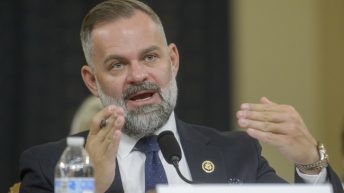
Rep. Brian Harrison brought attention to the issue after a tip suggested undocumented people were obtaining vehicle titles without proper ID, inflating insurance rates and increasing risk on the roads. Harrison pressed the DMV and Governor Greg Abbott’s office, saying enforcement of existing rules was needed to protect consumers and maintain order. His action reflects a wider view that government should stop tolerating simple abuses of processes meant to ensure safety and accountability.
In Texas, vehicles are central to daily life, and the state sees a steady flow of cars crossing the border, sometimes shipped out of the country. The concern is that titles issued with minimal verification let owners hide liabilities and skip insurance, leaving everyone else to cover the costs after accidents. Fixing title issuance is not glamorous, but for policymakers focused on outcomes, it is a practical lever to reduce fraud and unintended expense shifts.
Critics have raised sympathetic scenarios: a family stranded because a caretaker lacks updated papers, or asylum seekers and former DACA recipients who worked and paid taxes but now face expired credentials. Those are real human situations, and they press for solutions that balance compassion and enforcement. Still, calling enforcement “malice” ignores the consequences of lax rules on the broader community that must shoulder higher premiums and greater risk.
Insurance data cited in debates point to a roughly 10 percent rise in premiums over five years, a climb officials link in part to uninsured drivers and title fraud. When drivers without proper documentation are involved in crashes, hospitals and taxpayers often cover unpaid bills, and insurers raise rates for everyone. For many Texans, that cumulative burden is what prompted interest in closing gaps that let problem cases slip through the system.
The policy proponents frame this as parity: those here legally should not subsidize privileges for those who do not follow the same rules. This is a federalism argument — when Washington fails to enforce certain border and immigration controls, states must act where they can to protect their residents. Austin’s move on vehicle titles is being described as a modest, targeted step to protect consumers and public safety without broad deportation or sweeps.
Opposition groups warn that stricter ID checks will push vehicles off the road and create a class of unregistered, uninsured “ghost cars,” which could make streets less safe, not more. That criticism highlights trade-offs worth debating, but it does not erase the fact that unchecked fraud transfers costs and risks onto ordinary citizens. The question for policymakers is how to prevent abuse while minimizing harm to vulnerable people who legitimately need mobility to work and live.
The debate also exposes a political split: some advocates prioritize immediate relief and accommodations for people in precarious status, while others prioritize rule enforcement and fiscal fairness. Those pushing for enforcement argue that laxity becomes the new normal and that signals from government matter. As Rep. Harrison put it, “Outrage at the old way, action on the new.”
Practical steps could include clearer guidance, temporary accommodations for people transitioning documents, and coordinated outreach so residents understand the new ID requirements before being penalized. Proponents insist the point is not to strand families but to enforce long-standing rules that keep registration and insurance systems honest. The move is being sold as a housekeeping measure that has real effects on insurance markets and public safety.
Ultimately, this is a policy pitched as common-sense enforcement in a state where cars are essential and government inaction at the federal level leaves local leaders to solve immediate problems. The change is small on paper but intended to produce measurable benefits: fewer fraudulently titled cars, lower costs for compliant drivers, and a clearer responsibility chain after crashes. Whether it achieves those outcomes will depend on implementation and whether complementary policies soften unintended consequences for vulnerable residents.


Add comment