
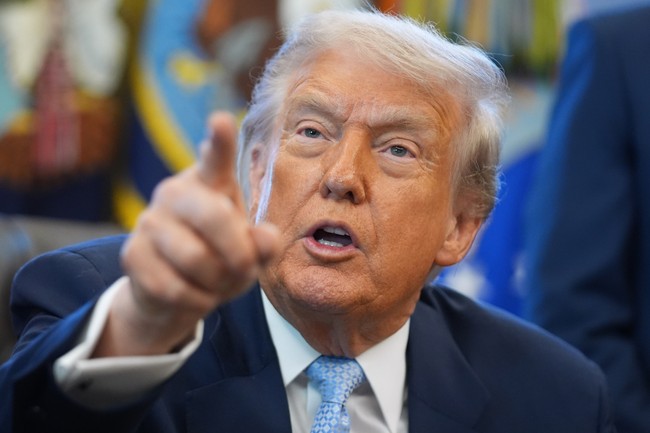
I’ll summarize the moment President Trump confronted reporters about an Afghan suspect and his call with service members, note the tragic death of National Guard member Sarah Beckstrom, describe the re-vetting directive for Afghans admitted after 2021, include Trump’s comments on stopping Venezuelan drug traffickers, and keep the key on-record quotes and embeds intact.
President Trump used a Thanksgiving call at Mar-a-Lago to check in with U.S. service members and to deliver blunt commentary on recent security failures. He spoke directly about the sacrifices troops make and then shifted to hard realities tied to domestic safety and border security. The tone was straightforward, aimed at accountability rather than platitudes, and he did not soften his stance when confronted by reporters. That directness matters to voters who want clear responses after violent incidents in the capital.
During the call, Trump relayed devastating news about one of the National Guard members wounded in the Washington, D.C., attack. “She’s just passed away. She’s no longer with us,” he stated. “She’s looking down at us right now. Her parents are with her.” Those lines landed like a gut punch and made the stakes painfully real for everyone listening.
The president pushed back at reporters who attempted to pivot the conversation away from accountability for how dangerous individuals entered and moved through the country. He repeatedly emphasized that Afghans who arrived under the Biden administration’s evacuation and resettlement efforts need to be re-examined with more scrutiny. Trump made it clear he expects policy to reflect consequences and a tightened vetting process for anyone admitted in that window.
When questions focused on the suspect in the D.C. attack, a 29-year-old Afghan national named Rahmanullah Lakanwal, Trump answered with impatience toward the predictable media framing. He emphasized that labels and identity politics should not obscure the simple need for rigorous screening and enforcement. For many Americans, the incident confirmed concerns about the thoroughness of vetting and the consequences of lax oversight.
There are practical policy elements in play beyond rhetoric. Trump outlined plans to revisit and re-vet those who entered after the 2021 withdrawal, framing that effort as a necessary security step. It’s a message aimed at restoring confidence that the government will prioritize public safety over political optics. Those who favor stronger border and immigration controls see this as a logical corrective after chaotic evacuations and disorganized resettlement programs.
He also used the moment to preview forthcoming action against international narco-trafficking routes. Trump said the U.S. will expand operations beyond maritime interdiction to include land-based efforts against Venezuelan drug networks. Those remarks signal a broader law enforcement posture that blends military, intelligence, and interdiction assets to choke off supply chains at multiple points.
The president told service members, in part, “You probably noticed that people aren’t wanting to be delivering by sea, and we’ll be starting to stop them by land also. The land is easier, but that’s going to start very soon.” That statement outlines a shift toward multi-domain enforcement and reflects an appetite for tangible results rather than promises. It’s a practical, tactical pivot intended to make interdiction more effective where smugglers are adapting their routes.
Beyond policy, Trump’s exchange with the press was performative in the sense that it showcased his no-nonsense approach when dealing with national security issues. He did not defer to political correctness or to media narratives that might downplay operational failures. Instead, he pressed the point that accountability matters and that officials must act to prevent further harm to American citizens and service members.
The interplay of grief, accountability, and policy planning was on full display during the call. The president’s blunt delivery and specific commitments to re-vetting and expanded anti-drug operations were intended to reassure troops and the public that steps will be taken. His message was aimed squarely at those who feel safety and sovereignty should be restored through decisive action rather than equivocation.
Here are clips of some of the event, including some of the back and forths:
Trump also revealed more information about future Venezuela plans. He described a near-term shift to halt suspected traffickers on land as well as at sea and framed the change as coming soon. That element of the address underscores a broader enforcement push tied to drug interdiction and regional security cooperation.
Watch:
Add comment