
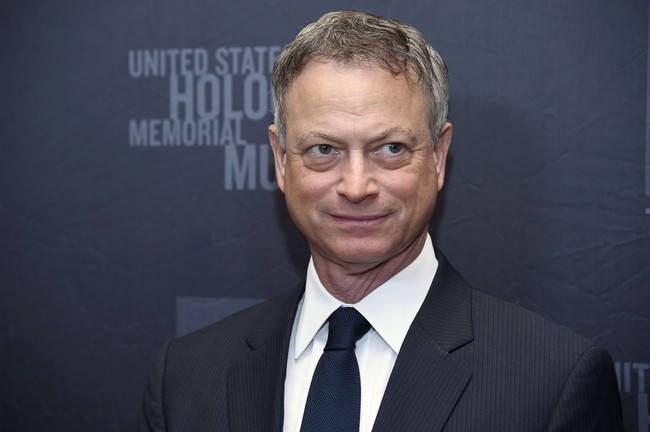
Gary Sinise stepped away from Hollywood and left California to focus on family, sharpen his nonprofit’s mission, and protect resources he’d earned for his loved ones and veterans. This article traces his shift from actor to full-time advocate, his reasons for relocating, the personal trials that drove the choice, and how the Gary Sinise Foundation continues to serve service members and first responders.
Gary Sinise is best known to many as Lieutenant Dan from Forrest Gump, but his life has long blended art and service. A Chicago native and founding member of Steppenwolf Theater, he built a career on stage and screen before channeling his fame into concrete support for those who serve. His foundation, started in 2011, is central to that work, focused on honoring veterans, first responders, wounded heroes, and families of the fallen.
It was an honor to spend time with our nation’s heroes at Walter Reed this week during a Serving Heroes event. Taking a moment to share a meal, a conversation, and some gratitude is a small way to say thank you for all they have sacrificed in service to our country.
I’m always inspired when I visit and humbled by the strength, resilience, and spirit of those recovering. I’m grateful for the opportunity to spend time with them and their families.
Sinise stepped away from acting in 2019 to become a caregiver and advocate during his son Mac’s battle with chordoma, an aggressive spinal cancer that dominated their lives for years. That choice allowed him to expand the Gary Sinise Foundation’s reach and to be present for family during the hardest seasons. He had the financial cushion to remain in California, but he weighed whether staying made sense for his future and the continuity of his foundation’s mission.
In an exclusive interview with Fox News Digital, the Golden Globe Award-winning actor — whose Gary Sinise Foundation gifted an injured U.S. Army veteran a car in partnership with Wells Fargo during America’s Ball for The Mall event earlier this month — opened up about his decision to leave California during an unimaginable time in his life.
“When I stepped away from acting in 2019… I had made some money. I had some investments going,” said Sinise, whose son, Mac, had been diagnosed with a rare form of cancer in 2018 and died in 2024. “Mac fought for the next four or five years, and I was his battle buddy and just fighting with him. And my wife had a lot of challenges and everything. My dad had had a stroke and died in 2021. My mom was aging and falling apart. I mean, they needed me and that was important.”
His decision to leave California reflected practical and moral considerations. Sinise noted living expenses, tax burdens, and high gas prices as concrete drains on resources that could otherwise support family and charitable work. Moving to Nashville allowed him to reduce overhead and direct more funds toward the foundation’s long-term commitments to veterans and first responders.
“I started to think, ‘Well, what happens if I don’t go back to work? Do I want to spend all the money here in California paying these big prices for gas and property taxes and all the different things?’ The house we had was a house that was very good for our family because it was big enough… We could provide shelter for a lot of the family members that may have been struggling at the time, but we weren’t in need of that anymore,” he continued.
Sinise — who is famous for his role as Lt. Dan in “Forrest Gump” — said he and his family weighed their options and ultimately made the decision to pack up and move to Nashville, Tenn., a place he had familiarized himself with over the years.
“I really started zeroing in on the lifestyle here,” the 71-year-old actor said. “There’s a gas station where I was getting gas for $2.59 a gallon. And then I visited California, you know, and they’re up at like, you know, $5.79 a gallon. So they’re a full $3 more a gallon for gas in California. I don’t understand it.”
From a Republican perspective, Sinise’s move underscores how policy and taxation shape real choices for families and nonprofits. When hard-earned savings are drained by high taxes and regulatory costs, charities and households feel the squeeze. Sinise’s choice to conserve capital and preserve an inheritance for his kids mirrors what many families consider when deciding where to live and how to protect their future.
Sinise has been candid about preferring to invest in people rather than pay higher state levies, saying he’d rather pass wealth to his children than hand it over to state coffers. That belief informed a broader decision to base operations where they make the most impact, while ensuring the Gary Sinise Foundation can sustain long-term commitments to veterans.
“They’ve got a lot of resources in California and I just don’t know what they’re doing,” he continued. “I like the gas prices [here]. I like the no tax state. I like saving a bit more money. If I was still in California and not working, that money would be moving a lot faster out the door than it is right now. So I wanted to save money and prepare for the future. I don’t want to give it all to California and property taxes. I’d rather give it to my kids later on.”
Stepping away from the camera gave Sinise room to be a caregiver, to refocus priorities, and to expand nonprofit programs that offer tangible help to wounded warriors and their families. He has insisted the foundation is not a one-time drop-in operation; families who enter the program become part of a long-term support network. That sustained model matters because recovery and reintegration take years, not a headline-friendly moment.
“Once folks come into our program at the Gary Sinise Foundation, they’re just, they’re part of our family,” said Sinise. “And if they need ongoing support, we want to be there for them.”
“When I started my foundation 15 years ago now, it was with the hope that I could build something that would be lasting and be around for a long time, helping a lot of people out. So we don’t just bring somebody into the program, do one thing for them, and then we never see them again. They’re kind of part of the fabric of the Gary Sinise Foundation, and we want to be there in times of need.”
Beyond the foundation, Sinise keeps his son Mac’s musical legacy alive and performs with the Lt. Dan Band, channeling grief into purpose. Proceeds from Mac’s music continue to support the foundation, reflecting a family vow to convert personal loss into lasting service for others. That dual commitment—to family and to country—drives Sinise’s work and explains why he chose a quieter, more practical life outside California’s taxing grasp.

Add comment