
This article examines Dr. Anthony Fauci’s refusal to appear before another Senate panel, the political theater surrounding his July hearing, and new reporting about his post-nih consulting ties and potential financial benefits tied to a roughly $44 million NIH-funded program.
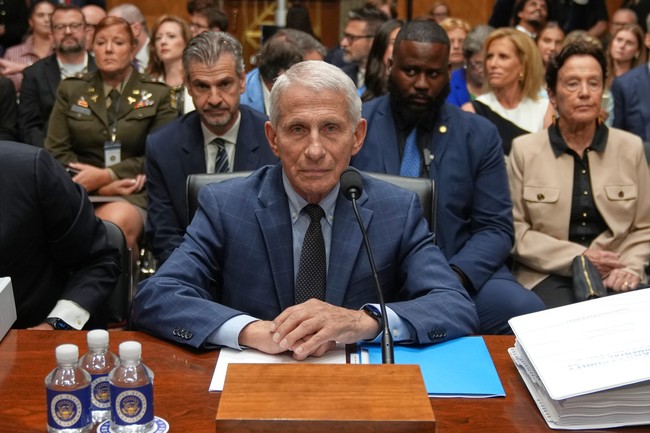
The recent July hearing with Dr. Anthony Fauci felt like a circus to many Republicans who expected accountability. He answered with deflection and then invoked the Fifth amendment over a hundred times, leaving GOP members and voters frustrated. Conservatives see that as emblematic of a broader problem: officials avoiding real consequences while maintaining public platforms.
Sen. Rand Paul and other Republicans pushed hard after that hearing, moving to recommend Fauci for contempt, and the debate quickly turned into partisan theater. Critics argue the Senate’s actions have been more about headlines than enforcement, which is why many doubt Fauci will ever face legal repercussions. From a Republican perspective, that lack of follow-through only deepens distrust in institutions charged with oversight.
Shortly after the hearing, Fauci declined a voluntary invitation to testify before Sen. Ron Johnson’s subcommittee, prompting an attorney response that framed any second appearance as harassment. That response claimed a second compelled session would “impermissibly harass or degrade Dr. Fauci for political purposes.” For conservatives, the legal posture feels like a shield used to avoid answering hard questions about pandemic policy and research oversight.
Dr. Anthony Fauci on Friday declined a request to voluntarily appear before a second Senate panel, opening another front in Republicans’ investigations into the former public health official’s handling of the COVID-19 pandemic.
An attorney for Fauci rejected the request from Sen. Ron Johnson, R-Wis., chairman of the Senate Permanent Subcommittee on Investigations, arguing that compelling Fauci to testify again after his contentious July 29 Senate hearing would “impermissibly harass or degrade Dr. Fauci for political purposes.”
Johnson has been conducting a parallel investigation into Fauci and the federal government’s response to COVID-19, including the safety and efficacy of COVID-19 vaccines.
Beyond avoiding another Senate appearance, Fauci’s post-government moves have political and ethical implications. Recent reporting ties him to an Italian biomedical center where he holds an informal consulting role, and that institute later became part of a project receiving about $44 million in funding connected to NIAID. Republicans see this as a textbook example of revolving-door influence that demands scrutiny.
The pattern is familiar: long tenure in powerful grant-making roles followed by lucrative affiliations that seem to benefit from prior relationships. Critics say this undercuts public trust because taxpayer dollars can end up enriching networks rather than advancing independent science. From a conservative standpoint, oversight must include tracking how public funds flow and ensuring conflicts of interest are exposed and addressed.
Another report mapped how an associate of Fauci’s became a principal investigator on a sizable NIAID-funded vaccine and antibody program, and the Italian institute was listed as a participating institution. Records reportedly show lab purchases tied to the NIH project, raising clear questions about procurement, transparency, and whether U.S. grant money indirectly subsidized private or foreign interests. Those are exactly the sorts of issues Republicans pushed to investigate.
Fauci spent nearly four decades controlling NIAID, one of the most powerful infectious-disease funding agencies on the planet.
Within months of leaving that post, he attached himself to a foreign-government-backed pandemic center led by a longtime scientific associate.
That associate subsequently became one of the principal investigators on a $44 million NIAID-funded vaccine and antibody program.
His Italian institute became an official participating institution.
And its own records now show laboratory purchases tied directly to an NIH ReVAMPP project.
Conservatives argue this story underscores the need for stronger post-employment restrictions for senior officials who controlled grant decisions. When former agency heads can so easily plug into projects that later benefit from funds they once helped allocate, it creates perceptions of pay-to-play and insider advantage. That perception damages the credibility of public science and the agencies that fund it.
There’s also a political element: many citizens feel their representatives talk tough but lack the will to pursue enforceable results. If Senates and committees cannot translate investigations into accountability, voters will understandably lose faith in oversight. Republicans contend that transparency, subpoenas when warranted, and clear rules on conflicts are minimal steps to restore public confidence.
The Fauci episode has become a rallying cry for those who distrust pandemic-era decision-making and the institutions that enabled it. Holding officials accountable, examining funding flows, and tightening post-service ethics rules are central conservative demands. Without those changes, the same doubts about influence, funding, and immunity will keep haunting public health policy debates.

Home-based job that pays more than 12,000 Dollar per month by doing simple tasks on a laptop or mobile device part-time. Last month, I earned 24,863 Dollar from this job by working 4 hours per day online. Very simple jobs to do, and the earnings are insane. Everyone can now make more money online by joining the website listed below…..
𝒋𝒖𝒔𝒕 𝒖𝒔𝒊𝒏𝒈 𝒕𝒉𝒊𝒔 𝒔𝒊𝒕𝒆.. Www.PayAtHome1.Com
Fauci REFUSES!!! LOCK his useless evil ass up in GITMO for crimes against humanity SEDITION and TREASON!!!
What the hell has this country come to where these low-life dirt-bags get to call the shots and are above the Law and Everything they decide!
If there was anymore justice in America this useless garbage would have been tried and executed by a Military Tribunal and Firing Squad already!
Fauci all the human death and destruction you caused will not go unpunished and God Almighty is going to mete out yours in due time!