
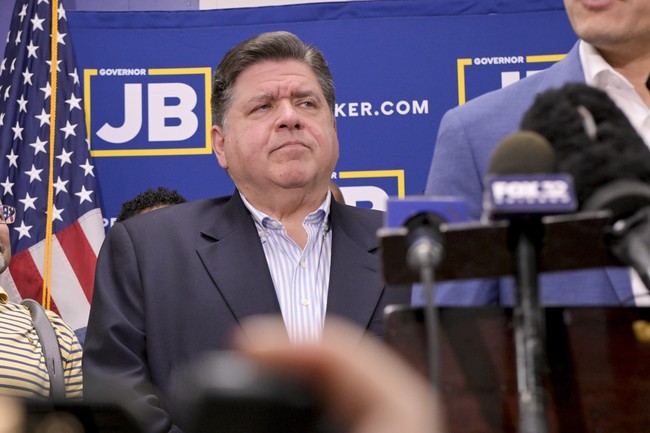
I’ll cut to the chase: Illinois Gov. JB Pritzker is positioning himself as a national liberal foil by taking aim at ICE and Trump, leaning into progressive media appearances, and polishing a narrative of statewide resistance — all while Illinois grapples with higher taxes, rising crime, and population loss under his watch.
Pritzker sat for an interview with a friendly outlet and used it as a platform to recast himself as a national leader. He’s following the same playbook some other Democrats use: portray federal officials as villains, highlight symbolic actions, and pitch those moves as proof of leadership. The problem for voters is that rhetoric does not erase the tangible results that people see at home.
Under Pritzker, Illinois has seen fiscal shifts that are hard to ignore. The state is taking $1,434 more in taxes from each resident than before he took office, and the fiscal year 2025 budget took $717 million more than originally planned. Compared to his first year in 2019, the state is taking $18 billion more from taxpayers, or 51% — nearly double inflation, and those numbers matter to working families and small businesses.
Instead of owning those outcomes, Pritzker deflects by attacking federal immigration enforcement and aligning with anti-Trump themes. He’s signed laws aimed at limiting ICE operations, set up oversight panels, sued the federal government, and blocked the deployment of federalized National Guard troops in Chicago. Those moves are headline-grabbing and play well with a national progressive audience, but they don’t directly solve crime, budget deficits, or the exodus of residents.
Is Illinois better or worse since he took office? Here’s a Pritzker report card.
Illinois is taking $1,434 more in taxes from each resident than before Gov. J.B. Pritzker took office, yet the tax hikes keep coming.
The fiscal year 2025 budget took $717 million more than originally planned, that’s more than an extra $55 for every resident.
Compared to Pritzker’s first year in 2019, the state is taking $18 billion more from taxpayers, or 51% – nearly double inflation.
His anti-ICE stance is presented as a moral crusade. In the interview, he accused federal agents of racially profiling and turning enforcement into a kind of secret police. Those are strong words intended to mobilize the party base and draw national attention, but they’re also a political bet: that outrage can cover for poor governance at the state level.
The tangible difference is ICE and CBP today under Donald Trump are stopping US citizens who are Black and brown and demanding to see citizenship papers. Now, I don’t know about you, I don’t get asked for citizenship papers. I don’t have any on me. But they’re doing it, and they’re doing it to people who are not undocumented, they’re doing [it] to people who are here legally, people who have lived here maybe generations, US citizens… The difference is that they’re racially profiling.
Pritzker also embraced abolishing ICE when pushed by the interviewer, framing it as necessary because of what he called unprecedented conduct under Trump. That kind of rhetoric may play well on the late-night circuits and in progressive podcasts, yet it risks casting aside pragmatic discussion about border security and the rule of law.
It is fundamentally different, what Donald Trump is doing with it. What he’s doing with it should absolutely be abolished. And it’s got to be replaced. It’s just got to be wiped away and replaced. Donald Trump has turned them into a secret police. And I do not believe that we want secret police on the streets of our cities and of our country.
On personal matters, Pritzker dodged when asked about his weight-loss regimen and whether he was using GLP-1 drugs. That answer fit the pattern: pivot from the concrete question and return to the bigger narrative he wants to sell. It’s a disciplined media strategy, designed to keep attention on the story he controls most tightly.
When the interviewer asked about 2028 whispers and a possible presidential run, Pritzker again stuck to the script: he’s running for reelection now and is focused on Illinois. That’s the public line, but his actions and media tour suggest he’s also testing the waters for something beyond Springfield. For a governor overseeing an economy with ballooning pension liabilities and persistent out-migration, national ambitions feel premature.
VOX: I recently read James Carville publicly backed you for president in 2028. I know you’re immediately running for a third term for Illinois governor, but I would not be a journalist if I didn’t just directly ask you — are you someone who we should be thinking about as a 2028 presidential candidate?
PRITZKER: I’m running for reelection like you just said. Now that is what I’m focused on. I’m obviously flattered that people have talked about me for national office. I, you know, look, I’m the governor of the fifth-largest state in the country. And I’m very proud of that fact. But I’m focused on the accomplishments that we need to make and that we’ve made, in the state of Illinois and for the people of Illinois.
Pritzker talks like a national figure and positions Illinois as a model for blue states resisting the Trump administration. But political theater does not replace competent state governance. Promises of wealth taxes and moral posturing won’t stop people from leaving the state or fix a budget system strained by bad fiscal choices. Voters will judge him by outcomes, not soundbites.
The stakes are clear: if a politician wants to run for higher office, he should first demonstrate the ability to govern effectively. Turning Illinois into a national stage for opposition helps with headlines, but it doesn’t pay pensions, reduce crime, or reverse the population decline. Those are the things voters actually measure when deciding who to trust with broader power.
WATCH:


Add comment