
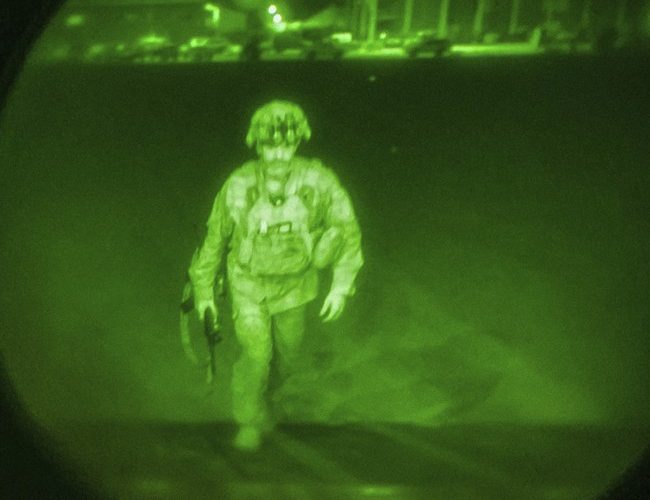
The firing of Army General Christopher Donahue has become a drawn-out fight over how the military is run and who gets to set its future, touching on personnel, institutional influence, and the rollback of DEI policies. This piece argues that Donahue’s removal is about more than one man—it’s about cutting the ties that let retired flag officers steer promotions and preserve a status quo. It examines the reaction from the retired establishment, the Afghanistan baggage that likely influenced the decision, and why sidelining Donahue sends a message to his network. The consequences reach into promotion politics, the role of greybeard influence, and the broader push to depoliticize and rebuild military effectiveness.
The Donahue episode has outstayed the usual news cycle and turned into a proxy battle over senior leadership norms. Many observers pointed to an organized push from retired senior officers to amplify outrage and frame the move as unjust. A short list of talking points circulating among critics suggested that President Trump gets to pick his team and that the old guard believes its influence is under attack.
- President Trump gets to pick his team; Hegseth is the general manager.
- The ranks of GOFOs are so salted with the debris of the Obama and Biden years that they need a culling on the order of the one General George C. Marshall gave to the U.S. Army pre-World War II.
- He who smelt it, dealt it. The source of this hit and who is pushing it tells you all you need to know about the motive.
- The graveyard is full of indispensable men, and everyone moves up one place.
I expected the fuss to fade quickly, but it intensified instead and drew mainstream outlets into a very one-sided narrative supporting Donahue. The coverage from some quarters presented retired admirals and generals as defenders of tradition and painted the personnel moves as reckless. That framing ignored the reasons behind the shakeup—cronyism, risk avoidance at senior levels, and a lack of accountability that critics say built up over decades.
https://x.com/FrankenforIowa/status/2071436549577662659?ref_src=twsrc%5Etfw
Even a normally establishment outlet ran a sympathetic piece that framed Donahue as a trailblazer and implied that his removal was a heavy-handed political act. That kind of coverage amplified the retired-officer chorus and gave the protest a mainstream sheen. But volume alone does not equal righteousness; it often signals a network protecting its own.
John Vandiver’s piece on Gen. Donahue’s departure is a textbook example of one sided framing.
It quotes Sen. Thom Tillis, Adm. William McRaven, and Lt. Gen. Ben Hodges, all of whom have records of defending the institutional status quo and opposing the current push to reduce general officers. Even the one voice from Fox News is used to criticize the decision.
What’s missing is any serious discussion of why these removals are happening in the first place. There’s no examination of cronyism, risk aversion, or the lack of accountability that built up at the top over the last two decades. The article treats the old guard as untouchable and presents any attempt to clean house as reckless.
If the military truly had no problems with how senior leaders were selected and protected, these changes wouldn’t be necessary.
Secretary of War Pete Hegseth has removed roughly 25 senior officers across services, including service chiefs, and most of those moves did not provoke this level of hysteria. That suggests Donahue’s case carries unique baggage or symbolic weight. One obvious thread is Donahue’s role in the Afghanistan withdrawal, where operational decisions and the optics of evacuation remain controversial.
Accusations tied to the evacuation—decisions about priority for aircraft, treatment of civilians and allies, and the handling of working dogs—left a stain on several officers’ records. Donahue oversaw security operations at a key point in that evacuation, and a candid after-action review might raise hard questions about those choices. If accountability for that episode matters, removing those involved makes political and managerial sense.
Beyond Afghanistan, the uproar reveals a deeper conflict over influence. Retired generals and admirals remain power brokers long after leaving uniform, sitting on boards, advising think tanks, and shaping careers. Their endorsements and whispered recommendations still matter when promotion boards convene, meaning a loyal network can secure futures for protégés.
Sidelining Donahue signals to his proteges and backers that their informal pipeline is undercut. Promotions to flag rank often feel like entries to an exclusive club where sponsors matter more than merit. If your champion falls out of favor, your upward path can vanish overnight, and that threat explains why Donahue’s removal sparked such a loud defense.
And another thing.
Most civilians do not understand just how much influence retired senior generals and admirals have on serving generals and admirals (generals and admirals = general officers/flag officers = “GOFO”).
It’s that control that this “greybeard” GOFO cohort exerts on the current GOFO population that is deeply concerning.
The serving GOFOs follow the direction of that greybeard group, as the greybeards control the serving GOFO’s future both in uniform and out. (How else do you think a retiring GOFO gets that cushy position on the Raytheon board of directors?)
In that regard, the greybeards hold more power than the chain of command up to SecWar.
At least they used to.
Now the greybeards are getting loud as that control for the first time is seriously threatened as these Hegseth removals are happening outside of their control, despite their behind the scenes work to keep the military version of the Deep State afloat.
We live in interesting times.
The other vector of dispute is ideological: the push to undo DEI-driven personnel practices and restore a focus on readiness, unit cohesion, and clear standards. Critics say those reforms are political, while supporters call them essential corrections to a politicized culture. The fierce defense of Donahue by the retired cohort looks like a fight to preserve an old order that rewarded conformity to political litmus tests.
Removing a central figure like Donahue is therefore tactical and symbolic: it breaks networks, deters future protégés from relying on the same patronage, and signals a different set of priorities at the top. That is what has really set off the greybeards, and it explains why this personnel action became a national controversy instead of a routine reassignment.
Add comment