
The acting FDA commissioner warned colleagues in May 2021 that patients were reporting unusual health problems after COVID vaccination and urged a formal study, but that warning appears to have gone largely unheeded by powerful federal health officials who controlled major research dollars and public messaging.
In an email dated May 27, 2021, Janet Woodcock described a stream of reports from people, including healthcare professionals, about persistent symptoms after vaccination. She stressed that the complaints “do not fit together into a distinctive syndrome and most are not easily quantifiable or evaluated with standard laboratory testing.” That phrasing underlines the real challenge: the signals were messy but persistent.
Woodcock warned that mass vaccination campaigns would produce psychological reactions and that sorting true biological signals from noise would be difficult. She wrote, “But the peoples’ main complaint is that no one takes them seriously, no one knows how to treat them, and there is no effort to study this.” That line reads like a plea for scientific curiosity and basic accountability.
She also anticipated a lack of industry interest in funding such investigations, noting, “I doubt the industry would support, for obvious reasons.” That is a blunt observation about incentives when industry funding and public health priorities don’t align. The implication was clear: federal agencies needed to step up before the problem “fester[ed].”
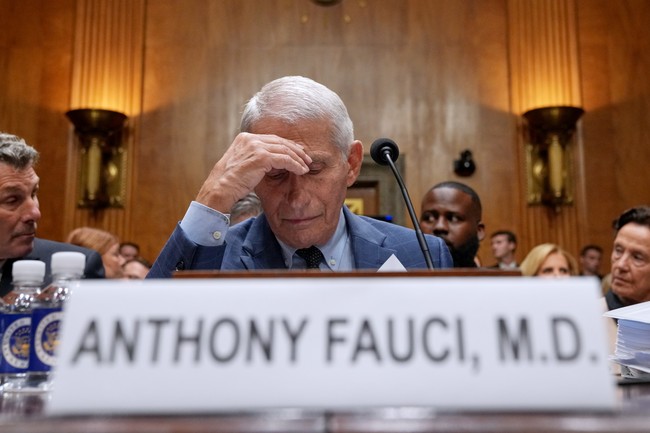
Anthony Fauci, then director of NIAID, forwarded Woodcock’s message to NIH leadership and wrote that the matter “cannot ignore her.” His email added, “We should probably bring in CDC and see what Rochelle [Walensky] thinks.” The language shows recognition that the issue deserved attention from multiple agencies with surveillance responsibilities.
Despite that internal alarm, investigators and the public have reason to ask what, if any, coordinated study followed. Woodcock explicitly said that systems like VAERS and other routine surveillance might miss the sorts of patterns she was hearing about. If the systems federal agencies relied on weren’t suited to detect subtle, heterogeneous signals, then the right response would have been to design targeted research.
Instead, follow-up appears limited. Five years later, no comprehensive government-led study matching Woodcock’s request has been produced publicly, and officials have offered sparse explanations about why that work was not prioritized. That gap feeds public suspicion that bureaucratic inertia, reputational risk, or deference to industry shaped the response more than scientific curiosity did.
There were other internal voices of concern. Reports surfaced that FDA safety experts warned their leaders that surveillance systems might lack sensitivity to pick up statistically significant adverse events. One official reportedly feared analyses could “create erroneous conflicts that feed in to anti-vaccination rhetoric,” suggesting a tension between communicating caution and protecting public health credibility.
Science needs rigorous critique, replication, and an appetite for uncomfortable results. When those checks are muted by political pressure or fear of public backlash, the process breaks down. The pandemic era showed how quickly public trust erodes when people feel their reports are dismissed instead of investigated.
Independent researchers have since explored persistent symptom clusters after vaccination. A Yale-led team looked at what it called “post-vaccination syndrome” among a small group reporting ongoing problems like fatigue, brain fog, exercise intolerance, and tinnitus. The study found some biological differences worth probing, including higher circulating levels of SARS-CoV-2 spike protein in a subset of participants.
The Yale work was presented as hypothesis-generating, used a small sample, and appeared as a preprint rather than a finalized, peer-reviewed paper. Its authors were careful not to claim causation, yet their findings emphasize why the kind of formal, well-funded, systematic inquiry Woodcock urged would have been valuable. When signals are uncertain, rigorous studies can clarify risk and guide treatment.
Many patients who reported symptoms described struggling to get attention, and researchers called the topic politically and scientifically “radioactive.” That reality underscores the cost of dismissal: suffering people without clear answers, plus a widening trust gap between the public and institutions meant to protect them. Accountability requires facing politically awkward questions.
The central fact remains: an acting FDA commissioner flagged possible vaccine-related health problems and asked senior federal scientists to study them, warning that ignoring the issue could let it “fester.” Whether through resource choices, messaging concerns, or institutional blind spots, that request did not trigger the comprehensive response it deserved. The absence of a clear, robust federal investigation leaves policymakers with serious questions about how future safety signals should be handled.
https://x.com/C__Herridge/status/2088995670774448454

Of course we wouldn’t want to make fauci look bad would we. If complaints were taken seriously, it would have caused much hesitation in people getting the ‘jabs’. That pathetic POS is as bad if not worse than Hitler’s Josef Mengele.