
Warren’s Latest Power Play: Block Fintech Lender From Banking Charter
Senator Elizabeth Warren is pressing regulators to stop Opportunity Financial’s bid to become a bank holding company, arguing the fintech’s lending practices are predatory and risky for consumers; this piece examines the political fight, the regulatory pushback, the legal losses OppFi has incurred, and the constitutional and market implications of deep federal interference in lending markets.
The debate has a clear partisan flavor and it centers on how far government should go in policing lending practices. Senator Warren frames OppFi as a predatory actor preying on vulnerable borrowers, and she has taken that case to federal regulators. Opponents warn that heavy-handed federal action will choke off credit for higher-risk borrowers and push them toward illegal alternatives.
The mechanics of high-risk lending are simple and unforgiving: lenders price loans to reflect expected defaults, and that often means much higher rates for borrowers with thin or damaged credit. If regulators force those rates down without addressing underlying risk, lenders will retreat or vanish, leaving borrowers with fewer legal options. That trade-off rarely gets the attention it deserves in political debates about consumer protection.
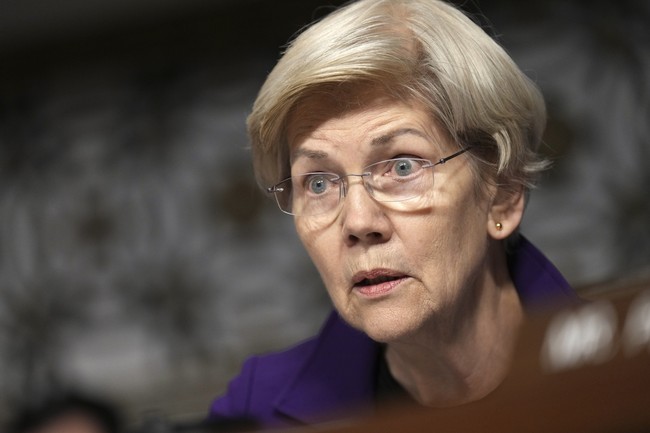
U.S. Senator Elizabeth Warren (D-Mass.), Ranking Member of the Senate Banking, Housing, and Urban Affairs Committee, sent a letter to Travis Hill, Chair of the Federal Deposit Insurance Corporation (FDIC), Jonathan Gould, Comptroller of the Currency, and Kevin Warsh, Chair of the Federal Reserve, to express concern regarding Opportunity Financial’s (“OppFi”) application to acquire BNC National Bank, a national bank subsidiary, and become a newly formed bank holding company despite the company’s history of predatory lending.
“Though OppFi brands itself as a lender that ‘empower[s] everyday consumers to overcome financial hurdles and build long-term financial stability,’ a closer look into its business model reveals persistent, predatory financial strategies. OppFi charges up to 195% APR on personal installment loans [and] OppFi’s charge-off rates (when a lender determines a debt is unlikely to be collected) exceed 55%. Notably, a 2021 filed by the D.C. Office of the Attorney General alleged that ‘OppFi’s underwriting model ‘anticipates that up to one third of their borrowers will be unable to repay their loans and default,’’ wrote Ranking Member Warren.
Those quoted claims are serious and politically useful, but they are only one side of the story. OppFi and other fintechs argue they serve customers traditional banks will not touch and that competitive markets discipline abusive behavior better than federal fiat. Courts have weighed in against regulators before when agencies overreached or misapplied state law.
A California judge has dealt a significant setback to Gov. Gavin Newsom’s consumer-finance regulators, rejecting a high-profile effort to impose more than $100 million in penalties against a major fintech lender in the latest regulatory case against what progressive activists call “rent-a-bank” schemes.
The ruling against Opportunity Financial — known as OppFi — also casts doubt on a key enforcement initiative as speculation grows about Newsom’s national political ambitions.
In a ruling issued May 19, Los Angeles County Superior Court Judge Gary D. Roberts found that OppFi did not violate the state’s lending laws as alleged by the California Department of Financial Protection and Innovation (DFPI), the agency charged with policing financial services in the state.
That California ruling matters because it shows regulators can lose when they push too far. It also feeds the political narrative that prominent Democrats are weaponizing agencies to police markets in ways that can chill innovation. OppFi’s defenders say the company’s model is lawful and fills a market gap, while critics portray the same facts as evidence of exploitation.
Complicating the picture is the role of advocacy groups and their backers, who often shape the public case against fintech firms. Campaigns and reports from well-funded consumer organizations can steer regulators and public opinion, even when the funding and motives behind those groups are messy. Political theater can substitute for careful policy debate when powerful names and flashy numbers are involved.
Early this year, the Center for Responsible Lending (CRL), a prominent left-of-center consumer advocacy organization, released a 12-page report targeting OppFi by name.
Much of CRL’s funding has come from Herb and Marion Sandler, whose lending practices got them labeled among the “25 People to Blame for the Financial Crisis” by Time magazine. Critics of the group have long alleged its creation was an effort to distract from the Sandlers’ role in predatory lending and focus attention on financial services companies that offer competitor services to a credit union, Self-Help, also associated with the group.
At the federal level there are constitutional questions about how far Washington can intrude on lending markets and state regulatory space. Conservatives argue that the 10th Amendment and basic federalism principles counsel restraint and local control. Democrats see national rules as necessary to protect consumers from allegedly abusive financiers.
The real policy choice is between protecting vulnerable consumers from genuine abuse and preserving access to credit for people who lack conventional options. Politicians like Elizabeth Warren have picked a side: regulatory pressure first, market consequences later. That approach may satisfy a base, but it has real costs for borrowers who depend on nontraditional credit to handle life’s disruptions.


The photo of that Demonic Controlled Leftist Maniac in our Congress says it all about how sick America is now!
This Infection and sickness needs to be overcome sooner rather than later to save the Republic!