
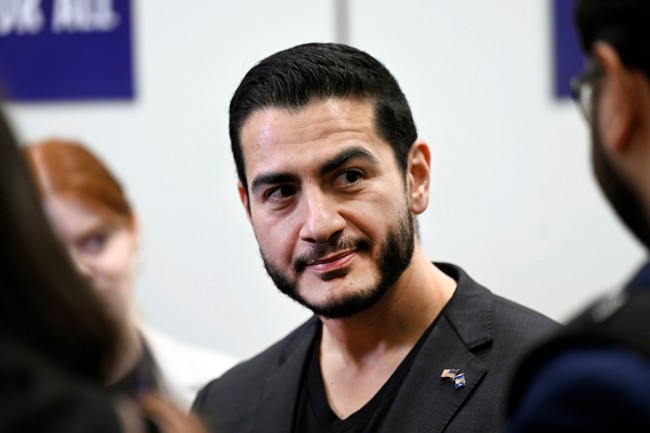
The Michigan Senate contest is intensifying as Democratic primary debates and fresh scrutiny of Abdul El-Sayed collide with a strong Republican presence, shifting the dynamics ahead of November; this piece examines the controversy over protesters, free speech, polling that shows a tight race with Mike Rogers, and what the primary fight means for the fall general election.
Michigan is already hot this summer, and politically things are heating up too. The Democratic primary has Abdul El-Sayed facing Mallory McMorrow and Congresswoman Haley Stevens in August, all vying to challenge Republican Mike Rogers for the open Senate seat Gary Peters is vacating.
Republicans are watching closely because Mike Rogers has consolidated key support and carries a clear conservative message. He’s already won a major endorsement that reinforces his position, and the GOP view is that Michigan is ripe for flipping after more than two decades without a Republican senator.
A recent column by Nolan Finley put a spotlight on El-Sayed for his response to University of Michigan pro-Palestinian activists who were named in a federal indictment. Finley framed the issue as a defense of violent acts under the guise of political expression, a charge that raises real concerns for law-and-order voters.
The Democratic candidate for Michigan’s open Senate seat is selling the idea that the First Amendment covers violence and vandalism, if done in the name of a political cause.
I’m a free speech absolutist. I don’t think hate speech should be recognized as its own category of expression. Americans should be free to say the most awful things without legal consequence.
Those quotes are exact and they underline a basic conservative worry: protecting free speech does not mean excusing criminal conduct. The block of quoted opinion insists that spray painting private homes and other acts of vandalism are not protected expression, and that distinction matters to many voters.
But El-Sayed, in defending the University of Michigan pro-Palestinian activists named in a federal indictment for crimes committed to protest support for Israel’s war in Gaza, is arguing the defendants are being prosecuted for their views rather than their acts.
Spray painting messages across a private home, as the protesters did to the houses of UM officials, is not free speech; it’s vandalism.
From a Republican perspective, the electorate cares about safety, property rights, and accountability. Saying you support protest rights is one thing; appearing to defend criminal conduct that targets private citizens is another, and that line could be decisive for independent and moderate voters in Michigan.
Polling shows the general election could be close. Recent surveys have the matchup between Rogers and El-Sayed within the margin of error, making this an essential battleground for control of the Senate. Conservatives note that primary outcomes and messaging now will shape the fall contest, and Republicans are preparing to capitalize on any perceived weaknesses from the Democratic nominee.
El-Sayed still has to navigate a competitive August primary against two established elected officials, and primary bruising could leave scars heading into November. Meanwhile Rogers’ campaign is positioned to emphasize steady leadership and law-and-order stances that aim to appeal to swing voters alarmed by unrest and property damage tied to political demonstrations.
Michigan hasn’t elected a Republican to the U.S. Senate since 2000, which frames this race as a rare pickup opportunity. Republican strategists see an opening if conservatives can persuade voters that security, economic competence, and mainstream values offer a clearer path than divisive protest politics.
What happens in the next months will matter. Primary debates, how candidates answer tough questions about protests and the rule of law, and how they handle scrutiny over statements and associations will shape perceptions. For voters concerned about public safety and protecting civil liberties without tolerating criminal acts, these are testy, important decisions.
Conservative voices will keep pushing the narrative that defending free speech does not equal endorsing vandalism or violence, and they will press Democratic hopefuls to clearly disavow actions that cross into criminality. That pressure is likely to intensify as the calendar moves toward August and then November.
The race in Michigan is now one to watch closely, not just because it could flip a long-standing trend, but because the campaign arguments being made now will echo into the general election. Expect more scrutiny, sharper exchanges, and a focused Republican effort highlighting contrasts on law, order, and accountability.
Add comment