
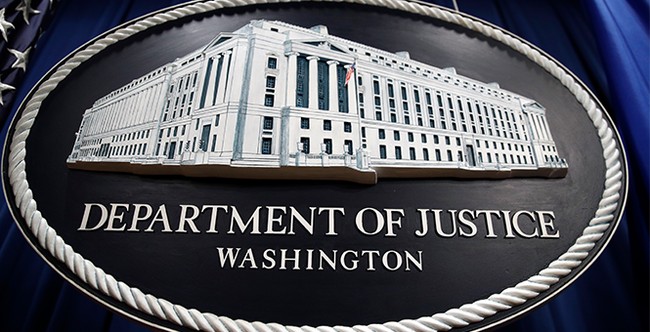
The Justice Department’s recent sweep in Pennsylvania exposed a brazen Medicaid home-care fraud ring that echoes the worst Minnesota scandals, with 19 people charged for claiming pay for services that often never happened; the arrests show cross-party support for enforcement, detail shocking examples of fraud committed while suspects were jailed or driving for ride-share apps, and raise questions about federal program oversight and taxpayer protection.
Fraud is nothing new, but the scale here deserves attention. Pennsylvania spends roughly $8 billion on Medicaid home-care services, and that pool of money invites both legitimate providers and parasites. When claims are filed for care that never occurred, the damage lands squarely on taxpayers and on the vulnerable people who should be getting help.
The bust in Pennsylvania stands out because it brought both Republicans and Democrats together in calling for accountability. Lawmakers and officials signaled cooperation with federal investigators rather than political theater, and that willingness to work across the aisle matters when complex fraud schemes are on the table. If enforcement is serious and bipartisan, it sends a message to would-be cheats that someone is watching.
The DOJ’s expanded anti-fraud task force made its first sweeping bust of Medicaid scofflaws in Pennsylvania this month, drawing comparisons to the massive fraud scandals that rocked Minnesota — but with one major difference.
Republicans and Democrats in the state united in outrage after nearly two dozen people were charged in Philadelphia and elsewhere. The DOJ noted Pennsylvania spends $8 billion on Medicaid home-care services, more than almost any other state, and those services were the target of the busts.
“The allegations are really disturbing just as they are in Minnesota and other places where we’ve seen this,” House Ways and Means Committee member Lloyd Smucker, R-Pa., told Fox News Digital in an exclusive interview.
The details in the Department of Justice announcement read like a manual of audacity. Some defendants kept submitting claims while incarcerated or hospitalized, while others reported providing care during traffic stops or while working for ride-share services. Those kinds of facts make it hard to sympathize with anyone caught up in the scheme; this isn’t a gray area, it’s blatant theft.
Today’s cases demonstrate that even the boldest fraudsters will be caught and stopped. In one case announced today, four defendants, two purported aides and two Medicaid recipients, were charged in connection with a conspiracy to submit claims for home health services that never occurred. One purported aide claimed to be providing services while she was incarcerated; another purportedly provided services while hospitalized. These four defendants caused over $440,000 in claims to Medicaid. In another of today’s cases, two defendants, father and son, were charged after the son, a purported aide, claimed to be providing services while driving for a ride-share and food delivery service. On one occasion, the defendants claimed services while the son was in the midst of a traffic stop in which he was cited for possession of marijuana; on another, the defendants claimed services while the father was in court participating in a sentencing hearing for another individual.
Calling it greedy doesn’t cut it; the right words include shameless and reckless. These schemes prey on systems meant to protect people with limited means, and when fraud drains funding, the most vulnerable lose access to real care. The political reality is simple: protecting vulnerable people means enforcing laws and fixing program weaknesses so scammers can’t exploit them.
(Republican Representative Lloyd Smucker (PA-11) said Pennsylvania welcomes fellow Keystone Stater and CMS Administrator Mehmet Oz and his investigators, adding that he is grateful state officials in Harrisburg are also taking note.
That cooperation sets the Pennsylvania busts apart from those in Minnesota, where Gov. Tim Walz has faced accusations of inaction over what has become a multibillion-dollar scandal.
Pennsylvania Gov. Josh Shapiro signaled cooperation and collaboration with Republicans in going after Medicaid fraudsters in remarks his office made to Fox News Digital.
There’s a governance lesson here for every state that runs big entitlement programs. Tighten oversight, audit claims regularly, and make coordination between state and federal investigators routine. When investigations are left to partisan posturing, fraud flourishes; when agencies cooperate, enforcement becomes effective and taxpayers benefit.
Finally, catching these rings is one thing; preventing them is another. Prosecutors need resources and lawmakers need to back structural fixes that reduce opportunities for fraud. This bust in Pennsylvania shows what enforcement can do when it’s treated as a shared duty rather than a political club to swing at opponents.
Add comment