
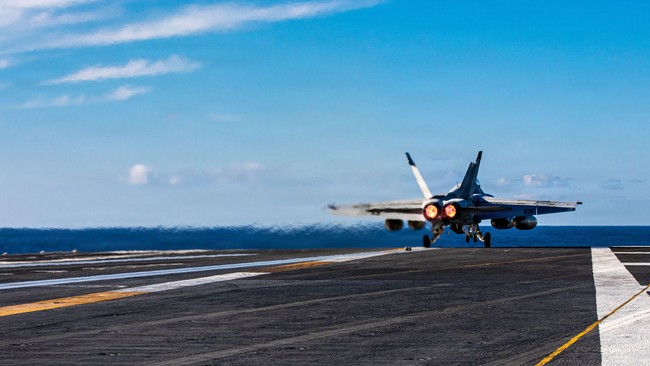
U.S. forces struck back after Iran attacked another commercial tanker in the Strait of Hormuz, escalating operations that began Friday night and continued into Saturday. Central Command released strong statements about the strikes and the targets, and U.S. officials described the response as larger than the previous action. The move comes amid a fragile ceasefire and contentious diplomacy over a memorandum of understanding that has not stopped Iranian aggression. Political reactions split along familiar lines as Washington balances pressure, restraint, and a willingness to use force to protect shipping and American interests.
Iran launched what U.S. officials say was a one-way attack drone that struck the Panama-flagged M/T Kiku as it transited near the Strait of Hormuz carrying more than two million barrels of crude. The attack followed an earlier strike on M/V Ever Lovely, and American forces responded quickly. Leadership in Washington authorized strikes “at the Commander in Chief’s direction,” signaling direct presidential involvement in the decision to push back. That posture underlines that protecting free transit and commerce in critical chokepoints remains a top priority.
United States Central Command (CENTCOM) released a formal account of the action and outlined the targets chosen for the U.S. response. Their statement emphasized the tactical goals of degrading Iranian capabilities used to threaten commercial shipping and regional stability. Military planners focused on infrastructure tied to surveillance, communications, air defenses, drone operations, and minelaying. The strikes aimed to reduce Iran’s ability to conduct similar attacks in the near term while sending a clear strategic message.
After yesterday’s U.S. strikes in response to the Iranian attack on M/V Ever Lovely, Iran was given a chance to honor the ceasefire agreement but elected not to when its forces launched a one-way attack drone that hit M/T Kiku this morning at 4:30 a.m. ET. The Panama-flagged tanker was transiting near the Strait of Hormuz with more than two-million barrels of crude oil.
https://x.com/EricLDaugh/status/2070986873871208628?ref_src=twsrc%5Etfw
CENTCOM’s follow-up made clear the strikes were tailored and aimed at specific Iranian military capabilities, not indiscriminate escalation. “CENTCOM forces launched strikes today in direct response to continued Iranian aggression against commercial shipping. U.S. military aircraft targeted Iranian military surveillance infrastructure, communication systems, air defense sites, drone storage facilities, and minelayer capabilities,” the statement read. “Commercial vessel transits through the Strait of Hormuz continue. U.S. forces remain vigilant, lethal, and ready.” Those words match what military leaders said publicly and frame the strikes as defensive and proportional in response to ongoing attacks.
U.S. forces had also posted footage of their earlier strikes, showing precision engagements and the assets used to neutralize threats. They want to make clear that the strikes are both tactical and strategic: immediate acts to stop attacks and long-term efforts to deter future aggression. The memorandum of understanding and fragile ceasefire have not stopped Tehran from testing limits or conducting operations that endanger global oil flows. That continued provocation forced a kinetic reply to protect both commerce and regional allies.
Defense officials told reporters the Saturday action was larger than Friday night’s strikes, underlining a stepped-up approach after Iran failed to halt aggressive behavior. “It’s a larger strike than last night,” an official told Fox News. “Iran had a chance to stop shooting … and they didn’t take it,” the official said. “Instead, they attacked another ship in Hormuz this morning, the MT Kiku.” Those direct quotes reflect the frustration in military circles when diplomatic arrangements do not translate into changed behavior on the ground.
Back-channel diplomacy continues, but competing claims over the agreement’s terms — including control of the strait and the use of unfrozen funds — have left gaps that Iran appears willing to exploit. President Trump publicly called Iran’s attack a “foolish violation” of the ceasefire as negotiators parsed differences over implementation and enforcement. Meanwhile, regional actors respond to shifting dynamics on the ground, and non-state groups like Hezbollah signal they will continue fighting if they reject diplomatic outcomes.
Domestic political reaction broke predictably along partisan lines, with Democrats minimizing or dismissing the seriousness of Iran’s efforts to acquire nuclear capabilities and their repeated violations of agreements. Critics say the focus should be on diplomacy and negotiating terms, but many Republicans and national security officials argue that forceful responses are necessary when Iran attacks commercial shipping and threatens global energy supplies. That split matters because it shapes the country’s readiness to counter future threats.
The U.S. military’s actions over these two days demonstrate a willingness to act decisively when Iranian operations endanger neutral vessels and international trade. Military leadership stresses vigilance and readiness to defend maritime transit routes, while officials also weigh how strikes fit into a broader strategy of deterrence and diplomacy. For now, the strikes are a clear message: attacks on commercial shipping will meet a robust military response intended to protect American interests and keep the Strait of Hormuz open for lawful transit.

Add comment