
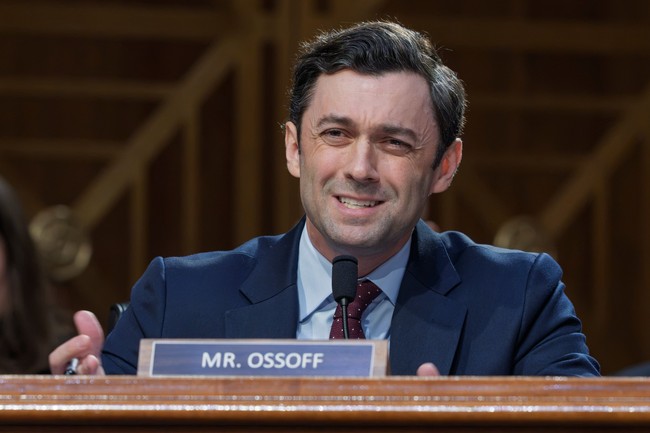
Sen. Jon Ossoff launched a personal attack that crossed a line by suggesting President Trump and his assistant posed a security or moral problem, and that attack has been pushed back not just by pundits but by conservatives and Trump himself.
Democrats who are positioning themselves for future races are leaning hard into attacks on President Trump, hoping toughness will play well with primary voters or help in the next cycle. That strategy often produces heated rhetoric, but this episode stood out as particularly nasty and unnecessary. Political theater is one thing; implying impropriety about a woman who works for the president is another.
Ossoff, who is running for reelection in Georgia and whose name has been floated for 2028, claimed that service members were fighting “his [Trump’s] war,” an odd framing that shifts honor away from the men and women in uniform. Saying our troops are somehow engaged in a personal project for one leader diminishes their sacrifice and misunderstands how military service is perceived across party lines. Attacking the institution and the people who serve rarely wins hearts or persuades undecided voters.
Where this controversy really ignited was Ossoff’s reference to Trump traveling with an aide, and the implication he used went beyond policy into the personal. “He wants to build his ballroom and travel with Natalie on their apparently defenseless flying palace gifted by the Emir of Qatar,” Ossoff said. Those words hit a nerve because they targeted a staffer by name and suggested wrongdoing without evidence. When commentary veers into personal accusations against staff, it invites immediate pushback from people who see the lines being crossed.
https://x.com/atrupar/status/2089089370259070987
Conservative voices didn’t hesitate. CNN commentator Scott Jennings labeled the remarks “pretty ugly stuff” and warned about the message being sent to women, highlighting how such comments can come across as demeaning. Others called the insinuation “misogynistic,” pointing out that attacking a female aide by implying she is inappropriate company for a president is tone-deaf and damaging. The backlash underscored that political attacks perceived as violating personal dignity can be politically costly.
Supporters of President Trump also pushed back by noting the personal resilience of the aide in question, and how policy actions by the administration had helped her. Robby Starbuck noted Natalie Harp’s recovery from bone cancer and credited the Right to Try Act signed by Trump as providing a lifeline. That connection reframed the conversation from innuendo to how policy can have tangible, life-saving results for individuals.
“He should apologize to Natalie for doing this. I don’t think any of us would want our daughters talked about like this,” Starbuck said, and that sentiment captured why many conservatives saw Ossoff’s comments as unacceptable. Public figures can, and should, be criticized, but when attacks drag private citizens and staffers into salacious insinuation, it crosses into a personal realm most voters reject. Calls for an apology became louder as the debate played out.
Then President Trump responded in his own characteristic way, refusing to dignify the attack with a long rebuttal and instead turning it into a moment of ridicule. He dismissed Ossoff as “Pee Wee Herman,” signaling that he considered the senator unworthy of serious engagement and leaving the insult as the final word. That approach pleased supporters who prefer a take-no-prisoners style and undercut the seriousness Ossoff hoped to create.
Political operatives watching this exchange noted how the reaction from Trump and his allies reframed the story away from whatever policy point Ossoff tried to make. When the president treats an adversary as a joke, it can neutralize intended damage and shift momentum to the target of the attack. That dynamic often benefits incumbents who can leverage media flashpoints into demonstrations of resilience.
For Republicans and conservatives, the episode was also a reminder about standards in political debate and the value of defending staffers who are unfairly targeted. The broader lesson is that weaponizing personal life or staff relationships is a risky tactic that can backfire politically and ethically. Campaigns that respect boundaries while making substantive critiques tend to fare better with independent voters.
This controversy will likely linger in talking points, but its immediate effect was a swift defensive unity among conservatives and a pointed retort from President Trump himself. The dust-up highlights how partisan attacks can rapidly escalate and then collapse under their own ugliness when they aim at people rather than policies.
Editor’s Note: Every single day, here at RedState, we stand up and FIGHT, FIGHT, FIGHT against the radical Left and deliver the conservative reporting our readers deserve.

As I website owner I conceive the subject material here is real excellent, thankyou for your efforts.