
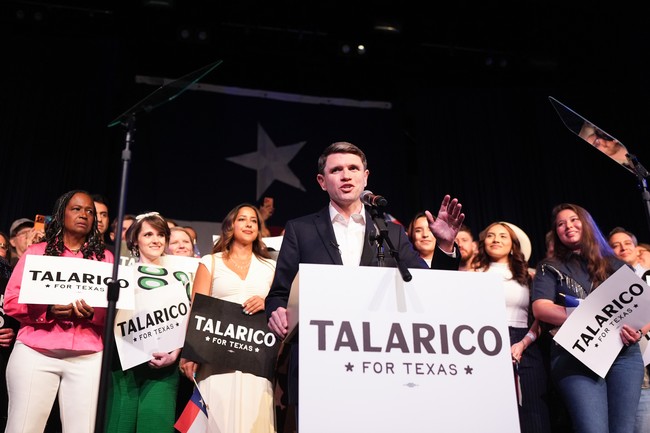
I’ll take apart the Talarico campaign’s deceptive clip, explain why the attack on Ken Paxton rings hollow, show what the unedited context reveals, and point out how legacy outlets amplified the smear. This piece focuses on the politics and messaging choices in the 2026 Texas Senate race and why conservatives should care about dishonest campaign tricks. Expect direct, plain talk about motive and method, without fluff.
James Talarico is trying hard to look like a regular Texan in his 2026 Senate push, but his campaign keeps resorting to cheap shots instead of defending policy. The recent post from his official X account used a clipped excerpt to suggest Attorney General Ken Paxton prefers California over Texas. That tactic is designed to offend Texas pride and paint Paxton as out of touch, but the clip omits key context.
The clipped post implied Paxton wants to spend time outside Texas and framed it as disloyalty. One fact in the record is that Paxton did spend much of his childhood in California; his family moved around because his father served in the Air Force. That background does not erase his long record of living, working, and winning elections in Texas, and it certainly does not make him any less Texan.
The Washington Post passage often cited states: “Paxton, 57, spent much of his childhood in California — his father was in the Air Force — and went to college in Texas and then law school at the University of Virginia. He later returned to Texas, north of Dallas, and won election in a deeply conservative, affluent, mostly White area, first to the state House of Representatives and then the Senate.” That passage is accurate about his upbringing but also shows his political roots are deep in Texas.
Paxton, 57, spent much of his childhood in California — his father was in the Air Force — and went to college in Texas and then law school at the University of Virginia. He later returned to Texas, north of Dallas, and won election in a deeply conservative, affluent, mostly White area, first to the state House of Representatives and then the Senate.
When you watch the full video rather than the campaign snippet, a different picture emerges. Paxton is talking about how Texans escape summer heat by visiting other states — Wyoming, Florida, and yes, California gets a quick mention. His comment about California was joking and tongue-in-cheek, acknowledging natural beauty but offering it almost as a guilty pleasure for a Republican to admit.
That nuance is the whole point: the Talarico post stripped tone and context to manufacture outrage. It’s a basic political dirty trick — take a sentence out of context, add a smear-y caption, and watch the outrage spread. Conservatives should recognize this as the same playbook the left uses when they want to distract from substance and weaponize culture.
The campaign and sympathetic outlets pushed the story like it was a gotcha moment, but anyone who actually watches the footage will see the clip was edited to create the scandal. This kind of selective editing is dishonest messaging, plain and simple, and it tells you more about Talarico’s strategy than anything Paxton said.
Another part of the smear implied Paxton is not a “true Texan” because he lived outside the state in childhood, which is a weak angle politically. Military families move a lot; the relevant measure for voters is where a candidate built his life and record. Paxton returned to Texas, practiced law, served in the state legislature, and has long been active in Texas politics.
Beyond that, the Talarico campaign has a pattern of clutching cultural props — like the recent attempt to lean on barbecue tours — to paper over policy positions that won’t play in mainstream Texas. Messaging that depends on manufactured scandals says the campaign lacks stronger, honest arguments to offer voters.
https://x.com/TeamTalaricoHQ/status/2070200399760400675
When mainstream outlets amplified the clip, they helped amplify the manufactured outrage. Media outlets routinely seize on clips they think will drive clicks, and in this case they repeated the dishonest framing without pushing back. That’s why careful viewing matters; voters who skip the video and rely on the caption get baited into the story the attacker wants them to believe.
It’s also worth noting Talarico’s recent convention comments, where he railed against the influence of billionaires in broad, sweeping language about media and politics. That rhetoric fits his campaign’s strategy: paint vague villains, attack from the left, and hope unsubtle cultural hits stick. But cheap cultural attacks rarely substitute for a substantive platform in statewide Texas politics.
“They’re not invading with an army, they’re just buying the system. The billionaires who own the social media algorithms, who own the cable news networks, who own the politicians fighting on our screens, they are turning neighbor against neighbor, weakening that spirit of friendship that makes Texas so great.”
Conservative voters should be skeptical of any campaign that tries to smear by omission rather than engage on record. The Paxton clip controversy is a reminder that context matters and that political operatives will manipulate short clips to craft false narratives. Watch the full remarks, weigh the record, and judge candidates on their actions, not on edited moments designed to generate heat.
When clips are cropped and captions are chosen to outrage, the result is manufactured controversy, not truth. That’s the takeaway for anyone paying attention to messaging in this 2026 Senate fight: substance matters more than spin, and voters deserve better than dishonest edits and media hype.


Add comment