
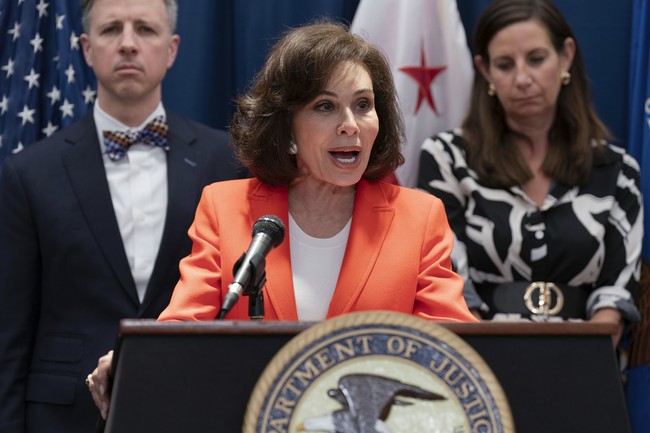
Jeanine Pirro forcefully challenged reporters who tried to downplay deliberate vandalism at the Lincoln Memorial Reflecting Pool, defending the repair work and indictments and calling out biased coverage that treats damage like cleanup as a political attack.
The left has turned routine restoration into a political spectacle, and many reporters have fed that narrative instead of focusing on the facts. The project to reseal and repair the Reflecting Pool was meant to restore a national landmark, not to become fodder for partisan sniping. When vandals sliced into the new sealant and damaged the pool, prosecutors treated it as a crime, and U.S. Attorney Jeanine Pirro pressed the media for better evidence before granting them the benefit of doubt.
Critics have conflated ordinary repairs with some imagined political agenda, even calling the work a waste and exaggerating side effects like algae in the water. Those complaints ignore that maintenance on treasured public spaces is common and necessary, and that damage inflicted intentionally by activists is a separate, criminal issue. Pirro refused to accept sloppy reporting that frames the situation as if the pool’s condition were merely an aesthetic gripe instead of vandalism under indictment.
Pirro was responding to coverage that minimized the damage and questioned whether anyone could tie the vandalism to the accused, a three-time Olympic canoeist charged with felony destruction of property. She called out journalists who suggested the damage was trivial, repeatedly inviting them to bring any exculpatory evidence before a grand jury. Her point was simple: courtroom process and expert assessment are how you establish damage and culpability, not sneering punditry.
The back-and-forth with reporters included direct, clipped exchanges that exposed how some questions aimed to muddy the facts rather than clarify them. Pirro emphasized that the pool is a national asset, not the property of any one politician, and that intentionally ripping the sealant is not the same as accidentally touching the water. She pressed for accountability and criticized attempts to turn a vandalism case into a political narrative.
U.S. Attorney for Washington, D.C. Jeanine Pirro: “The damage is over $1,000 [on the Lincoln Memorial Reflecting Pool].”
Reporter: “How do you prove that $1,000 [in damage]?”
Jeanine Pirro: “With an expert. Come to the trial.”
Reporter: “Did he have any tools or was it just his bare hands?”
Jeanine Pirro: “Right now, we believe it’s his bare hands, both hands.”
Reporter: “In your belief, was it probably damaged before?”
https://x.com/RedWavePress/status/2072760469073342510
Jeanine Pirro: “Oh, he damaged it!”
Reporter: “Do you believe there had already been damaged before?”
Jeanine Pirro: “He damaged the pool!”
Reporter: “There are all these videos —”
Jeanine Pirro: “Well, good, I’m glad you got that evidence. Come on to the grand jury, you can testify. NEXT!”
The media’s rush to equate repairs with political theater undermines both the work and public trust. When coverage suggests that maintenance is suspect or that damage deserves applause, it flips common sense on its head and rewards destructive behavior. Instead of valorizing vandalism or minimizing criminal conduct, reporters should let investigators and experts do their jobs.
Pirro also pushed back against attempts to connect this vandalism to unrelated events, making it clear there was no basis for dragging in distant controversies. She invited skeptical journalists to present whatever evidence they claimed to have at the proper legal venues. That challenge highlighted how some commentators prefer performative skepticism over actually participating in civic processes like grand juries or trials.
The remodeling work itself ran into predictable complications like algae growth, which some commentators seized on as proof of incompetence or waste. Those points are distractions that obscure the main issue: people allegedly caused significant, deliberate damage to a public monument and face criminal charges. The focus should be on the crime, the cost of repairs, and whether those responsible are held to account.
Instead of acting as neutral fact-checkers, parts of the press leaned into mockery and minimization, framing the repair as an unnecessary expense or an ideological hit. Pirro did not accept that framing and repeatedly refused to be lectured by reporters who seemed more interested in scoring points than in understanding the legal and logistical realities. Her insistence on evidence and expert testimony was a reminder that due process—not punditry—decides guilt and damage assessments.
The larger question is whether our institutions and media will protect national symbols from willful destruction or shrug when activists damage them in service of a cause. Pirro’s blunt responses underscored a demand for accountability and an insistence that public property matters beyond partisan narratives. If reporters want to challenge the prosecution, the invitation to present evidence at a grand jury remains open, and the case will proceed through normal legal channels.

Add comment