
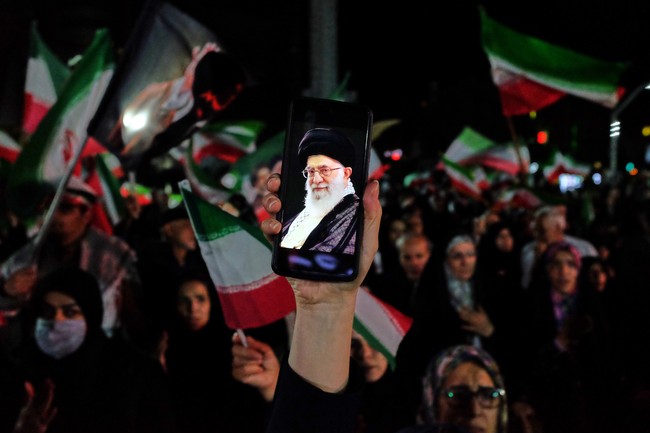
The late Ayatollah Ali Khamenei’s funeral has finally been set months after a deadly strike, and questions swirl about the body’s condition, how authorities have preserved it, and whether the massive public event is being used more for political theater than mourning.
The timeline is strange: more than four months after the strike that reportedly killed Khamenei, Tehran has announced public viewings and a funeral procession. For Americans and allies who supported decisive action, the delay raises practical and symbolic questions about Iran’s control and narrative. Officials inside Iran seem determined to stage a show of strength, even as doubts about the corpse and the logistics whisper through the crowd.
One immediate concern is the state of the remains. Islamic practice generally calls for burial within 24 hours, though wartime exceptions exist, and senior clerics often get special treatment. Experts familiar with Shia law say chemical embalming would be uncommon, so the likeliest method of preservation is cold storage, which carries its own political optics.
The lengthy delay to the funeral has raised questions about how Khamenei’s remains have been preserved, as Islamic tradition, analysts say, generally calls for prompt burial and discourages chemical embalming.
“The mechanism is almost certainly refrigerated cold storage, not embalming, as Islam bars chemical embalming,” counterterrorism expert Dr. Omar Mohammed told Fox News Digital.
“Shia law allows delayed burial and preservation by cold in exceptional cases, and a clerical exemption for a Supreme Leader is easy to get,” he added.
“Iran’s forensic morgues already hold bodies for months, so four months in freezing is not exotic. That is what ‘religious and legal standards’ cover,” Mohammed said.
Cold storage is practical, but it also looks like preservation for propaganda. If the regime intends to parade a body in public, keeping it intact matters more than religious scruples. For those of us who prefer clear, strong action overseas, seeing Iran attempt to digitize its resilience through a staged funeral is thin comfort.
Another question nobody can answer publicly is whether there’s much of a body left to display. A bunker-penetration strike wrecks structures and bodies alike, and recovery can be messy and incomplete. Experts warn DNA may have been the only reliable way to identify some victims in the weeks after the attack, which makes the idea of a full, recognizably intact corpse unlikely.
“There may not be much of a body to present. Khamenei was killed by a bunker-penetration strike, and others killed with him were recovered weeks later and identified by DNA,” Mohammed explained.
Iranian authorities are being opaque, and that raises the next issue: control. The regime clearly fears that a mass funeral could backfire, either by triggering unrest or by exposing cracks in its authority. That fear explains both the delay and the heavy-handed way the government is preparing to manage the crowds and the story.
https://x.com/DailyGuardian1/status/2072644989432234364
Rumors and official spin have mixed into a torrent of speculation online, and Tehran is responding with theater. The government’s announced figures for attendance and press accreditation are enormous, bordering on the implausible, and that’s clearly part of the point. Big numbers are being used to sell continuity and strength to an audience that includes both domestic critics and skeptical foreign powers.
Rumors claiming that Ali Khamenei’s body has been kept in cold storage since February have fueled intense speculation online. Reports suggest Iranian authorities fear that a massive public funeral could trigger security risks or political unrest, recalling past crowd disasters during high-profile funerals. While the claims continue to circulate, no official confirmation has been provided regarding Khamenei’s death or the status of any burial plans.
Authorities have announced public viewings and multi-city processions, and they are touting staggering attendance estimates to send a message. “The numbers the regime is putting out — up to 20 million mourners in Tehran, 35 million nationwide, more than 90 countries represented, 14,000 journalists credentialed — are not logistics,” Mohammed, of The George Washington University Program on Extremism, said. The messaging is aimed squarely at proving the Islamic Republic remains unbowed.
The IRGC will handle security, and that’s where the political and coercive elements collide. This is not just crowd control; it is a reminder to the population of who commands the streets. In practice, a funeral of this scale becomes both a display and a mobilization, and those mobilized are the same forces that have suppressed dissent in past crises.
For Republicans and defenders of American action, the situation underscores a larger point: decisive moves have consequences, and those consequences ripple through regimes that try to mask weakness with spectacle. The funeral might be intended as a show of solidarity, but to outside observers it looks like a carefully managed performance meant to paper over real vulnerabilities.
Large crowds, intense surveillance, and a tightly controlled narrative will define the coming days in Tehran and Qom. Whether the public spectacle will convince outside audiences or simply expose the regime’s need for an image overhaul is the real question. In the meantime, the world watches while Iran stages its biggest political funeral in decades.
Predicting mass turnout is part of Iran’s playbook, but the logistics are staggering and the security risks real. Estimates of millions on the streets sound designed to intimidate as much as to memorialize, and every element of the procession—from the viewings to the carriage of the message—serves a political purpose.

Add comment