
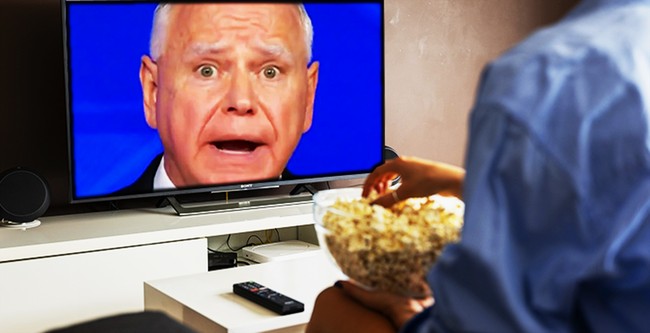
I’ll walk through the viral Nick Shirley investigation into Minnesota day care centers, how Governor Tim Walz responded, the federal scrutiny that followed, notable social media reactions, and what this means politically for Walz and Democrats in the current cycle.
Independent journalist Nick Shirley released a video tour of Minnesota day care centers that caught fire online, drawing massive attention and forcing a national conversation about oversight and accountability. Shirley reported not finding children in some facilities and encountered people who refused to answer questions, even spotting a “learing center” with a misspelled sign. The clip’s view count—now approaching nine figures—shows how sharply the public reacts when government programs and taxpayer money are involved.
The reaction has been fast and unforgiving, and that matters in politics because optics and competence influence elections. Governor Tim Walz tried to reframe the story by posting upbeat statistics about Minnesota’s rankings: “#8 state for safety. #5 state to live in. #3 state for jobs. #2 state to raise a family, and #2 state to retire. We’ve made progress, but there’s more to do to deliver security, opportunity, and freedom to every Minnesotan. I won’t quit fighting until we’re #1.” That message reads like damage control after a scandal breaks, and it didn’t slow down scrutiny.
Federal authorities are not standing on the sidelines. The FBI has shifted more assets to the state to investigate the allegations, and Treasury officials have signaled interest in the money flows that Shirley’s reporting and subsequent coverage highlighted. With reports suggesting billions could be involved, this is no longer a local flap; it’s a federal probe that raises questions about oversight at multiple levels.
Those developments make it clear that the story is about more than one viral video. When the Treasury and FBI get involved, you’re looking at potential criminal or civil liability, regulatory failures, and systemic weaknesses that allowed questionable payments to occur. Voters deserve straight answers about where taxpayer dollars went and why safeguards failed to stop suspicious activity.
Social media amplified the issue, and Walz’s post was swamped with replies that ranged from amusement to anger to calls for accountability. Conservative activists and everyday citizens used the viral clip to demand tougher oversight, and prominent figures piled on with sharp criticism. One reply that stood out was a brief, scathing rebuttal from Nick Shirley himself.
The political stakes are immediate. Walz is running for reelection, and a scandal that touches childcare funding, public dollars, and possible fraud undermines the pitch that his administration is competent and focused on security. For Republicans, this is a clear opening to make the case that Democrats can’t be trusted to manage taxpayer programs without letting waste and potentially dangerous lapses happen.
Beyond the politics, there is a practical problem for parents and communities that depend on child care services. If funds meant to support children and working families were misdirected or abused, real people suffer: workers lose jobs, families lose reliable care, and trust in institutions erodes. Those are the consequences voters care about when they decide whether an incumbent deserves another term.
The Walz administration’s past posts boasting about child care investments now read differently in light of scrutiny, and critics are asking whether those programs were properly monitored. When officials praise initiatives, they must also show they built auditing, verification, and enforcement into program design—especially when large sums are involved. Accountability isn’t optional; it’s the minimum we should expect.
Minnesota’s situation has attracted comparisons to other states, and observers have noted similar vulnerabilities elsewhere, including in California, where large-scale programs have sometimes produced messy results. For now, Minnesota is in the spotlight because of the scale being reported and the clarity of the video evidence that sparked public outrage. That focus will continue until investigators and state leaders provide clear, verifiable answers.
Politically, Democrats face the uncomfortable reality that their chosen leaders must defend not just policy choices but how well those policies were executed and policed. Voters are watching whether Walz and his team will cooperate with federal investigators and institute real reforms, or whether they will cling to talking points while the underlying problems remain unresolved. Results, not spin, will decide how this story affects the next election cycle.
The Shirley video sparked a necessary debate about government transparency, program integrity, and the consequences of lax oversight. Minnesotans and taxpayers across the country deserve a thorough, impartial investigation and a clear plan to prevent similar situations in the future. Until those things happen, this scandal will be a major political and governance issue in Minnesota and beyond.
Minnesota’s rankings: “#8 state for safety. #5 state to live in. #3 state for jobs. #2 state to raise a family, and #2 state to retire. LOOKS LIKE WALZ CONDUCTED HIS POLLING AMONG THE SOMALI POPULATION. YO, TAMPON TIMMY–# 1 IN STEALING FROM CHILDREN.