
I’ll explain what the DOJ memo says about the accused pipe bomber, walk through his alleged motive as reported in the filing, note how the media framed it, and point out why calling him the “Jan. 6” pipe bomber is misleading based on his own statements and the document’s details.
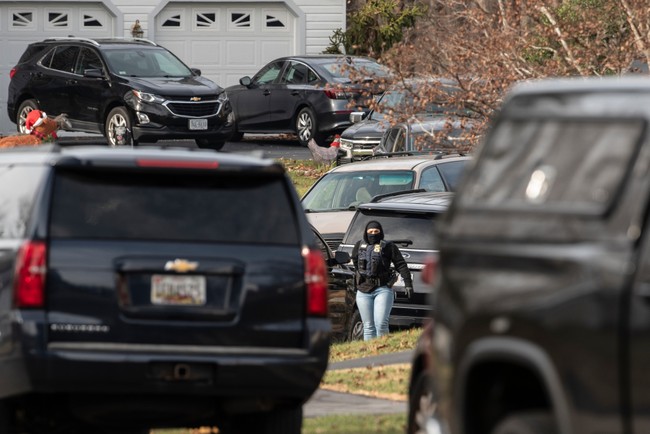
On Sunday the Department of Justice filed a memorandum supporting pretrial detention for Brian Cole Jr., a 30-year-old from Woodbridge, Virginia who was arrested in December 2025. Authorities say Cole is the person shown in surveillance footage placing pipe bombs near the DNC and RNC on January 5, 2021, the night before the Capitol events. The filing sketches out how investigators say he made, transported, and planted the devices and then how he described his motives during a recorded interview.
Cole faces two felony counts tied to explosive devices under federal statutes: transportation in interstate commerce with intent to kill, injure, or intimidate or to damage property, and malicious destruction by means of fire and explosive materials. He made an initial court appearance and did not enter a plea; his detention hearing was scheduled and continued into late December 2025. The government memo was submitted by the U.S. Attorney’s office in D.C. and lays out both investigative facts and Cole’s own statements during questioning.
The memo reports that Cole initially denied involvement, saying he drove to Washington to attend a protest about the 2020 election. Later, confronted with surveillance stills and video, he is reported to have admitted to building and planting the devices and described details about assembly and placement. The filing includes verbatim excerpts from his interview that shed light on how he said he became radicalized, at least in his own words.
- During the interview, which was video-recorded, the defendant initially denied manufacturing, transporting, and planting the pipe bombs. When asked about his whereabouts on January 5, 2021, the defendant stated that he drove his Nissan Sentra to Washington, D.C. by himself that evening to attend a protest concerning the outcome of the 2020 election.
- The defendant explained: “I didn’t agree with what people were doing, like just telling half the country that they – that their – that they just need to ignore it. I didn’t think that was a good idea, so I went to the protest.”
- The defendant “has never really been an openly political person” and does not discuss politics often with his family to avoid conflict. According to the defendant, “no one knows” his political views, including his family.
- Later in the interview, the defendant explained that after the 2020 election, “when it first seemed like something was wrong” and “stuff started happening,” he began following the issue closely on YouTube and Reddit and felt “bewildered.” In the defendant’s view, if people “feel that, you know, something as important as voting in the federal election is being tampered with, is being, you know, being – you know, relegated null and void, then, like, someone needs to speak up, right? Someone up top. You know, just to, just to at the very least calm things down.”
- The defendant felt that “the people up top,” including “people on both sides, public figures,” should not “ignore[e] people’s grievances” or call them “conspiracy theorists,” “bad people,” “Nazis,” or “fascists.” Instead, “if people feel that their votes are like just being thrown away, then . . . at the very least someone should address it.”
After admitting to being the person in the footage, Cole allegedly walked agents through assembling the devices, cleaning them with disinfectant wipes, and setting timers for 60 minutes before planting them near the DNC and RNC. He reportedly said he did not test the devices and claimed relief when they failed to detonate, saying he placed them at night because he did not want to kill people. The account in the memo reads like a confession with details about the materials, the sequence of events, and his own lack of intent to cause fatalities.
- The defendant stated that he assembled the devices in the hours before he drove to Washington, D.C. on January 5, 2021, and that he cleaned the devices with disinfectant wipes. Eventually, the defendant admitted that he did not go to Washington, D.C. to attend a protest but in fact traveled there to plant the devices.
- The defendant placed one of the devices in his backpack, exited his car, and walked toward the DNC. He set the timer on the first device to the maximum duration (60 minutes) and planted the device near the DNC. The defendant then returned to his car, retrieved the second device and placed it in his backpack, and walked to the RNC, where he set the timer for 60 minutes and planted the device.
- According to the defendant, he was not really thinking about how people would react when the bombs detonated, although he hoped there would be news about it.
- The defendant stated that he had not tested the devices before planting them. He claimed that when he learned that the devices did not detonate, he was “pretty relieved,” and asserted that he placed the devices at night because he did not want to kill people.
- The defendant stated that he did not tell anyone about the pipe bombs before planting them or in the years since.
- When the interviewing agents returned to the defendant’s motive, he explained that “something just snapped” after “watching everything, just everything getting worse.” The defendant wanted to do something “to the parties” because “they were in charge.” When asked why he placed the devices at the RNC and DNC, the defendant responded, “I really don’t like either party at this point.”
- The defendant also explained that the idea to use pipe bombs came from his interest in history, specifically the Troubles in Ireland. The defendant denied that his actions were directed toward Congress or related to the proceedings scheduled to take place on January 6.
Some outlets quickly labeled this a classic “Jan. 6” case and emphasized election-related beliefs, but the memo itself is more nuanced. Cole told investigators he blamed both major parties and said his action sprang from personal frustration and things he watched online. That detail matters because it separates motive rooted in broad antipathy toward both parties from an explicitly organized political attack tied directly to the January 6 congressional proceeding.
Readers should note the difference between reporting on what the DOJ memorandum actually quotes and media headlines that compress complex allegations into a single angle. The court filing, as quoted above, provides the basis for charges and the government’s request for detention, and it contains direct statements attributed to the accused that outline both his conduct and the rationale he gave investigators.
Add comment