
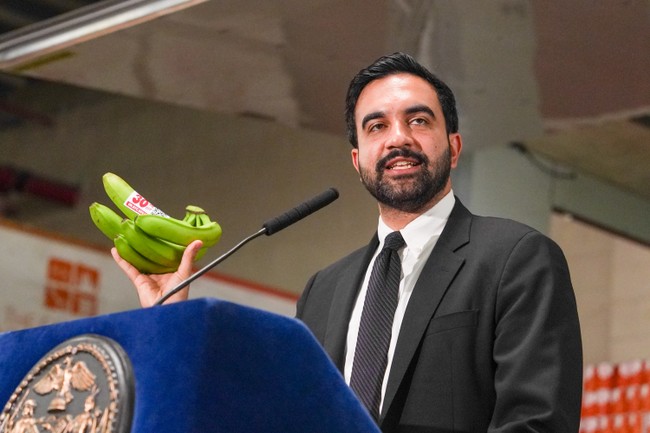
New York City’s mayor has announced taxpayer-funded grocery stores that will operate without any ID checks, a policy shift that opens subsidized discounts to anyone who walks in and raises predictable concerns about fairness, waste, and market disruption for city residents and small businesses.
Mayor Zohran Mamdani’s plan for one city-run grocery in each borough comes wrapped in the language of fairness and help for struggling families. But the decision to forgo identity, residency, or income verification turns a targeted relief program into a universal subsidy paid for by New Yorkers. That change amplifies obvious practical problems and fuels political frustration among residents who expected focused relief.
Jeanny Pak said: “We are looking to make sure that we target New Yorkers, whether it be a sort of library card-esque thing, and also we manage who’s buying and that it is focused on everyday New Yorkers.” That statement promised a mechanism to prevent outsiders from tapping into a program designed for local households. The later reversal abandons that promise and replaces it with openness to anyone who happens to stroll through the doors.
“We’re talking about a city-run grocery store, one in each borough, which, by the way, you do not need an ID to shop at, no matter what you’ve just heard in the news of today,” the mayor told Joy Reid. That quote settles the policy: no verification, no residency checks, no gatekeeping. It is a stark admission that the stores will operate like any other shop but with deep public subsidies behind the price cuts.
The consequences are straightforward and foreseeable. When a subsidized retail channel offers a 30 percent markdown without restrictions, demand will spike well beyond intended beneficiaries. Shoppers from outside the city, opportunists seeking arbitrage, and anyone else with access will be able to buy cheap goods and resell them, or simply consume limited supplies that were meant for New Yorkers on tight budgets.
Unlimited access guarantees pressure on inventory and upward pressure on costs for the program. As more people use the stores, taxpayer subsidies will have to cover larger losses to maintain low shelf prices, or the city will cut corners on quality and selection. Either outcome undermines the program’s stated goal to reliably serve everyday New Yorkers.
https://x.com/Acyn/status/2084409928022913151
These stores will also distort the market for local small businesses. Bodegas and independent grocers operate on thin margins and depend on neighborhood customers. A public store subsidized by municipal funds can undercut private competitors in price and volume, squeezing them out or forcing layoffs. When competition becomes a matter of public subsidy rather than better service, neighborhoods lose economic diversity and resilience.
There’s also a predictable fiscal cascade. When early losses mount, the political instinct will be to throw more money at the problem rather than admit failure. That pattern shifts the burden to taxpayers without fixing the underlying incentive problems that created the shortages. At some point, higher taxes or redirected services will be proposed to sustain the program, and ordinary residents will feel the squeeze in other areas of public spending.
Beyond economics, the policy sends a message about priorities and governance. Promising targeted relief and then removing the guardrails looks like mismanagement at best and political theater at worst. Residents who voted for change or expected accountability see a program that rewards nonresidents while straining city coffers and local supply chains.
The rhetorical defense — that the uproar was invented by opponents or the media — does not address the mechanics of how subsidies work. Critique about hypocrisy rings hollow when program design ignores basic incentives and verification methods that would prevent abuse. If the goal was to help New Yorkers most in need, a practical, enforceable system would be the obvious route.
At the heart of the debate is a simple question: who pays and who benefits? Under the new rules, New Yorkers pay and anyone can benefit. That imbalance undermines trust in public programs and creates winners and losers based on proximity and opportunism, not on need. It is reasonable to expect policymakers to design assistance so it actually reaches the intended recipients without wrecking nearby businesses or municipal finances.
Practical solutions exist but require the political will to implement them: targeted verification, residency checks, purchase limits, and anti-resale measures, among others. Without those, the city faces shortages, arbitrage, and growing fiscal strain while the stated beneficiaries stand to gain the least. The policy choice may be pitched as generosity, but in practice it looks like a blank check for anyone with access to the stores.


Add comment