
The Democratic-led blockade of full Department of Homeland Security funding has stretched into a historic 45-day impasse, sparking travel headaches, strained emergency services, and a rare media moment where a legacy reporter bluntly exposed the mismatch between Democratic rhetoric about ICE and the reality of how ICE is financed.
The shutdown has had immediate, visible consequences at airports where long lines and delays followed mass TSA callouts and resignations because employees were not being paid. Beyond airports, essential services like FEMA and the Coast Guard are operating under stress, and the operational risks grow the longer funding remains stalled. This isn’t a theoretical budget fight; it’s disrupting core public safety work paid for by American taxpayers.
The political showdown centers on Immigration and Customs Enforcement, with Democrats insisting they want to rein in what they call abusive practices. They argued for reforms while blocking a clean funding path, but they also negotiated a deal that effectively carved ICE out of the main DHS funding patch. That split meant the agency’s enforcement arm would continue to have resources while other DHS components remained frozen in limbo.
Border Czar Tom Homan has repeatedly described the situation as Democrats “holding the agency hostage” because they object to ICE enforcing laws enacted by Congress. He pointed out a raw contradiction: leaders denounce ICE publicly while ensuring the agency’s enforcement work stays funded. The resulting posture lets political leaders claim toughness to their base without actually stopping the enforcement actions they criticize.
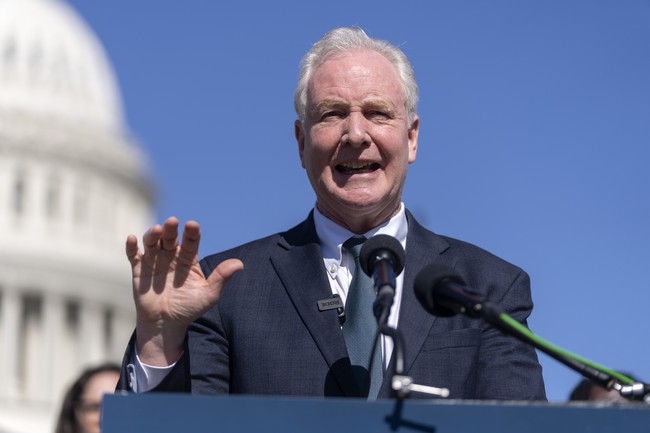
Even mainstream outlets couldn’t help but press the point during an ABC interview with Sen. Chris Van Hollen. Reporter Jonathan Karl asked a simple, piercing question about the tangible gains Democrats had won after refusing to fund DHS. The questioning exposed the awkward reality that the enforcement arm continues to get money, undermining the narrative that Democrats had successfully forced reforms or stopped ICE operations.
“I guess what’s confusing here is you have fought and blocked the funding for the Department of Homeland Security because you object — as you just outlined — to what ICE has been doing, and you wanted to force changes. And yet, the only thing that has been assured throughout all of this is that ICE already has the money. Because as you said, $75 billion passed in the budget bill last year. So you’re holding up the entirety of the Department of Homeland Security because you object to ICE and you want changes to ICE, but through it all, ICE continues to have the money.”
The exchange made a critical point plain: Democrats portrayed themselves as taking action against ICE while the agency’s enforcement funding remained intact. That means the public spectacle of opposing ICE becomes posture, not policy, and it’s ordinary Americans who pay the price through degraded services, delayed responses, and increased risks. The political theater benefits activists but not the public interest.
Van Hollen doubled down, calling ICE a “lawless operation” and insisting Democrats would not allocate more money to it. But the reality Karl highlighted was unavoidable — the agency’s core enforcement work still enjoys funding, and the spending dispute mainly affects support staff and other DHS missions. That gap is what produces the disconnect between shouted outrage and actual outcomes.
The House GOP has pushed back with a proposed 60-day stopgap to restore funding and ease the fallout, arguing that practical governance matters more than theatrical protest. Republicans frame this as protecting national security and public services from partisan brinkmanship. The fight now is whether political leaders put ideology ahead of safety or choose to secure the resources needed to keep the country running.
Meanwhile, frontline officers at ICE and Customs and Border Protection continue to face danger and complexity while policymakers trade blame in Washington. Those men and women remain committed to enforcing the law and safeguarding the borders regardless of the political posturing that imperils their support systems. They deserve clear backing, not headline-driven bargaining that risks lives and infrastructure.
Editor’s Note: ICE and CBP continue to put themselves in harm’s way in order to protect America’s sovereignty and to keep our streets safe.



Add comment