
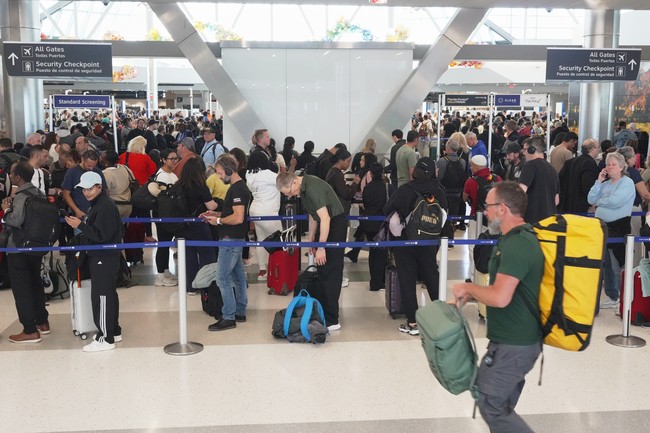
The standoff over federal funding left TSA officers unpaid for weeks and snarled travel at major airports, but recent action from the White House freed funds and began restoring normal operations, with paychecks going out and lines shrinking at Houston, Atlanta, New York, Baltimore, New Orleans, and Dallas.
The partial shutdown dragged on past 44 days, leaving the Department of Homeland Security stretched and many frontline workers facing unpaid bills and impossible choices. Reports of thousands of no-shows and hundreds of resignations painted a bleak picture for travelers, and the disruption became a national headache during a busy travel period. At the center of the fight were Democrats demanding sweeping ICE reforms while blocking routine appropriations, and a federal workforce caught in the crossfire.
Faced with empty checkpoints and four-hour waits at many airports, the administration sought a creative budget maneuver to get pay flowing to the Transportation Security Administration. President Trump directed DHS to move funds, and the result was immediate: paychecks for TSA staff began to clear and staffing began to stabilize. The difference was visible on the concourse and in traveler reports, with several problem airports showing much shorter lines almost overnight.
The media and officials who tracked the situation documented the shift in operations. “Major U.S. airports that suffered massive disruptions for weeks after 50,000 Transportation Security Administration security officers went unpaid since mid-February say operations are returning to normal,” read one prominent summary. “Airports in Baltimore, Houston, New York, New Orleans, and Dallas, which have all experienced massive delays in recent weeks, all reported very short lines on Monday. The standoff brought chaos and in some cases security lines topping four hours, the longest in the TSA’s nearly 25-year history.”
On the worst days, absence rates surged and morale collapsed as more than 500 officers quit and tens of thousands of shifts went unfilled. Airports reported that absence rates reached double digits at several hubs, with Houston experiencing days where nearly half of scheduled officers failed to show. The operational strain led to ad hoc moves, including reassignment of other federal personnel to help manage crowds and maintain basic screening functions.
Officials also moved ICE personnel to assist at select airports, a step that calmed lines but drew sharp criticism from opponents who framed the deployment as political. The administration argued that the priority was restoring security and service for travelers, not scoring points, and that available federal resources needed to be used to prevent chaos. That pragmatic approach was enough to bring immediate relief to many terminals while appropriations remained in dispute.
Critics pushed back hard on the decision to reallocate funds and staff, insisting Congress alone should hold purse strings and objecting to the executive’s workarounds. “If there’s one power that Congress has, it’s the power of the purse. This president has consistently and universally said that he, in fact, has that power,” he says. The argument underscored a broader constitutional and political tussle over who gets to decide funding priorities when lawmakers deadlock.
While the constitutional debate plays out, travelers are the immediate priority. With payroll issues addressed and extra personnel in place, airports that had been hit hardest have seen lines fall and operations normalize. Passengers who faced uncertainty and long waits began reporting smoother experiences, reflecting the tangible effect of restoring pay and shifting resources on the front lines.
Some on the left remain furious that relief arrived, charging that creative fixes reward what they call obstruction and force them into rhetorical corners. “Democrats are fanning the flames and raising the rhetoric by comparing ICE to the Gestapo, fascists, and secret police.” That language shows how politicized even routine security operations have become, making everyday logistics a partisan battleground. In the meantime, TSA officers getting paid again and passengers moving through terminals is a practical result that has immediate impact on travel and safety.
The dispute over funding and immigration policy will continue in Congress, but for now the machines at airport checkpoints are running more like they should. Restoring pay did not erase the political fight, but it did stop the worst immediate effects for millions of travelers and for the security workforce that keeps airports functioning. The situation remains a reminder of the human cost when budget fights become showdowns and of how quickly creative action can change conditions on the ground.


Add comment