
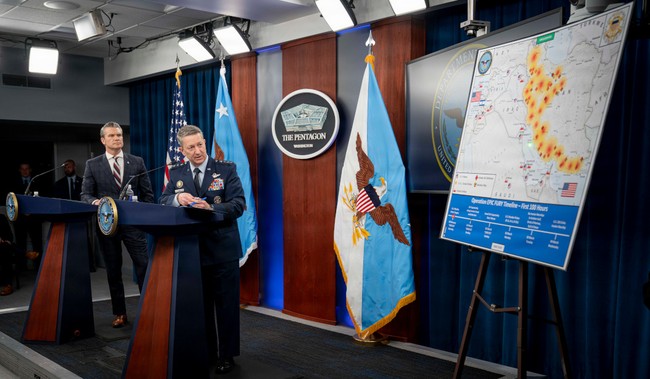
The U.S. and Israel are pressing their campaign against Iran, with strikes and deployments shaping a conflict that could broaden; this piece walks through the latest reporting on possible ground options, the challenge of securing Iranian nuclear material, the shifting force posture in the region, the vulnerability exposed by recent drone strikes on U.S. aircraft, and Iran’s information blackout at home.
Events in the Middle East have taken on new urgency as American and Israeli operations continue to strike Iranian targets. Reports say President Trump is weighing a range of options, including a possible ground mission to seize fissile material, and that posture is driving troop movements and strategic planning across the region.
One report lays out the core uranium concern plainly: “President Trump is considering a military operation to send US soldiers inside Iran to extract nearly 1,000 pounds of uranium from Iran, officials said.” That sentence alone tells you why planners and commanders are focused on both the intelligence picture and the risks of any insertion into Iranian territory.
Further detail in that reporting explains the thinking: “Trump is open to the idea of sending the troops into Iran for days or longer to complete the mission, but the president is considering the risks to American soldiers, US officials familiar with the plan told the Wall Street Journal.” The administration is balancing the desire to deny Tehran key materials against the obvious hazard to U.S. forces operating in hostile, well-prepared terrain.
The reporting adds a clear policy angle: “As he weighs the dangers of the operation, Trump has encouraged his advisers to pressure Iran to agree to give up its atomic material as a condition for ending the war, according to the outlet.’” Diplomacy and coercion remain on the table, but hard options are being readied if Iran refuses to comply and if the intelligence indicates material can still be located and secured.
On the force posture front, multiple accounts note fresh deployments of elite units and conventional forces into the theater. “Hundreds of U.S. Special Operations Forces, including Navy SEALs and Army Rangers, are now in the Middle East, as well as thousands of Marines and Army paratroopers, according to sources familiar with the deployments.” Those are the units you task with the highest-risk missions and contingency raids, and their presence signals serious planning is underway.
There are also shorter, blunt reports that the Pentagon is preparing for the possibility of extended ground operations, though official details remain sparse. Commanders will need to plan for logistics, sustainment, and the political fallout of any large-scale ground campaign while keeping pressure on Iran through air and sea control and targeted strikes.
The conflict has exposed vulnerabilities, too. One damaging strike earlier in the week took out a U.S. E-3 Sentry AWAC aircraft and hit other support assets, underscoring the new reality of drone-enabled strikes and asymmetric threats. “Friday, the U.S. military suffered what in competent hands would’ve been a potentially game-changing loss in our ongoing war with Iran. At least twelve U.S. servicemembers were wounded, two seriously, and at least two KC-135 aerial tankers, the Wall Street Journal says ‘multiple,’ and one E-3 Sentry Airborne Early Warning and Control aircraft were seriously damaged.” That kind of loss changes tactics, force protection, and how commanders value dispersed basing and redundancy.
Iran’s domestic response has been to clamp down hard on communications, further complicating independent verification and situational awareness. “This is a blackout on truth,” a senior Israeli intelligence official told Fox News. “The regime is hiding reality from its own people. They don’t want the Iranian people to see how badly they’re getting hit.” Information denial is part of modern conflict, and it helps Tehran control the narrative and suppress dissent even as infrastructure and military targets are struck.
Modern warfare now mixes precision strikes, drone attacks, special operations readiness, and information control, and that mix carries risks for escalation and broader regional involvement. Gulf states under attack have incentives to move from defensive measures to more active contributions, and their participation would materially change the strategic picture in ways that planners must assume as plausible.
For U.S. policymakers, the task is straightforward in concept: deny Iran the means to build or hide weapons, protect American forces, and coordinate with partners to keep the conflict from widening. For commanders on the ground, the problem is logistics, intelligence, and the ever-present danger of escalation when strikes, raids, and counterstrikes intersect in a crowded theater.
At this stage the fighting looks likely to continue for some time, with a presidential mix of diplomacy, pressure, and readiness for decisive operations. The coming days will test both resolve and the ability of American and allied forces to operate in a contested environment where drones, dispersed stocks, and information control change the calculus of victory.


Add comment