
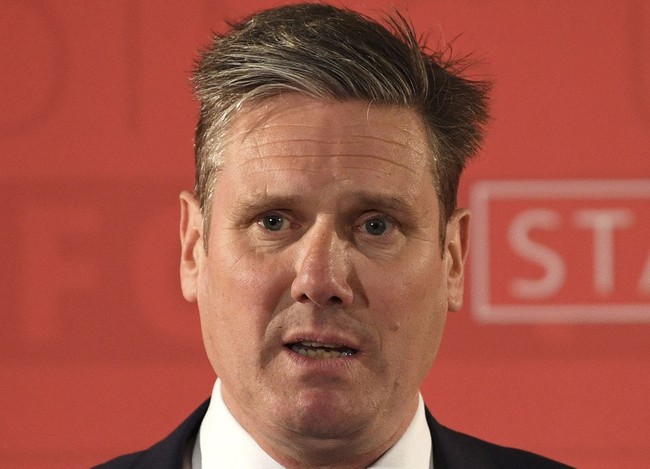
Keir Starmer abruptly announced he will resign as Labour leader and step down from Downing Street once his party elects a successor, following a week of ministerial defections, a damaging by-election, and open discussions inside Labour about who should replace him.
Twenty-four hours before the announcement, whispers of an exit plan were already circulating inside Labour circles and among political observers. By Monday morning he stood outside Number 10 and confirmed what had been brewing: he will resign as leader of the Labour Party. He said he had spoken with the monarch and will remain in office until the party completes a leadership contest expected to finish before Parliament returns in September.
The collapse followed a series of dramatic events that stripped Starmer of momentum and credibility within his own ranks. Defence Secretary John Healey resigned, followed by Armed Forces Minister Al Carns, marking seven ministerial departures in roughly a month and signaling a department in open revolt. Those exits were framed around what ministers described as an underfunded defence posture and impossible budget constraints.
“The question my party is asking now is whether I am best placed to lead us into the next general election.
https://x.com/PolitlcsUK/status/2068980373061533712
“I have heard the answer of my parliamentary party to that question, and I accept that answer with good grace.
“That is why I will resign as leader of the Labour Party.”
Healey made a stark charge that Starmer and the Treasury had failed to give the armed forces the resources needed for rising threats, warning that cuts would reduce readiness and increase risks to personnel on operations. Carns expressed a similar view, telling colleagues that asking the military to face a more dangerous world on a budget for calmer times was untenable. Those public criticisms from senior figures undercut the administration’s claims of competence on national security.
“You have been unable, and the Treasury has been unwilling, to commit the resources that the nation needs to defend the country at this time of rising threats.
“Without a DIP that meets the moment in this way, I am being forced to make decisions that would reduce the readiness of our Forces and increase the risk to personnel on operations, and could make the country less safe.”
Ministerial departures happen in governments, but two senior defence figures walking out the same day is unusual and alarming for cabinet coherence. That episode was followed by a by-election victory for Andy Burnham, which did more than return a familiar face to Westminster. Burnham’s win gave Labour MPs a clear alternative and boosted those ready to push for leadership change, shifting the balance inside the party away from unity behind Starmer.
Over the weekend, the pressure intensified. Reports suggested cabinet ministers, advisers, donors, and trade union leaders were all nudging Starmer toward the same conclusion. Conversations about succession moved from whisper to open discussion, and momentum for a change of leadership became visible in meetings and private briefings. The sense that the argument was already settled inside Labour made Monday’s public resignation more a formality than a surprise.
“We are asking our Armed Forces to operate in a more dangerous world on a budget written for a calmer one.
“A serious country funds its defence to meet the threat it actually faces, not the threat it wishes it faced.”
In his remarks, Starmer defended his record and listed achievements — increases in defence spending, support for Ukraine, NHS reforms, trade deals, and efforts to curb illegal migration. He argued that Labour inherited a broken country and left it in a stronger position. Still, those claims failed to persuade key figures sitting behind him in Parliament, where support matters most.
Cabinet ministers urged Starmer to set a clear timetable for departure while MPs and influential party figures began counting potential backers for alternative candidates. Burnham’s return to Westminster put him in position to lead a post-Starmer campaign, and other potential challengers started weighing whether to throw their hats into the ring. The internal dynamics made the leadership question the central drama of British politics for days.
Outside Labour, critics wasted no time responding to the sudden vacancy at the top. Calls for a general election surfaced, and opponents argued that simply replacing the name on the prime minister’s door would not settle the broader issues voters care about. Pressure from other parties and voices demanding a national say complicated the path to an orderly handover.
“I will remain in post as Prime Minister until the contest is complete, and I will do everything I can to ensure an orderly handover of power.
“I will also give my successor my full and unequivocal support.”
With Starmer stepping down, Labour now faces a scramble to present a coherent alternative without fracturing further. Burnham arrives with momentum, potential challengers circle, and the party must decide whether a personnel change can answer the policy and management failures that led to this moment. The political calendar will force a quick resolution, and how the party navigates the transition will shape British politics for months to come.


Add comment