
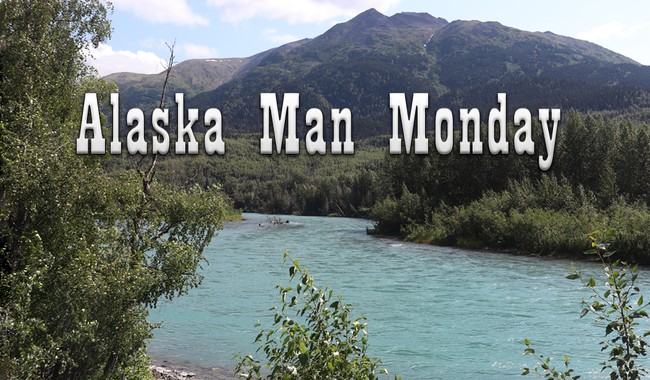
Alaska’s story this week mixes big mineral finds, a busy wildfire season, and a nudge to get outside; the state’s gold potential promises meaningful economic value, lightning has ignited new blazes across remote country, and a simple reminder to touch some grass ties it all together.
Gold turned Alaska from a perceived mistake into a national magnet, and modern exploration shows the territory still holds vast deposits. Recent company reports describe a mile-long trend of continuous mineralization at Golden Summit, suggesting both scale and potential that could support further development. The numbers are eye-opening and worth paying attention to for anyone who cares about natural resources and American economic strength.
Freegold Ventures Ltd. June 17 reported that the final assays from 2025 drilling and results from the first three holes of the 2026 program continue to demonstrate the grade and scale potential across the roughly one-mile-long trend of continuous mineralization at the Dolphin-Cleary deposit on the company’s Golden Summit project in Interior Alaska.
Freegold has outlined a roughly 1,700-by-700-meter body of gold mineralization that encompasses three primary zones – WOW, Dolphin, and Cleary Hill – that contain more than 30 million oz of gold in three categories:
• Oxide (at a 0.15 grams per metric ton cutoff grade): 63.71 million metric tons of indicated resource averaging 0.45 g/t (920,000 oz) gold; plus 18.84 million metric tons of inferred resources averaging 0.47 g/t (287,000 oz) gold.
• Primary (0.5 g/t cutoff): 431.95 million metric tons of indicated resource averaging 1.24 g/t (17.24 million oz) gold; plus 357.61 million metric tons of inferred resource averaging 1.04 g/t (11.96 million oz) gold.
• Under-pit (0.75 g/t cutoff): 2.21 million metric tons of indicated resource averaging 1.12 g/t (79,000 oz) gold; plus 18.01 million metric tons of inferred resource averaging 1.35 g/t (782,000 oz) gold.
The roughly 40,000 meters of drilling completed at Golden Summit in 2025 and the 50,000 meters planned for this year are focused primarily on upgrading the resource with infill drilling – particularly in areas of higher grade gold mineralization – and advancing the technical work needed to complete a prefeasibility study that details the technical and economic parameters of developing a mine at Golden Summit.
Those assay figures translate into serious economic opportunity for Alaska and the nation. Extracting and processing these resources would bring jobs, capital investment, and tax revenue that matter in remote communities. Mining isn’t sentimental; it’s practical, and when it’s done responsibly the benefits can ripple outward to infrastructure and services that otherwise struggle to appear in far-flung places.
Scorecards are a bit tongue-in-cheek, but the find earns a clear nod: Alaska Man score: Five gold nuggets. That’s shorthand for the scale and promise of what’s been outlined, and a reminder that Alaska’s resource base remains a strategic asset for the country. When projects move from exploration to feasibility, the stakes and the scrutiny both rise.
More than 4,000 lightning strikes were recorded across Alaska on Friday as thunderstorms moved through the Coastal Region, sparking several new wildfires in the Susitna Valley, according to the Alaska Division of Forestry and Fire Protection.
Forestry officials said Friday night that aircraft were being used to locate smoke reports when weather conditions allowed. Fire managers are assigning crews and aircraft based on threats to homes, roads and other infrastructure.
As of 9:30 p.m. Friday, six fires had been confirmed near the Susitna Valley.
Wildfire season is active, partly because winter snowpacks were below normal, and lightning has lit off multiple new blazes in the coastal and interior regions. Much of Alaska is sparsely populated, which limits the human toll compared with densely settled lower states, but fires still threaten property and access for people who live off the road network. Resources like aircraft and crews get prioritized to protect homes, roads, and infrastructure when fires pop up.
Locally, there were no confirmed fires close to the Susitna Valley community in question, which is a relief for folks who live and work there. Still, the scale of lightning activity and the number of confirmed ignitions underscore how quickly conditions can shift. Preparing for wildfire season in remote places is different, and it often means leaning on air support and strategic crew placement.
Alaska Man score: No score. This is just nature, doing its thing. That’s not a dismissal of risk; it’s recognition that weather and terrain have their own logic, and people in these regions learn to live with that reality while staying ready if conditions worsen. Awareness and practical preparedness matter more than hot takes.
Finally, some plain talk about summer: get outside. There’s a value to stepping out of the house and into real green spaces, whether you live near town or in the bush. It’s not a cure-all, but touching grass connects you to the seasonal rhythm that shapes life in the Great Land and reminds you why preserving healthy landscapes and sensible land use matters.



Add comment