
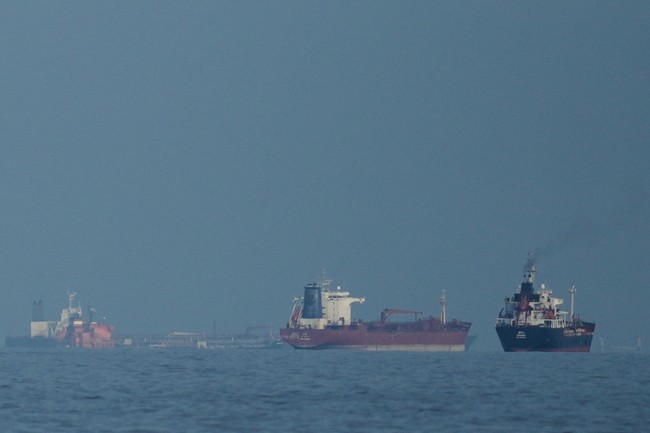
President Trump’s energy approach is getting credit as global oil prices fall below $80 a barrel even amid tensions with Iran, with administration officials pointing to steady tanker traffic through the Strait of Hormuz and U.S. military measures keeping sea lanes open while diplomatic talks continue in Europe.
The cost of energy touches everything we buy and do, so when oil prices ease it matters. Lower fuels reduce costs for manufacturing, transportation, and everyday goods, and that ripples through the economy pretty fast. Petroleum remains central to modern life, from fuels to plastics, so shifts in oil pricing are a big deal for households and businesses alike.
Officials have been highlighting a notable drop in prices despite the standoff with Iran, arguing that this reflects effective policy and on-the-water security measures. The administration points to recent data showing headline U.S. crude sitting comfortably under $80 a barrel, a far cry from some dire early forecasts. For voters and consumers, cheaper energy at the pump is tangible and politically visible.
https://x.com/RapidResponse47/status/2068714942002323793
On Sunday, U.S. Ambassador to the United Nations Mike Waltz discussed the economic angle on a national talk show, stressing both national security and price relief. His comments tied the need to deny Iran a nuclear weapon to a broader strategy that, he said, also protects supply lines and keeps energy affordable. Waltz emphasized that Americans want lower gas prices and framed current levels as an improvement over the prior administration’s record.
Well, Margaret, I’ll go back to other polling, that shows that the American people absolutely agree with President Trump that Iran can never have a nuclear weapon. Of course, we all want lower gas prices. They are lower, below four dollars, and falling, with more work to do. They’re cheaper than under the Biden administration. We’ll remember, just a few months ago, when analysts were saying oil would be upwards of $150-200 a barrel. And it is not; it is now under $80. Of course, everyone wants cheaper energy. But what President Trump is doing is striking that balance with also ensuring that a genocidal regime that none of us trust can never have a nuclear weapon, and that process is underway right now, as we speak.
Diplomatic activity in Switzerland has been ongoing as parties try to manage the crisis, and officials say they are monitoring talks closely. Diplomacy can reduce the chance of escalation and help steady markets, but the real-time effect often depends on what happens at sea and in the shipping lanes. Right now, the U.S. claims escorts and alternate channels have kept tankers moving.
Energy Secretary Chris Wright also appeared on Sunday programming to underscore the operational picture in the Strait of Hormuz. He pointed to the number of ships transiting the area as evidence that traffic is near normal and that oil flows have not been choked off. Wright highlighted the role of U.S. naval presence and the opening of a second channel to maintain safe passage for commercial vessels.
In the last 24 hours, yesterday, 67 ships went through the Strait of Hormuz. The day before it was 55 ships. So, in terms of oil and oil products, about equal to where we were before the conflict. So, yeah, traffic is flowing through the Strait, quite nicely. Now, that’s because of a U.S. military presence. Iranians have still not de-mined the central shipping channel. But the U.S. opened a second channel down (to) the south, and we have been bringing, we have been escorting ships through that for several weeks now. And, at very high levels today.
When shipping operates at near-normal levels, supply fears ease and traders recalibrate prices downward. That dynamic can undercut extreme predictions and steady consumer expectations for fuel costs. Still, the situation is volatile and subject to rapid change if hostilities flare or if Iran takes steps that limit maritime freedom.
Current market readings put U.S. crude in the mid-$70s and Brent near $80, figures that surprised some forecasters who saw much higher spikes as likely. Those price points matter for inflation, household budgets, and the broader economic outlook. If these flows continue, consumers could see sustained relief at the pump, which tends to boost sentiment and spending power.
For Republicans and supporters of the administration’s posture, the combination of forceful naval presence and firm diplomacy is presented as proof that security and prosperity can go hand in hand. The messaging is straightforward: protect the supply lines, keep pressure on adversaries, and let the market respond with lower prices. That line resonates politically because people notice when they spend less on gas and grocery deliveries.
The current picture is cautiously optimistic but still fragile; diplomats are meeting and military assets remain active in the region. Any clear turn in the drama around Iran could reverse gains quickly, so the situation requires ongoing attention. For now, lower oil prices are a welcome sign and a political talking point for those praising the administration’s energy and security approach.


Add comment