
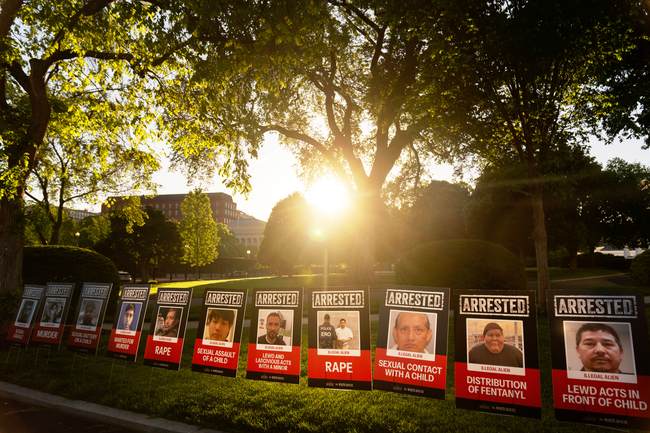
Brandon Ortiz-Vite, a Mexican national convicted of murder in Michigan, is suing former President Trump for $75.5 million, citizenship, and a public apology after his case was used in 2024 campaign ads; this article examines the lawsuit, the underlying facts of Ortiz-Vite’s record, legal perspectives on presidential immunity and public record use, and the broader policy implications for immigration enforcement and public safety.
The lawsuit reads like a bold attempt to rewrite responsibility, claiming humiliation and a loss of dignity because a campaign used a mug shot and a public conviction as an example. He asks for $75.5 million, naturalization, and counseling plus a public apology, while serving a long sentence after being convicted of murder. From a Republican viewpoint, this strikes as the wrong side of accountability: the laws were applied, the verdict was rendered, and campaign speech relied on public court records.
Ortiz-Vite’s criminal history and immigration timeline matter here. He was originally in the United States under DACA, faced prior arrests, and was deported in 2020 before reentering illegally. He was then arrested, tried, and convicted in the brutal killing of Ruby Garcia, a crime that led to a lengthy prison term. That sequence is central to why a campaign would highlight the case when discussing criminal illegal immigration.
The legal theory behind suing a former president over campaign ads is shaky. Presidential immunity protects a wide range of official acts, and even campaign statements enjoy considerable First Amendment protection, especially when they are grounded in public records. As attorneys have noted, being embarrassed by a politician is not a constitutional violation, and truth is a powerful defense against defamation claims in these contexts.
An illegal alien killer highlighted by President Donald Trump’s campaign in 2024 wants $75.5 million and “naturalization to this beautiful country,” as well as an apology from the 47th POTUS.
“I was put into a category. Who I was as a person no longer mattered! What only mattered was my race, my case, and immigration status. Once again it belittled me, shattered my dignity and what I was as a person,” Mexican national Brandon Ortiz-Vite wrote in a lawsuit filed last week in U.S. District Court.
“The shame it brought to my family name is a reality I have to live with now,” he wrote. “I took full responsibility for my actions, but for them to use my case for political gain on T.V. was unjust. Humiliating. When I thought it couldn’t get worse, it did. I was center stage in front of a nation, public scrutiny at its finest.”
That quoted passage is powerful rhetoric, and it will play emotionally in court filings and media coverage. But emotion does not erase criminal conduct or undo the practical consequences of failing to secure borders. From a policy angle, the case underscores tensions between public interest reporting, campaign messaging, and the rights of convicted individuals who claim harm from publicity tied to their crimes.
One practical legal assessment offered by a former federal prosecutor was blunt: he did not expect this suit to get very far. The point made was simple—statements grounded in public record and the natural reach of political speech make for a difficult path to a viable civil claim. If the campaign used public mug shots and factual summaries, truth and constitutional protections weigh heavily against the plaintiff.
Beyond the courtroom, the optics matter for voters and policymakers. Democrats who argue for more lenient immigration policies now face a test: do they defend the idea that cases like this should stay out of public debate, or do they admit that enforcement failures can have tragic human costs? For conservatives, the suit reinforces the demand for stricter border control and consistent enforcement so convicted violent offenders do not remain or reenter our communities.
“Based on my experience, I do not think this lawsuit is going anywhere,” Grand Rapids attorney and former federal prosecutor Matthew Borgula told MLive.
“Also, Presidential immunity covers official acts, and campaign statements can fall outside it — but this suit fails for more basic reasons. The statements were substantially true, and being publicly embarrassed by a politician isn’t a constitutional violation. This case should end before it begins.”
The likely legal outcome is dismissal, and even if the suit advances, precedent and First Amendment principles make a large award improbable. The broader implication is clear: if public officials and campaigns cannot point to public convictions while arguing for enforcement changes, the space for public debate on safety and immigration shrinks dramatically. That is a concern for anyone who prioritizes law and order and the rule of law.
At its core, this episode is about responsibility—individual responsibility for violent acts, institutional responsibility for enforcing immigration laws, and political responsibility for honest public debate. Lawsuits that try to turn those realities into a liability for officials who pointed to public facts threaten to skew accountability in ways that voters should scrutinize closely.


Add comment