
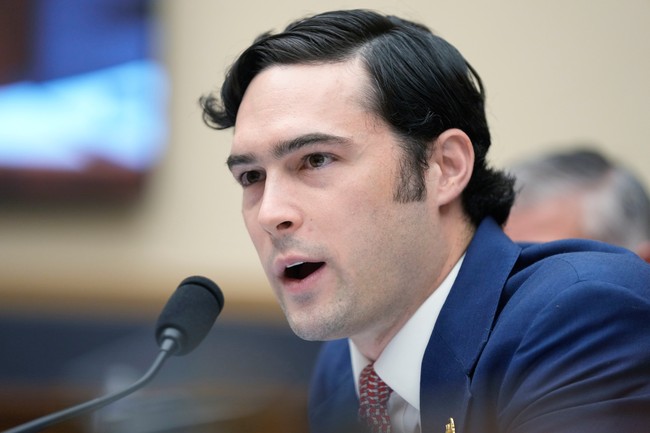
Rep. Brandon Gill’s exchange with Democratic witness Brendan Ballou at a House Oversight hearing exposed stark welfare statistics for Somali-headed households in Minnesota, sparking a broader argument for sweeping welfare reform and a tougher approach to immigration and assimilation policy.
Some takedowns are worth watching, and last January one of those landed in a congressional hearing when Rep. Brandon Gill pressed Brendan Ballou about welfare use among Somali households in Minnesota. The moment made plain differences in outcomes that many political observers and taxpayers find alarming and worthy of policy attention.
https://x.com/joeroganhq/status/2078846067387609238
The exchange was sharp and focused, laying out numbers that demand a policy response rather than partisan hand-wringing. Gill zeroed in on basic measures—food stamp and Medicaid participation—then contrasted them with native Minnesota households to underline the scale of the discrepancy. That blunt contrast is exactly the sort of clear-headed questioning voters expect when public funds are at stake.
The hearing transcript contains a back-and-forth that left little room for gentle interpretation. In Gill’s words and Ballou’s responses, the tensions between a compassionate ethos and practical fiscal accountability were on full display. The quoted portion of the exchange reads exactly as transcribed, preserving the moment for anyone who wants to judge the evidence and the witness’s answers for themselves.
Rep. Gill: Mr. Ballou, thank you for being here. Let me ask you, does large-scale Somali immigration make Minnesota stronger or weaker?
Brendan Ballou: Certainly stronger.
Rep. Gill: Certainly stronger. Do you know what percentage of Somali-headed households in Minnesota are on food stamps?
Brendan Ballou: No.
Rep. Gill: 54 percent. Do you know what that number is for native Minnesota-headed households?
Brendan Ballou: Well, to be clear, a majority of the…
Rep. Gill: It’s seven percent. There’s a big difference between 54 percent and seven percent. Is there not?
Brendan Ballou: Excuse me, sir, could I please answer the question?
Rep. Gill: Let me move on, we’ve got a lot of questions here. What percentage of Somali-headed households in Minnesota are on Medicaid?
Brendan Ballou: I don’t know.
Rep. Gill: It’s 73 percent.
Those figures are stark: over half on food assistance and nearly three quarters on Medicaid in a specific demographic. Policy debates should not shy away from hard numbers like these, because taxpayer dollars fund public benefits and because long-term dependency has real consequences for families and communities. A responsible government has to ask whether current rules encourage assimilation and upward mobility or unintentionally create incentives for persistent dependency.
Ballou later noted that many Somalis in Minnesota were born in the United States, while Gill highlighted language barriers and cultural gaps that affect integration and employment prospects. From a conservative viewpoint, assimilation is not optional; it is essential for social cohesion and economic self-sufficiency. If half a population lacks English fluency, that raises obvious concerns about access to work, civic participation, and a shared civic identity.
There are two separate but related policy questions here: how to stop fraud and how to design welfare so it helps people move toward independence rather than creating long-term traps. Law enforcement efforts to root out fraud are necessary and welcome, but enforcement alone won’t fix incentives embedded in benefit programs. Structural reform should aim to reward work, require meaningful steps toward language acquisition and job training, and limit benefits where they replace rather than supplement household earnings.
Critically, this is not about scapegoating immigrants; it’s about asking whether current systems deliver outcomes Americans expect when money is limited and priorities compete. Voters want targeted, efficient programs that lift people up instead of subsidizing multigenerational dependency. Good policy should be ambitious about assimilation and clear about expectations while preserving a safety net for the truly vulnerable.
The testimony and the statistics that Rep. Gill cited invite lawmakers to consider tougher eligibility rules for new arrivals and clearer pathways to self-reliance. That could include conditional access to some benefits tied to language progress, employment searches, or participation in community integration programs. Such approaches respect both the value of charity and the need for accountability when public funds are involved.
Those who defend the status quo often frame the debate as compassion versus cruelty, but the better conservative argument is that compassion without results becomes cruelty in practice. Ensuring that assistance leads to independence is the humane option for recipients and taxpayers alike. If policymakers refuse to confront uncomfortable facts, the long-term costs—economic, social, and political—will only grow.
The Gill-Ballou exchange should serve as a policy prod rather than an endpoint. Lawmakers can and should use clear data to craft reforms that protect vulnerable people while preventing abuse and encouraging assimilation. Until reforms change the incentives, the stark numbers Rep. Gill highlighted will continue to raise legitimate concerns about fairness and sustainability.



Add comment